
















Spain’s Ceuta migration backlog raises alarm over asylum rights
Thousands remain stranded in Spain’s North African enclave as authorities face political pressure to accelerate returns, while humanitarian organisations warn that vulnerable migrants may be denied fair assessments.
Spain’s efforts to clear a major migration backlog in its North African enclave of Ceuta have intensified concerns over asylum procedures, the treatment of vulnerable migrants and the balance between border management and human rights.
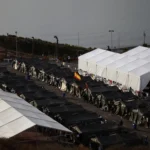
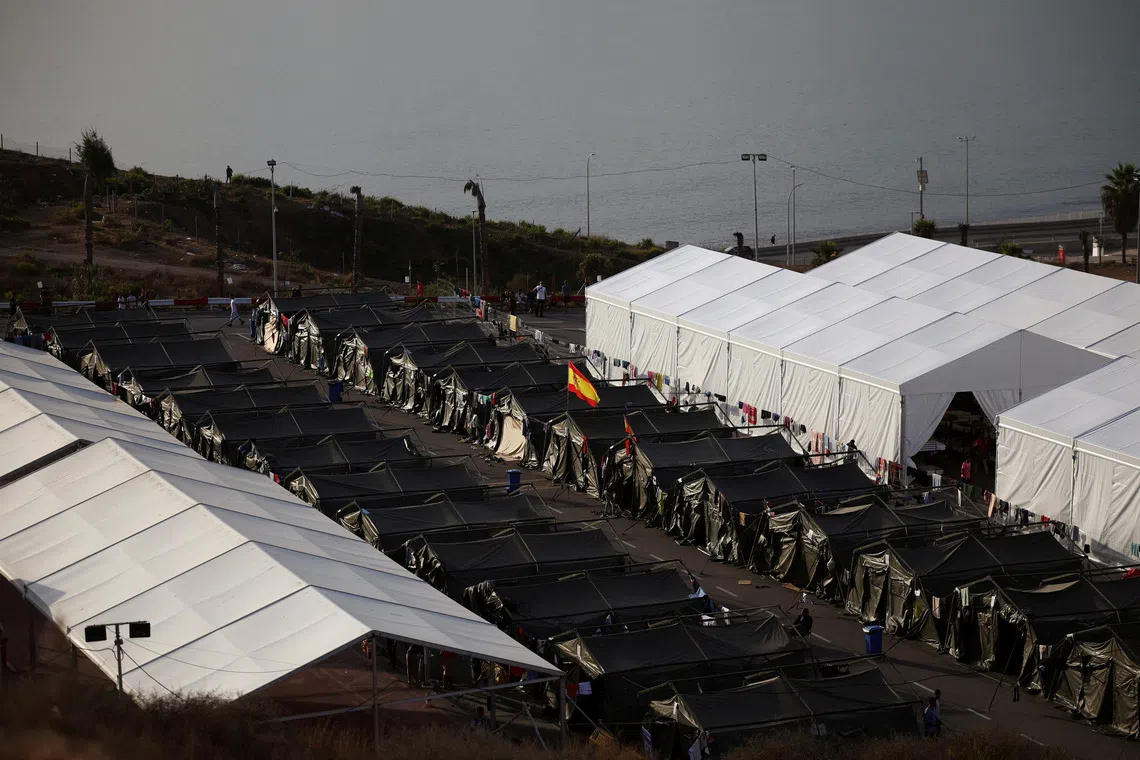
Nearly three months after a mass crossing from Morocco on 30 July, thousands of people remain in the small Spanish territory, including families, asylum seekers and people who fear persecution if returned. Some are staying in overcrowded facilities, while others are reportedly sleeping outdoors or sheltering in surrounding hills.
A Reuters investigation published on Monday found that migrants, lawyers, charities and security personnel had raised concerns about the processing of asylum claims and the circumstances surrounding some returns to Morocco.
The crisis has placed Prime Minister Pedro Sánchez’s government under pressure from European partners and domestic political opponents. With a snap election scheduled for 29 November, the government is also facing demands to demonstrate greater control over migration.
Among those affected is Fatna, a 21-year-old woman who arrived in Ceuta while heavily pregnant with her disabled three-year-old son. Nearly three months later, her newborn daughter was reportedly suffering from kidney problems, and the family was seeking permission to travel to mainland Spain for specialist treatment.
Under the procedures described by Reuters, travelling while an asylum claim is under review requires authorisation. The family’s circumstances illustrate how delays can affect people whose medical and humanitarian needs may require urgent attention.
Humanitarian organisations have warned that migrants should not be treated as a single group. Their legal situations differ, ranging from people seeking work to individuals who may qualify for international protection because of persecution, conflict or other serious risks.
Reuters reported that eight charities, including Oxfam and Amnesty International, had submitted a complaint to Spain’s ombudsman alleging serious rights violations. The allegations included forced returns involving people from conflict-affected countries and a lack of interpreters or legal assistance.
Spanish government departments approached by Reuters did not respond to its requests for comment on the allegations.
The Spanish government says many migrants have returned to Morocco voluntarily. Interior Minister Fernando Grande-Marlaska said that 12,000 people had chosen to cross back since mid-August. He also said authorities had received up to 1,200 asylum applications and resolved 700.
However, at least nine non-governmental organisations have alleged that some returns were coerced. One charity said migrants from Sudan and Chad were summoned by police and deported without warning. Reuters also reviewed messages from a Moroccan migrant who said he and others had been taken from makeshift camps under the impression that they were being transferred to reception centres.
These accounts remain allegations rather than a judicial finding that all the returns were unlawful. But they raise questions about whether people were adequately informed of their rights and whether their individual circumstances were properly assessed.
The distinction is legally significant. Morocco’s designation as a safe country of origin under European Union rules does not, by itself, remove an individual’s right to seek asylum. Applications must be assessed in light of the applicant’s particular circumstances.
The backlog includes people who may face serious harm if returned. Reuters reported that some migrants from sub-Saharan African countries could have strong claims for protection, while LGBT Moroccans face particular concerns about returning to a country where same-sex sexual acts are criminalised.
For people with credible protection claims, a rushed process can carry consequences beyond administrative delay. A mistaken decision may expose someone to persecution or prevent them from accessing necessary medical care.
The case also highlights the importance of legal assistance and interpretation. Without adequate communication, applicants may struggle to explain why they fear returning home, provide supporting information or challenge a negative decision.
The Spanish government has defended its handling of the crisis as responsible and consistent with human rights. Humanitarian groups argue that accelerating the process must not come at the expense of individual assessments.
Ceuta covers approximately 20 square kilometres and has a population of about 84,000. Its limited capacity has been stretched by the July influx, placing pressure on public services and reception facilities.
According to a police union representative cited by Reuters, only around 100 cases were being registered each day as of 14 October because of shortages of staff and functioning computers. The union estimated that between 7,000 and 8,000 migrants remained unregistered, sleeping outdoors or relying on accommodation provided by charities and civil society groups.
Those estimates have not been confirmed by the Spanish government, which said it was impossible to know how many people were hiding across the territory.
Medical services have also faced pressure. Doctors in Ceuta’s only hospital reported treating migrants for scabies, tuberculosis and gastrointestinal infections associated with prolonged periods outdoors. Reuters also reported that at least seven women had given birth during the crisis.
The figures illustrate a capacity problem that cannot be resolved through deportation decisions alone. Registration, accommodation, medical services, legal support and the transfer of eligible applicants to other parts of Spain all affect how quickly claims can be handled.
The crisis is testing the practical implementation of the EU’s migration and asylum framework, which seeks to strengthen border procedures and enable faster processing in certain circumstances.
Frontline workers and charities have questioned whether the 12-week processing timeframe envisaged under the EU’s migration pact is realistic when local authorities lack sufficient staff, equipment and reception capacity.
The pact does not require asylum seekers to remain in the territory where they first arrive. Transfers to other Spanish border-processing locations could therefore help relieve pressure on Ceuta while allowing applicants’ claims to be assessed.
Juan Miguel Morales, director-general of the NGO Sur Acoge, told Reuters that transfers were the only viable option for ensuring vulnerable migrants received proper assessments. Spain has transferred 262 minors to the mainland since the July crossing, according to the report, while many adults remain in Ceuta.
The debate exposes a wider policy challenge for the EU: stronger border controls and faster decisions cannot substitute for adequate administrative capacity or compliance with legal protections.
Spain’s migration debate has become increasingly polarised. Right-wing and far-right parties have criticised Sánchez’s government over its broader regularisation of irregular migrants and demanded the return of those who entered Ceuta. Some have portrayed the July crossing as a deliberate action by Morocco, an accusation Morocco denies.
The government faces pressure to accelerate processing while maintaining its stated commitment to human rights. Yet the available evidence suggests that the backlog may persist for months if registration and case assessment continue at their reported pace.
For Spain, the immediate task is to restore the capacity to process claims fairly and efficiently. For the EU, the episode raises questions about whether emergency migration procedures are adequately supported by resources and safeguards.
The central issue is not simply how quickly people can be returned. It is whether authorities can distinguish between those who do not qualify for protection and those whose circumstances require asylum or humanitarian assistance. That distinction is essential to maintaining both an effective migration system and the credibility of Europe’s commitments to human rights.
Sources
