














Two migrants die as more than 1,100 reach Greek islands
The latest deaths highlight the growing dangers of the Libya–Crete migration route, where rising arrivals are placing pressure on rescue services and reception facilities.
Two migrants have died and more than 1,100 others have reached the Greek islands of Crete and Gavdos over two days, exposing the growing humanitarian risks along one of the Mediterranean’s increasingly busy migration routes.
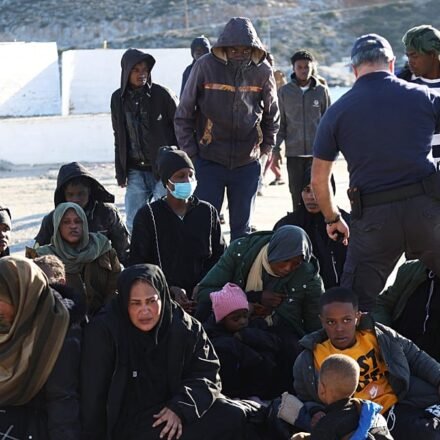
Greek coastguard figures reported on Saturday (28 November) showed that more than 1,100 people travelling from North Africa had been brought ashore or rescued from boats between Friday and Saturday afternoon. The operations involved Greek authorities and the European Union’s border agency, Frontex.
In the latest fatal incident, rescuers recovered two bodies and rescued 41 people from a rocky coastal area of Gavdos, a small island south of Crete. The two deceased people were reportedly found unconscious. Four survivors required medical treatment and were taken towards healthcare facilities on Crete.
The circumstances surrounding the deaths remain unclear. Local media reported that the migrants’ boat may have struck rocks while approaching the island, but authorities had not established the cause.
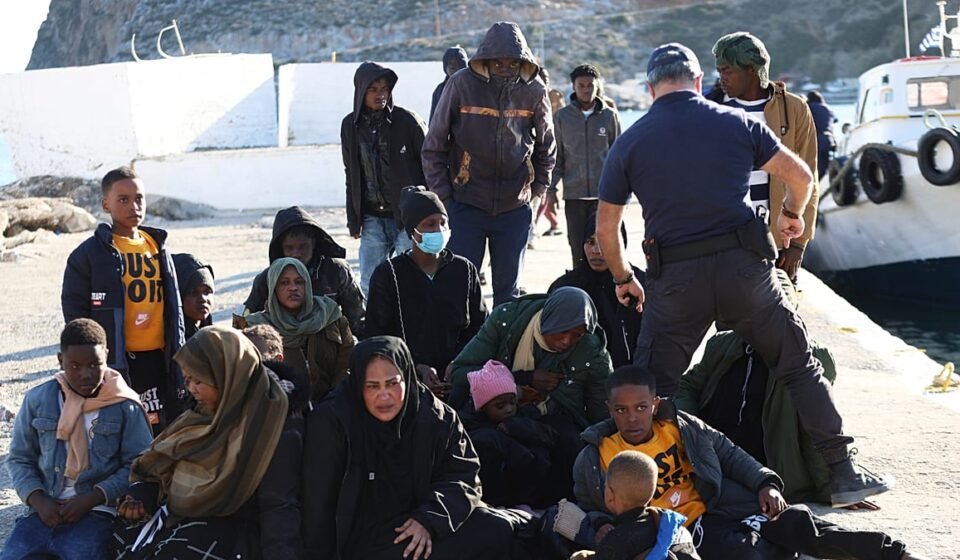
The scale of the response extended well beyond the incident at Gavdos. Separate coastguard operations brought hundreds of people to safety along Crete’s southern coast, including groups rescued near Kali Limenes and Ierapetra. In one operation, 102 migrants, including 16 women and five minors, were transferred to the port of Heraklion.
The latest arrivals reflect a broader shift in migration patterns towards Greece’s southern islands. The route from Libya to Crete and Gavdos has become increasingly important for people seeking to enter the European Union, particularly those travelling from Africa and South Asia. Unlike the shorter Aegean crossing from Türkiye, the journey from Libya involves a lengthy passage across open water, leaving passengers exposed to unpredictable weather, overcrowded boats and limited opportunities for emergency assistance.
Data from the International Organization for Migration’s (IOM) November 2026 quarterly report underline the scale of the shift. Crete registered 7,728 migrant arrivals in the third quarter of 2026, accounting for 55 per cent of all registrations in Greece during that period. The report also recorded 7,796 arrivals in Greece among people who had departed from Libya. Sudanese nationals accounted for 28 per cent of arrivals along the wider Eastern Mediterranean route, followed by Bangladeshis at 17 per cent and Afghans at 16 per cent.
The risks have grown alongside the movement of people. The IOM recorded at least 198 deaths and disappearances along the Eastern Mediterranean route between July and September, compared with 167 during the same period in 2025. This represented a 19 per cent increase despite a 13 per cent decline in recorded arrivals across the route. The figures suggest that fewer recorded arrivals have not translated into safer journeys, although incomplete reporting means they cannot establish the precise risk faced by individual migrants.
The latest incident also follows a series of deadly crossings earlier in November. At least 22 people died in separate incidents involving boats travelling towards southern Greece from North Africa. In one case, authorities recovered bodies from a migrant vessel south of Crete, while survivors were rescued by a passing cargo ship.
The repeated emergencies have raised questions about the capacity of rescue services to respond to growing numbers of boats arriving along Crete’s southern coastline. The long distance from departure points in Libya, combined with rough seas and strong winds, can make rescue operations difficult and delay assistance to vessels in distress. The concentration of arrivals also places pressure on local reception facilities and the authorities responsible for processing and accommodating survivors.
Greece has strengthened its border controls and adopted a tougher migration policy, including increased returns of rejected asylum seekers. It is also among five EU countries backing a proposal to establish a migrant return hub in Rwanda from next year. However, the latest arrivals demonstrate that restrictive border measures have not stopped people from attempting the dangerous crossing.
For the migrants who survive the journey, reaching the Greek islands is only the beginning of another uncertain process involving reception, asylum procedures and decisions about their future in Europe. For those who do not survive, the repeated tragedies highlight the human cost of a migration route whose dangers continue to outpace the region’s capacity to respond.
Sources:
- Reuters – Greece retrieves two dead migrants, rescues 41 near Crete (28 November 2026)
- Associated Press – More than 1,100 migrants reach the Greek islands of Crete and Gavdos in two days
- International Organization for Migration – Quarterly Regional Report: Mixed Migration Flows to Europe, July–September 2026
- eKathimerini – Two migrants dead, four injured in rescue operation in Gavdos
- eKathimerini – Over 900 people rescued south of Crete on Saturday
- The Associated Press – Earlier November migrant deaths off southern Greece