
















Netanyahu offers Eisenkot first turn in power-sharing bid
The Israeli prime minister proposes a rotating government as his rival races to build a coalition before a 6 December deadline, amid deep divisions over potential partners.
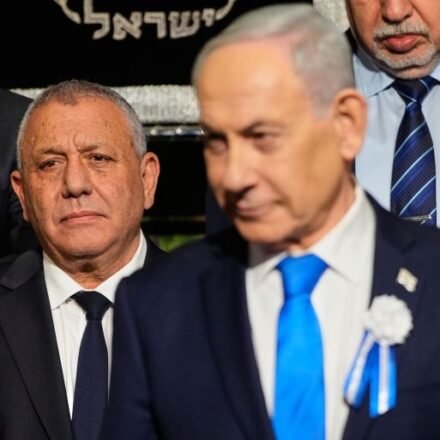
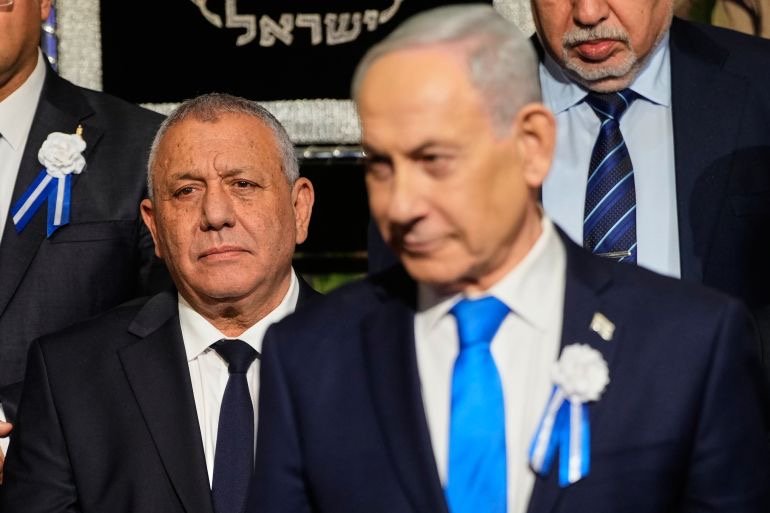
Israeli Prime Minister Benjamin Netanyahu has offered to let opposition leader Gadi Eisenkot serve first as prime minister in a proposed unity government, in a last-minute attempt to retain a place in power as rival coalition negotiations threaten to end his political dominance.
In a statement on Saturday, 28 November, Netanyahu said he was prepared to serve as alternate prime minister at the beginning of the proposed arrangement, setting aside his claim to lead a government as head of the largest parliamentary party. He called for immediate negotiations and presented the offer as necessary to address what he described as an existential security threat facing Israel.
The proposal comes as Eisenkot, leader of the centrist Yashar party, attempts to assemble a parliamentary majority before his mandate to form a government expires on 6 December. He has pledged to announce a new government by that deadline rather than seek an additional 14-day extension.
The offer marks a significant shift in Netanyahu’s negotiating position. His Likud party emerged as the largest individual party in the 27 October election, winning 27 seats, but its broader right-wing and religious alliance secured only 53 of the Knesset’s 120 seats. A government needs the support of at least 61 lawmakers to command a parliamentary majority.
Eisenkot’s political bloc faces a different but equally difficult arithmetic. His Yashar party won 21 seats, while his prospective partners include parties with substantially different political priorities. Agreements with the left-leaning Democrats and Avigdor Liberman’s right-wing Yisrael Beiteinu have brought the three parties to 36 seats, leaving them well short of a majority.
The central obstacle for Eisenkot is not simply securing enough seats but reconciling the competing demands of parties that disagree over the composition and direction of the next government.
Arab-led parties secured a combined 19 seats, including 11 for the Joint List and eight for the United Arab List (Ra’am). Their support could provide a route to a parliamentary majority, particularly if they back an Eisenkot-led government without formally joining the coalition. However, Yisrael Beiteinu leader Liberman has opposed relying on Arab-led parties, while other members of Eisenkot’s camp remain reluctant to enter an arrangement involving them.
The ultra-Orthodox parties, United Torah Judaism and Shas, offer another possible route. Together, they hold 13 seats, enough to bring Eisenkot’s existing 48-seat bloc to the 61 required for a majority. But negotiations over military conscription and religious exemptions remain politically sensitive, making such an arrangement difficult.
Netanyahu’s offer therefore presents Eisenkot with a complicated choice: negotiate a unity government that could preserve Netanyahu’s political influence, or pursue an alternative coalition that requires compromises with parties whose positions differ sharply on security, religion and relations with Israel’s Arab minority.
The proposal has also attracted scepticism from Netanyahu’s political opponents. Former prime minister Yair Lapid dismissed it as an attempt to undermine the opposition’s efforts to replace Netanyahu. Liberman had already warned that a rotation arrangement could be a political manoeuvre designed to delay coalition formation and push Israel towards another election. These are political assessments rather than established evidence of Netanyahu’s intentions.
There is also no indication that Eisenkot has accepted the offer. Reuters reported that his party had not immediately responded to a request for comment following Netanyahu’s announcement. The absence of a public agreement leaves the proposed arrangement uncertain, particularly as the two sides have struggled to reach common ground during negotiations.
The stakes extend beyond the question of who occupies the prime minister’s office. Eisenkot has demanded a state commission of inquiry into the failures surrounding Hamas’s 7 October 2023 attack, changes to the government’s composition and legislation requiring military or national service for all. These issues could become major points of disagreement in any unity arrangement.
If Eisenkot fails to form a government by 6 December, President Isaac Herzog can grant him an additional 14 days. If that also fails, the president may assign another lawmaker a 28-day mandate to attempt to form a government. Continued failure could eventually lead to another election, leaving Netanyahu in office as caretaker prime minister in the meantime.
Netanyahu’s willingness to take the second position reflects the pressure created by an election in which his alliance failed to secure a majority. But whether the offer can overcome divisions within both political camps remains uncertain. With coalition negotiations approaching a decisive deadline, Israel’s political future will depend less on the proposed rotation itself than on whether rival parties can agree on the policies and alliances needed to govern.
Sources:
- Reuters – Netanyahu makes long-shot unity appeal to rival Eisenkot
- Al Jazeera – Israel unity government talks stall: What happens now?
- The Times of Israel – Eisenkot vows to form government within eight days, accuses Likud of stalling coalition talks
- The Times of Israel – Netanyahu prepares to offer Eisenkot first turn in rotational government
- The Jerusalem Post – Netanyahu offers to serve as second prime minister in rotation with Eisenkot
- Israel’s Knesset – Official election results for the 26th Knesset
- Israel’s Central Elections Committee – Official calculation of Knesset seat allocation