
















Eisenkot to reverse Netanyahu policies, Israeli parliament takes office
The incoming Knesset’s opposition majority has begun advancing legislation targeting judicial changes, prime ministerial term limits and an official inquiry into the 7 October attacks, even as Gadi Eisenkot negotiates to form a government.
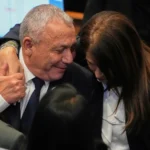
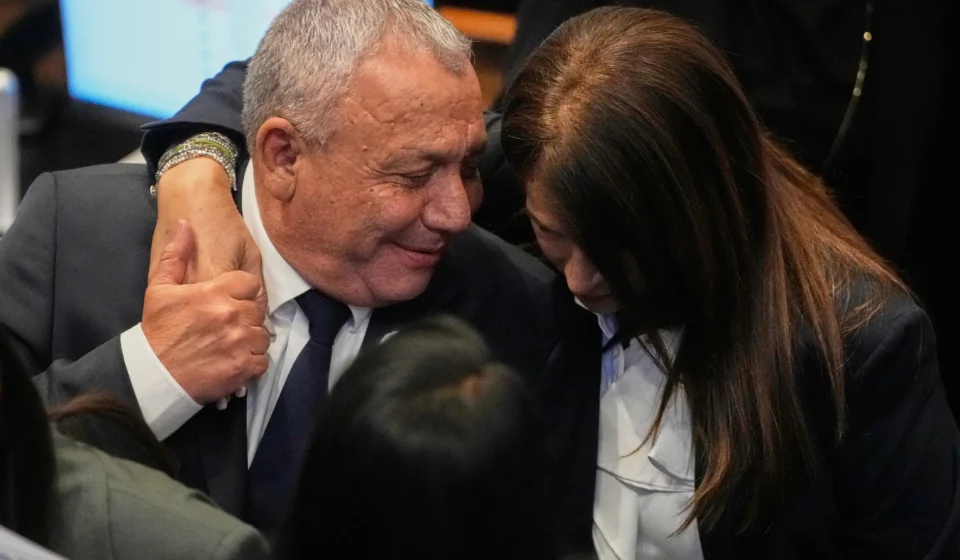
Gadi Eisenkot, the politician tasked with forming Israel’s next government, has pledged to reverse several major policies introduced by Benjamin Netanyahu’s outgoing administration, as the newly elected Knesset was sworn in on Tuesday, 10 November.
The former Israeli military chief now faces a six-week period to assemble a governing coalition that could end Netanyahu’s tenure as the country’s longest-serving prime minister. Although the coalition negotiations remain uncertain, Netanyahu’s opponents already command a parliamentary majority and have begun introducing legislation aimed at changing the country’s political and institutional direction.
According to the Associated Press (AP), Eisenkot’s bloc introduced bills seeking an official government-led inquiry into the Hamas-led attacks of 7 October 2023, limits on the prime minister’s tenure and the reversal of judicial changes enacted by Netanyahu’s outgoing government. The speed and extent to which these proposals can advance remain uncertain, but the new parliamentary arithmetic allows the opposition to act before a new cabinet is formed.
Eisenkot has presented his political approach as an effort to build a government that represents the wider population rather than particular political factions. Speaking ahead of the swearing-in ceremony, he said his bloc would work for all Israeli citizens, including those who did not vote for it.
The proposed legislation signals an attempt to address three major areas of political conflict: accountability for the 7 October attacks, the concentration of executive power and the relationship between the government and the judiciary.
An official inquiry into the October 2023 attacks would address questions about the security and political failures preceding the Hamas-led assault. The proposed term limits would seek to constrain the period an individual could serve as prime minister, while reversing judicial changes would reopen a dispute that generated extensive protests and political divisions during Netanyahu’s previous term.
These initiatives are not yet enacted policies. Their progress will depend on parliamentary procedures, political negotiations and the ability of the opposition parties to maintain a working majority.
Netanyahu has continued to dispute the political implications of the certified election results, despite his bloc falling short of a parliamentary majority. He has repeated allegations that Arab-led parties were involved in stealing the election, claims for which he has not provided substantiating evidence.
In his address to the new parliament, Netanyahu questioned whether Jewish opposition leaders should cooperate with Arab politicians, who represent a minority comprising approximately 20% of Israel’s population. He argued that such cooperation could make a future government dependent on groups he accused of opposing the existence of the Jewish state.
Eisenkot has not ruled out parliamentary cooperation with Arab-led parties, although he has attached conditions. These include accepting Israel’s identity as a Jewish state and declaring Hamas a terrorist organisation.
Eisenkot described Netanyahu’s parliamentary speech as divisive and driven by hatred. He said the remarks had strengthened his conviction that Netanyahu should no longer remain in office. He subsequently cancelled a planned meeting with Netanyahu’s Likud party, scheduled for Wednesday.
The disagreement highlights the importance of Arab-led parties in the new parliamentary balance. Their participation or external support could become significant in efforts to establish a government without Netanyahu, although the political conditions attached to any arrangement remain a major obstacle.
The opposition has also begun seeking control of the Knesset speakership, a position that carries considerable influence over the legislative agenda.
A majority of lawmakers submitted signatures calling for the removal of current speaker Amir Ohana, who is backed by Netanyahu’s Likud party. The move initiates the process towards a parliamentary vote on his replacement.
The opposition has nominated Matan Kahana, a senior member of Eisenkot’s Yashar party. A vote could take place as early as this week.
The speaker has an important role in determining which bills receive parliamentary consideration. Installing a candidate supported by Eisenkot’s bloc could therefore help the opposition advance its legislative priorities even before it forms a government.
The development also illustrates how parliamentary power can shift during a transition period. Control of the legislature’s agenda does not necessarily require control of the executive branch.
The new Knesset has created an unusual transitional arrangement. Netanyahu and his Cabinet remain in office as a caretaker administration, while newly elected lawmakers can introduce and consider legislation.
Meanwhile, Eisenkot is expected to hold discussions with party leaders to determine whether he can secure sufficient support for a governing coalition. If he fails, President Isaac Herzog is expected to give Netanyahu another opportunity to form a government.
Netanyahu’s caretaker status does not remove his authority over national security or the military. He also retains the ability to pursue appointments and potentially challenge or obstruct new legislation, although court-imposed restrictions apply to some of his powers.
The transition therefore creates two centres of political activity: an outgoing administration that retains executive authority and a new parliament in which Netanyahu’s opponents hold a majority.
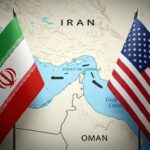
Netanyahu has argued that Jewish-led political parties should form a unity government in response to what he describes as the threat of an Iranian attack. During his parliamentary address, he renewed his appeal for political rivals to set aside their differences and called for efforts to topple the Iranian government.
The proposal places national security at the centre of the coalition debate. Eisenkot and other opposition figures must weigh the possibility of cooperation on security matters against their stated intention to reverse major elements of Netanyahu’s domestic agenda.
A government formed without Netanyahu could also leave the former prime minister more exposed to political scrutiny as he faces an ongoing corruption trial and questions about security failures preceding the 7 October attacks.
However, the outcome of those proceedings and any future inquiries remains undetermined.
The coming weeks will test whether Eisenkot can convert the opposition’s parliamentary majority into a stable governing coalition. His immediate challenge is not only to negotiate agreements among parties with different political priorities but also to establish whether Arab-led parties can play a role in sustaining a government.
The new Knesset has already demonstrated that legislative activity need not wait for coalition formation. Its first proposals indicate that the political transition could bring renewed scrutiny of the previous government’s judicial reforms, executive powers and handling of the 7 October attacks.
For Netanyahu, the period represents a loss of parliamentary control while he remains in charge of the executive. For Eisenkot, it is an opportunity to establish a new political direction, but the success of that effort will depend on coalition arithmetic and the ability to turn parliamentary support into a functioning government.
The immediate question is therefore twofold: whether Eisenkot can form a government within the six-week period and how much of his proposed legislative programme the new parliament can advance before that transition is complete.
Sources
- Associated Press — Israel’s new parliament is sworn in as Gadi Eisenkot pledges to reverse Netanyahu’s policies
- Associated Press — Israel’s president gives Eisenkot the first chance to form the next government
- Associated Press — Netanyahu’s party claims election was stolen as results show him losing majority
