

















Latin American banana producers seek fairer prices as El Niño threatens
Extreme weather is cutting production across major banana-growing countries, while farmers and industry groups argue that supermarket prices and trading practices fail to reflect the rising costs of climate adaptation and sustainable production.
Banana producers across Latin America are calling for higher and fairer payments as extreme weather linked to a developing super El Niño event threatens harvests, export earnings and the livelihoods of agricultural workers. Farmers and industry representatives warn that the combination of climate-related production losses and persistently low purchasing prices is placing the long-term sustainability of the sector under pressure.
According to a report by The Guardian published on 8 November, high winds in parts of Colombia and heavy rainfall in Peru and Ecuador are already affecting banana production. Farmers in the Dominican Republic are also preparing for drought conditions, with forecasts indicating warmer and drier weather than usual in some areas.
The Fairtrade Foundation, which monitors conditions among banana producers and workers, expects the current El Niño event to bring more severe weather impacts than the 2023–24 cycle. Dr Carley-Jane Stanton, its climate and environment lead, warned that stronger winds and heavier rainfall could intensify the difficulties facing producers.
The effects are already visible in Colombia’s Caribbean banana-producing region. Exports from Magdalena and La Guajira fell 32% in value to $122m between July and September 2026, according to the Association of Banana Growers of Magdalena and La Guajira, as reported by trade publication Fruitnet.
September was particularly difficult: shipments declined 42% year on year, while export earnings fell to approximately $40m from $70m.
The growers’ association said climate-related productivity losses, combined with currency-related pressures on export earnings, were undermining the industry’s economic sustainability. It called on international buyers to establish commercial conditions that reflect actual production costs and help secure the future of banana production.
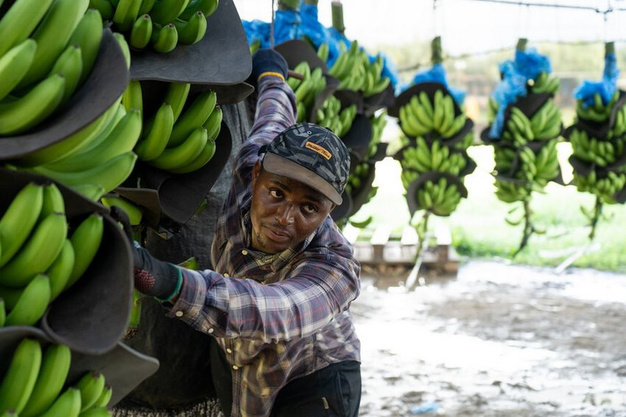
The experience of Colombian workers illustrates the human consequences. Ever Antonio Flores Muños, an employee of banana producer Agrosiete, told Fairtrade that temperatures had risen significantly over the past decade. He described losses associated with flooding and strong winds and warned that worsening conditions could put workers’ livelihoods and wages at risk.
The current concerns follow substantial production losses during the previous El Niño cycle. Fairtrade research found that productivity among its farmers and workers fell by 13% in the Dominican Republic, 22% in Ecuador and 6% in Peru compared with the preceding year.
The effects can be even more severe during particularly strong events. The 1983 El Niño, one of the strongest recorded, affected 15% of Ecuador’s planted banana area and contributed to a 36% reduction in exports.
The risks extend beyond immediate harvest losses. Higher temperatures, extreme rainfall and strong winds can damage plantations, disrupt transport and increase the likelihood of pests and diseases. Producers may need to invest in more resilient crops, improved drainage and other adaptation measures, but such investments require reliable income and access to finance.
Research cited by The Guardian suggests that suitable land for banana cultivation could shrink by an average of 61% across Latin America and the Caribbean by 2050 as climate conditions change. The estimate comes from research for the Inter-American Development Bank published in 2020.
The climate challenge is unfolding alongside a long-standing imbalance in the banana supply chain. Although production costs have risen, supermarket prices for bananas have remained broadly unchanged for almost four decades, according to the Guardian report. Fertiliser, fuel and labour expenses have increased, leaving producers with less room to absorb additional climate-related costs.
Research by the Ethical Trading Initiative found that the prices paid to suppliers in 2026 did not cover basic production costs for 66.7% of them.
This gap has implications for investment in climate resilience. When buyers pay less than the cost of sustainable production, farmers have limited resources to improve infrastructure, protect crops and maintain decent working conditions. The pressure can also be transferred to workers through lower wages and insecure employment.
Caoimhe Buckley, chief corporate affairs officer at major banana supplier Fyffes, argued that the long-term sustainability of the industry depends on purchasing practices that recognise the actual costs of production, including labour, environmental management, human rights responsibilities and climate adaptation.
Fairtrade is calling for legislation in the United Kingdom to address unfair trading practices, including low or delayed payments to farmers and contracts that transfer excessive commercial risk to producers.
The organisation argues that more predictable, equitable purchasing arrangements would help farmers invest in crop resilience and protect workers from extreme weather.
Some major UK retailers, including Sainsbury’s, the Co-operative and Waitrose, have taken voluntary steps by sourcing only Fairtrade bananas, which carry a guaranteed minimum price. Fairtrade says broader action is still needed across the market.
Eleanor Harrison, Fairtrade’s chief executive, said the UK’s banana supply depends on growers having sufficient resources to adapt to climate change and invest in their future. She argued that fair prices, climate resilience, and decent working conditions are interconnected.
The issue is therefore not confined to agricultural production. Retail purchasing decisions, supplier contracts and the distribution of risk across international supply chains all influence whether producers can withstand increasingly volatile weather.
The pressures facing Latin American producers expose a growing tension in the global food trade: consumers expect affordable products, but farmers must meet rising production costs and invest in adapting to a changing climate.
If supermarket prices and purchasing contracts do not reflect the costs of sustainable production, producers may struggle to finance the measures needed to protect future harvests. That could affect export volumes, employment and the reliability of supplies to major importing markets such as the United Kingdom.
The developing El Niño event adds urgency to the debate, but the underlying problem is structural. Climate adaptation requires investment, and investment depends partly on whether producers receive prices that cover the costs of maintaining viable farms and decent working conditions.
The future resilience of the banana industry will therefore depend not only on weather conditions but also on how international buyers, retailers and policymakers distribute the costs and risks of production across the supply chain.
Sources
- The Guardian — Banana producers in Latin America want better pay to cope with effects of climate crisis — Sarah Butler, 8 November 2026. The supplied text did not include the direct article URL.
- Fairtrade Foundation — Research and statements on El Niño impacts, banana production and fair trading practices, as cited in The Guardian.
- Ethical Trading Initiative — 2026 research on supplier prices and production costs, as cited in The Guardian.
- Inter-American Development Bank — 2020 research on climate change and the suitability of land for banana cultivation in Latin America and the Caribbean, as cited in The Guardian.
- Association of Banana Growers of Magdalena and La Guajira — Export figures reported by Fruitnet, as cited in The Guardian.
