


















El Niño could bring wetter winter to California, raising flood, coastal risks
A potentially strong El Niño is prompting preparations across California, where coastal erosion, wildfire-damaged hillsides and vulnerable agricultural areas could face renewed pressure from heavy rain and powerful surf.
California is preparing for the possible return of a strong El Niño, a climate pattern that can increase the likelihood of a wetter winter across parts of the state. From coastal erosion and flood-prone agricultural land to communities recovering from wildfires, officials and researchers are assessing the risks ahead of the coming storm season.
In a special report published on 17 October, US broadcaster ABC7 Los Angeles examined how the developing climate pattern could affect California’s coastline, water supplies, agriculture and marine ecosystems. Experts cited in the report cautioned that El Niño does not guarantee a particular outcome: the location, frequency and intensity of storms will determine how severe the impacts become.
California also faces conditions that complicate preparations, including rising sea levels, development in flood-prone areas and the legacy of drought. More rainfall could replenish water supplies, but intense storms could overwhelm infrastructure and cause significant damage.
El Niño develops when ocean temperatures in the equatorial Pacific become unusually warm and associated atmospheric circulation patterns change. Trade winds that typically push warm surface water westwards weaken or sometimes reverse, allowing more warm water to remain near the Americas.
These changes can influence the Pacific jet stream, which helps steer storms across the continent. During El Niño, the storm track often shifts southwards, increasing the likelihood that storms will reach California rather than primarily affecting the Pacific Northwest.
The pattern is associated with some of California’s most damaging winter weather events. However, the effects vary between events, and the presence of El Niño alone cannot determine whether a particular community will experience flooding, drought relief or destructive coastal storms.
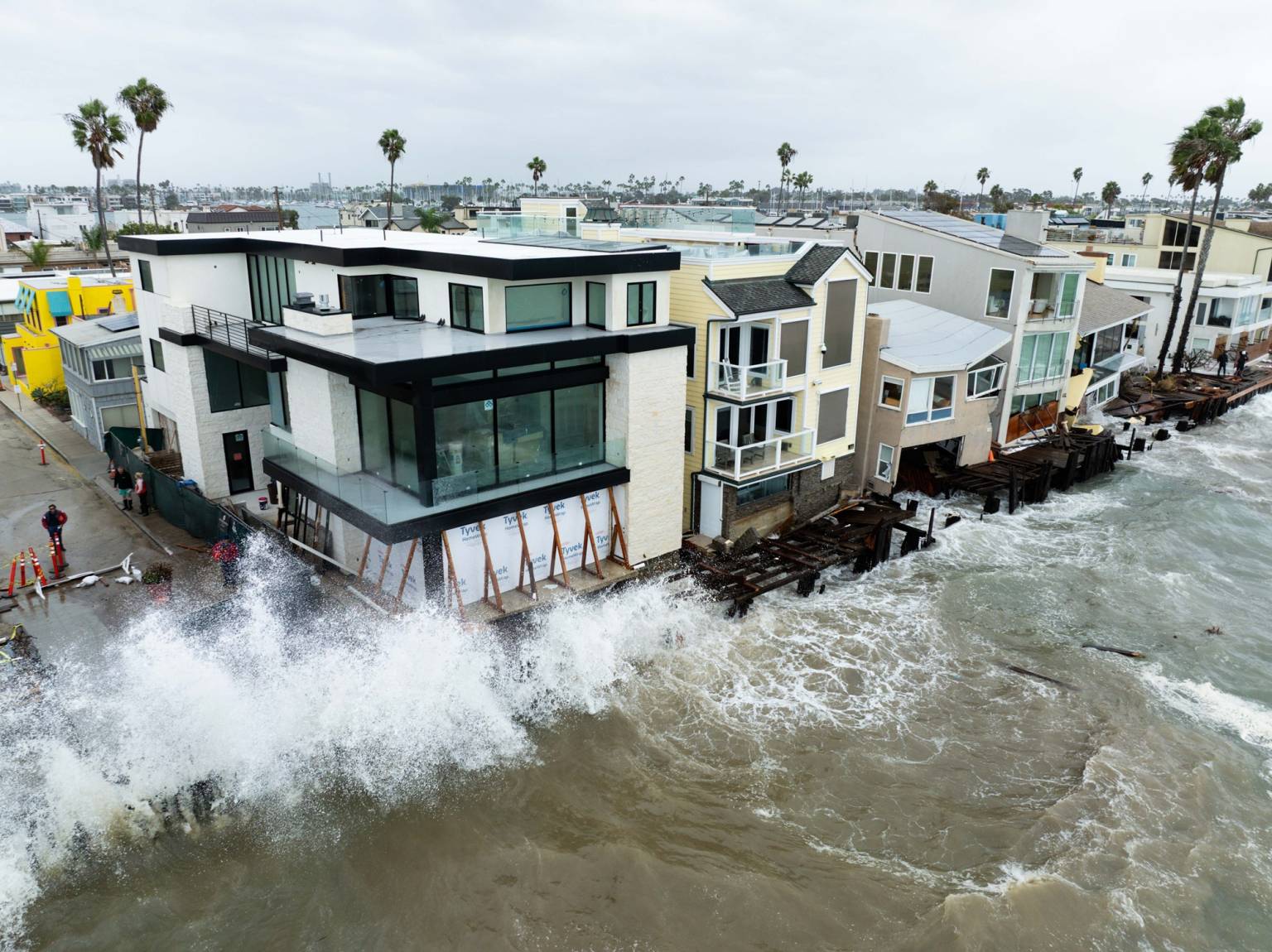
Along Southern California’s coastline, powerful surf and elevated tides are adding pressure to beaches, homes and public infrastructure.
The ABC7 report describes damage along Orange County’s coastline, where waves have affected residential properties and reduced access to popular beaches. At a well-known surf location in Newport Beach, high tides have exposed infrastructure that had remained buried for decades.
Brett Sanders, a University of California, Irvine professor cited in the report, linked long-term beach vulnerability partly to reduced sediment reaching Southern California’s coastline. Elevated tides and El Niño-related surf can intensify the effects of this underlying sand loss.
Crews are responding with temporary protective measures, including berm construction, boulder placement and beach sand replenishment. Officials are also preparing for the possibility of higher tides later in the winter.
The broader concern is that coastal communities already experiencing erosion may have less capacity to absorb additional wave damage during a period of intense winter storms.
The prospect of heavy rainfall is particularly concerning in areas affected by recent wildfires. Following the Eaton Fire, crews in Los Angeles County have been removing sediment from Devils Gate Dam and Reservoir as Altadena continues its recovery.
According to the report, the reservoir can hold up to 600 million gallons of water. Work at the site includes removing 20,000 cubic yards of sediment, as part of a wider county effort to clear 1.3 million cubic yards from reservoirs.
Fire-damaged landscapes can be more vulnerable to erosion and debris flows because the loss of vegetation reduces the ground’s natural protection. Heavy rainfall can carry soil, rocks and other material into drainage systems and reservoirs, increasing pressure on infrastructure and creating hazards for nearby communities.
Public works officials are urging residents to clear drains, prepare sandbags and consider whether their insurance coverage is adequate for potential winter storms.
These preparations reflect a central challenge for California: the same rainfall that replenishes reservoirs can become dangerous when it arrives too quickly or falls over recently burned terrain.
California’s Central Valley is another area watching the developing El Niño pattern closely. Flooding in the Tulare Lake Basin in March 2023 affected more than 100,000 acres, according to the ABC7 report, causing substantial agricultural losses and exposing weaknesses in ageing water infrastructure.
Since then, efforts have focused on expanding groundwater recharge capacity, including the development of additional recharge basins and on-farm projects designed to direct surplus water underground.
Early findings from an ongoing Fresno State study suggest that pistachio orchards may withstand weeks of flooding. However, the report notes that some levees damaged in 2023 have not yet been repaired.
Farmers and local officials say preparedness has improved since the previous major flooding episode, but heavy rainfall could still threaten crops, infrastructure and agricultural operations.
The situation illustrates the difficulty of managing water in a region that needs reliable supplies during dry periods but can suffer substantial losses when rainfall exceeds the capacity of rivers, canals and flood-control systems.
California’s water storage levels are slightly above the historical average heading into the potentially strong El Niño season, according to the report. Some Southern California reservoirs are near capacity, while many Northern California reservoirs are at normal levels.
State climatologist Michael Anderson emphasised the importance of forecasting, timely decisions and monitoring the Sierra Nevada snowpack. These factors help water managers balance public safety with the need to capture water for future use.
Groundwater recharge is also receiving greater attention. Researchers at Stanford University’s Doerr School of Sustainability have mapped underground aquifers that could store surplus stormwater, helping preserve supplies for drier periods.
California has invested billions of dollars in aquifer recharge projects. A wet winter could provide an opportunity to replenish underground reserves, but the benefits would depend on where and how quickly the rain falls, the availability of capture infrastructure and the ability to move water safely.
Water managers must therefore balance the opportunity to increase storage against the risk that intense storms will overwhelm existing systems.
El Niño may also influence California’s marine ecosystems by changing water temperatures, the distribution of prey and the movement of marine species.
Researchers at Stanford’s Hopkins Marine Station are tracking great white sharks to investigate how changing ocean conditions affect their migration. The ABC7 report also describes increased sightings of juvenile great white sharks in Southern California as warmer water from Baja California moves north.
Changes in prey distribution could bring whales closer to shore, potentially increasing their exposure to shipping traffic and fishing gear.
The report also notes two olive ridley sea turtle nests along the Southern California coast, describing them as the first documented sea turtle nests on the US West Coast. Scientists cited in the report suggest that warming ocean conditions may be contributing to the northward movement of the species.
These observations highlight how changing ocean conditions can produce different effects across marine ecosystems. Continued monitoring will be necessary to distinguish short-term variations from longer-term changes in species distribution.
California’s preparations for El Niño reflect a difficult balance between water security and disaster risk. Additional rainfall could replenish reservoirs and aquifers after dry periods, but severe storms could also intensify coastal erosion, trigger debris flows, damage crops and strain ageing infrastructure.
The state’s experience during the major storms and floods of 2023 provides lessons for water management and emergency planning. Yet improved preparation cannot remove every risk, particularly where development, damaged landscapes and coastal exposure increase vulnerability.
For policymakers, the immediate priority is to ensure that forecasting, drainage maintenance, reservoir management and emergency preparedness keep pace with changing conditions.
El Niño is a climate signal, not a precise forecast of local disasters. The extent of California’s winter impacts will depend on how the pattern develops and how storms unfold over the coming months.
Source
- ABC7 Los Angeles — “El Niño Effect: How climate pattern could reshape California’s winter”, published 17 October 2026.
Editorial note: This article is based on the supplied ABC7 report. The current El Niño forecast, individual scientific findings and reported infrastructure figures have not been independently verified for this draft.
