
















Thanksgiving storm leaves nearly 1mn US customers
Powerful winds, heavy rain and coastal flooding batter the eastern United States, forcing the historic postponement of New York’s Macy’s parade and disrupting one of the country’s busiest travel periods.
A powerful coastal storm swept across the eastern United States on Thursday, 26 November, leaving more than 900,000 utility customers without electricity, disrupting air travel and forcing organisers to postpone New York’s iconic Macy’s Thanksgiving Day Parade for the first time because of severe weather.
The storm brought wind gusts of up to 70 miles per hour (112 kilometres per hour), heavy rainfall and coastal flooding across several states, damaging power infrastructure and making road and air travel hazardous during one of America’s busiest holiday periods.
According to Reuters, 908,000 utility customers were still without electricity at 9.56pm Eastern Time on Thursday, down from a peak of 961,000 earlier in the evening. Pennsylvania recorded more than 207,000 outages, followed by New Jersey with over 179,000, Maryland with 139,000 and Virginia with 106,000.
The disruption extended beyond the electricity network. Flight-tracking service FlightAware recorded 454 cancellations involving US flights and 2,411 delays on Thursday, with major airports serving Washington and New York among the worst affected.
The scale of the disruption highlighted the vulnerability of transport and electricity infrastructure when severe weather coincides with concentrated holiday travel. Thanksgiving traditionally brings millions of Americans onto roads and into airports as families travel to celebrate together.
New York faced a particularly unusual disruption as Macy’s postponed its 100th Thanksgiving Day Parade until Saturday, 28 November, at 8.30am local time.
The decision, taken in consultation with city authorities and emergency agencies, was prompted by forecasts of dangerous winds that could make the parade’s enormous character balloons difficult to control.
The postponement marks the first time the parade has been rescheduled because of severe weather. It was suspended from 1942 to 1944 during the Second World War because materials, including helium and rubber, were needed for the war effort.
The historical significance of this year’s event made the decision particularly disappointing for organisers and spectators. The centennial edition was expected to feature an expanded collection of balloons, performances and marching bands, attracting millions of viewers along the route and through television broadcasts.
Will Coss, the parade’s executive producer, said organisers were disappointed but maintained that public safety took precedence over the celebrations.
The decision also reflected lessons from previous incidents. In 1997, strong winds caused the giant Cat in the Hat balloon to strike a lamppost, injuring two spectators. Since then, New York has maintained strict restrictions on balloon operations during adverse weather.
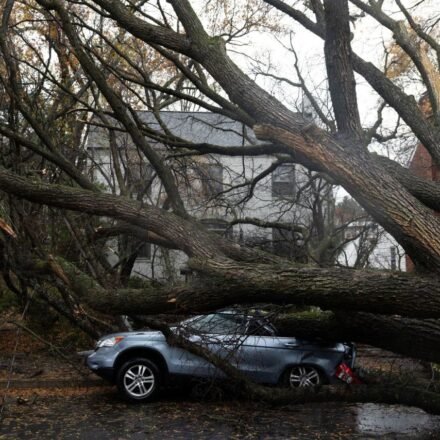
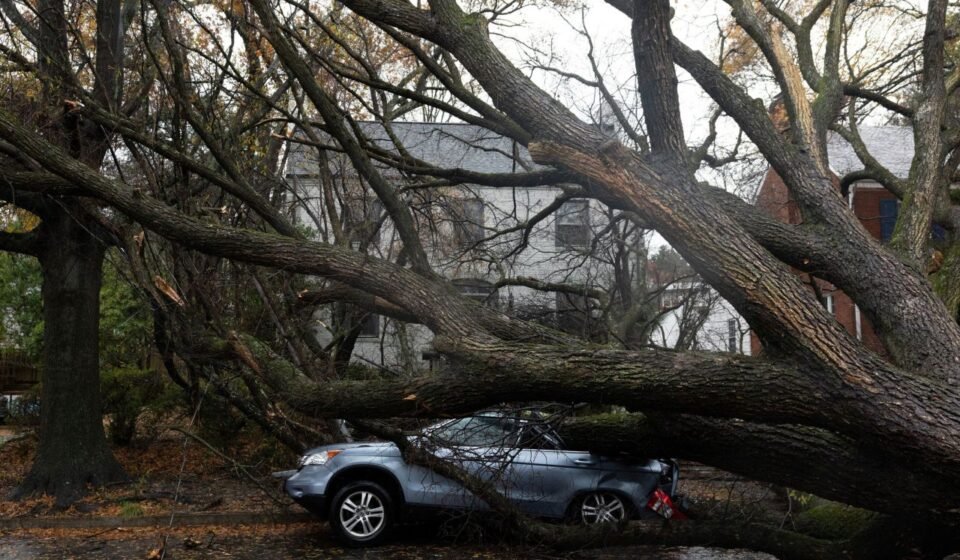
The storm’s effects extended well beyond Manhattan. Heavy rain and strong onshore winds contributed to coastal flooding, while saturated ground and falling trees damaged electricity lines and affected homes and roads.
The National Weather Service warned that the combination of strong onshore winds and unusually high astronomical tides, known as king tides, was increasing flooding risks in low-lying coastal communities.
New York City Emergency Management had forecast wind gusts of 45 to 55mph and one to two inches of rainfall ahead of the storm. By Thursday afternoon, winds at LaGuardia Airport had reached 56mph, according to city authorities.
In Maryland, the disruption raised concerns about the reliability of essential public utilities. WSSC Water, which serves Montgomery and Prince George’s counties, issued an essential-water-use-only request affecting approximately 1.9 million customers after intermittent power disruptions affected its Potomac and Patuxent water filtration plants.
Residents were asked to restrict water consumption to essential needs to preserve supplies for system storage and firefighting. However, the authority clarified that drinking water remained safe and did not require boiling. Both treatment plants were subsequently reported to have power and were producing water to meet demand.
New Jersey also declared a state of emergency ahead of the storm. Governor Mikie Sherrill urged residents to avoid unnecessary travel, keep electronic devices charged and report electricity outages directly to utility providers. Several transport routes and bridges faced restrictions because of strong winds.
The disruption was not limited to the eastern seaboard. The National Oceanic and Atmospheric Administration had warned before Thanksgiving that separate weather systems could bring heavy rain, mountain snow and coastal flooding to parts of the western United States.
California experienced powerful ocean swells and high tides, prompting warnings and evacuations in vulnerable coastal communities. The simultaneous weather threats on opposite sides of the country added to the holiday travel challenges.
The immediate concern for authorities remained restoring electricity, maintaining essential services and preventing further damage as the coastal system moved northwards. The National Weather Service expected the strongest winds and heaviest rainfall to ease across parts of the Mid-Atlantic overnight, although gusty conditions and coastal flooding risks were forecast to persist in some areas on Friday.
The storm also demonstrated how extreme weather can disrupt more than individual celebrations. Electricity networks, water-treatment facilities, transport systems and coastal infrastructure are closely interconnected, meaning damage to one part of the system can quickly affect millions of people. With Thanksgiving marking the beginning of the peak winter holiday travel period, the disruption offers another reminder of the economic and social costs of severe weather during periods of heavy public movement.
Sources: Reuters – Thanksgiving storm knocks out power, disrupts flights on US East Coast; Associated Press – Heavy rain, wind and flooding hit much of the US on Thanksgiving; National Oceanic and Atmospheric Administration – Thanksgiving week weather: Potent coastal storms, rain and snow to impact travel; National Weather Service – Thanksgiving coastal storm briefing; New York City Emergency Management – Thanksgiving weather alert; WSSC Water – Essential water use only request affecting 1.9 million customers; ABC News – Macy’s Thanksgiving Day Parade postponed due to weather.