










Trump’s Board of Peace warns of humanitarian emergency in Gaza
The organisation has criticised Israel’s insufficient shelter and infrastructure assistance as heavy rainfall floods tens of thousands of makeshift homes, exposing displaced Palestinians to cold, disease and unsafe conditions.
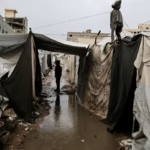
Flooding across the Gaza Strip has prompted an unusually direct warning from US President Donald Trump’s Board of Peace, which says the worsening conditions have created an “immediate humanitarian emergency”. The organisation has criticised Israel for failing to allow sufficient humanitarian assistance and essential materials into the territory as displaced Palestinians face another winter in inadequate shelters.
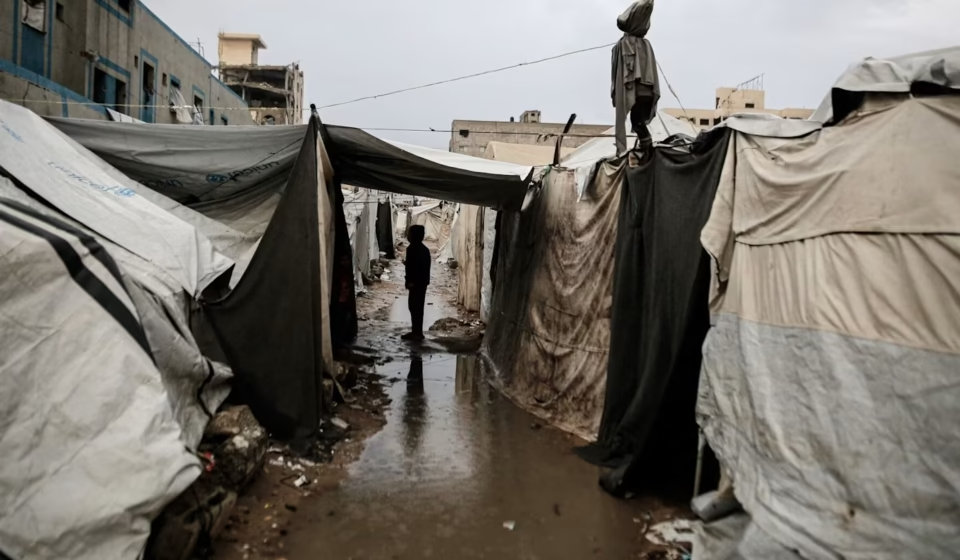
In a statement posted on Monday, the board said several days of heavy rainfall had flooded tens of thousands of tents and makeshift shelters, leaving families exposed to cold and unsafe conditions. It said it had warned for months that inadequate shelter, drainage and sanitation infrastructure would create precisely this kind of crisis.
The Financial Times, reporting from Washington, said the board had specifically urged Israel to permit the entry of materials for temporary accommodation, water and sanitation infrastructure, waste management, drainage and sewage removal. It described Israel’s response to the humanitarian needs as insufficient.
The scale of the damage highlights the vulnerability of a population already heavily dependent on temporary accommodation. According to Save the Children, approximately 350,000 Palestinians, most of them children, had been living in tents affected by flooding. The organisation also warned that more than 2,000 damaged buildings were at risk of collapse amid continued rainfall and strong winds.
Save the Children said children were being exposed to hypothermia and waterborne diseases. The organisation described the situation as a man-made disaster, linking the humanitarian consequences to the conditions in which displaced families have been forced to live.
The United Nations estimates that around 1.4 million people in Gaza, equivalent to approximately 65% of the population, live in tents or makeshift shelters. The arrival of winter increases the risks for families without adequate protection from rain, wind and falling temperatures.
Seasonal flooding and disease have repeatedly affected Gaza amid prolonged restrictions and damage to essential infrastructure. The current crisis therefore extends beyond the immediate impact of rainfall: it reflects the difficulty of maintaining safe living conditions when housing, drainage, sanitation and public services remain severely disrupted.
The Board of Peace’s statement carries particular political significance because Trump chairs the organisation and has repeatedly described himself as the most pro-Israel US president.
Its main stated purpose is to oversee Gaza’s redevelopment following Israel’s military offensive, launched in response to Hamas’s 7 October 2023 attack. However, the organisation has faced criticism over its perceived alignment with Israeli interests and its limited progress in addressing the territory’s humanitarian and reconstruction needs.
In its latest statement, the board said it had pressed both Israel and Hamas to fulfil their commitments under Trump’s Gaza peace plan. It called on the Israeli government to authorise essential materials for shelter, water, sanitation and waste management, while urging Hamas to disarm and relinquish its governing authority.
The board’s intervention indicates that the humanitarian consequences of delayed implementation remain a concern even within an organisation established under Trump’s leadership. Its criticism does not, however, establish that the Israeli government will change its restrictions or that additional aid will enter Gaza.
Trump received international recognition for helping negotiate a Gaza agreement last year that secured the release of all remaining Israeli hostages held by Hamas following the October 2023 attack. The agreement significantly reduced the scale of fighting after extensive Israeli bombardment.
However, several major elements of the proposed settlement remain unimplemented. These include the establishment of an international peacekeeping force, the creation of a new governing authority in Gaza, Hamas’s disarmament, the withdrawal of Israeli forces and the reconstruction of the territory.
Israel controls approximately 60% of the enclave, while Hamas retains control of the remainder, where nearly all of Gaza’s population resides, according to the Financial Times report.
The gap between the agreement’s stated objectives and its implementation has left the Board of Peace facing questions about its ability to oversee recovery. The latest flooding has brought those concerns into sharper focus by showing how unresolved infrastructure and shelter needs translate into immediate risks for civilians.
The board has also faced scrutiny over its financial arrangements. The Financial Times reported in May that a fund established by the World Bank for Gaza had received no donor money, despite initial pledges of $17 billion for relief efforts.
In June, Democratic Senator Jeanne Shaheen, the top Democrat on the Senate Foreign Relations Committee, raised concerns about the board’s accountability, standards and legal standing in a letter to US Secretary of State Marco Rubio.
Shaheen said the State Department had been unable to answer basic questions during congressional briefings about the organisation’s management, staffing and the potential use of funds. She also questioned whether money collected for the board could be used to compensate Trump during or after his presidency.
These concerns add an institutional dimension to the humanitarian crisis. Even where funding is pledged, effective recovery requires transparent management, functioning delivery mechanisms and access for humanitarian organisations and reconstruction materials.
The flooding demonstrates how the absence of adequate shelter and basic infrastructure can intensify humanitarian risks even when large-scale fighting has diminished. For families living in tents, the immediate priorities are protection from the weather, safe accommodation, clean water, sanitation and access to medical care.
The Board of Peace has now publicly acknowledged the urgency of those needs and criticised the insufficient response. But its ability to influence conditions on the ground will depend on whether it can secure practical commitments from Israel, Hamas and international donors.
Gaza’s recovery also requires progress on the wider political arrangements envisaged in the peace plan. Without agreement on governance, security, access and reconstruction, emergency assistance alone cannot provide a durable solution to the territory’s humanitarian crisis.
The immediate test is whether the board’s warning leads to concrete action before winter conditions deteriorate further. For displaced Palestinians, the difference between diplomatic statements and effective relief will be measured in access to safe shelter, functioning sanitation and protection from the elements.
Sources
- Financial Times — Trump’s Board of Peace warns of ‘immediate humanitarian emergency’ in Gaza
- Save the Children — Humanitarian assessment of flooding, damaged buildings and risks to children in Gaza, as cited by the Financial Times.
- United Nations — Estimate of the number of people living in tents and makeshift shelters in Gaza, as cited by the Financial Times.
