












FBI investigates alleged Chinese intelligence effort involving Nvidia chief
Trump says the FBI is examining the case but expresses confidence in the Nvidia CEO, as the allegations raise questions about technology security, US–China relations and access to advanced artificial intelligence chips.
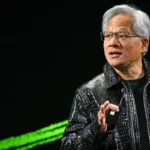
The FBI is investigating reports that Nvidia chief executive Jensen Huang had an affair with a woman allegedly linked to Chinese intelligence, US President Donald Trump said on Monday. The case has raised concerns about whether Beijing may have sought access to sensitive information from one of the world’s most influential semiconductor companies.
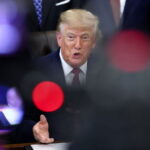
Speaking at a White House briefing, Trump said he understood that the FBI was examining the matter but did not believe Huang had reason to worry. He also said he had spoken directly with the executive to check on his wellbeing. According to the Associated Press (AP), Trump said Huang had told him he had no idea that the woman in question was allegedly a spy.
The comments came a day after Nvidia announced an independent investigation into reports that Huang had been the “target of a foreign intelligence effort”. The company said its inquiry would examine the allegations, while Huang publicly pledged to cooperate.
Huang has acknowledged having an affair and issued an apology to his wife and Nvidia in an open letter published on the company’s website. He did not identify the woman.
The New York Times reported that US intelligence had determined that the woman was gathering information for Beijing. It identified her as Alice Huang, a former executive of Singapore-based data-centre company Megaspeed International. The company had previously faced allegations that it was involved in the illicit shipment of advanced Nvidia chips to China.
These claims have not been independently established in the public record. The FBI investigation and Nvidia’s internal inquiry are expected to examine whether the reported relationship involved an intelligence operation and whether any confidential information was obtained.
In his statement, Huang said: “I support the investigation and will cooperate fully. I love our country and our company. I am committed to protecting NVIDIA and supporting America’s national security.”
The allegations have attracted congressional attention. Senate Intelligence Committee member Mark Warner and House Democratic Leader Hakeem Jeffries said they were interested in examining the matter further.
Jeffries said the Nvidia issue had been raised during a closed-door session with the CIA director and the director of national intelligence, although the meeting had primarily concerned Iran. He called for a full briefing to establish what had happened and assess the possible implications for US national security.
FBI counterintelligence investigations commonly examine attempts by foreign governments to obtain sensitive technology, influence public opinion or cultivate relationships with influential political and business figures. Such inquiries can take years and do not necessarily result in criminal charges.
The central questions are whether Huang knew of any alleged espionage activity and whether confidential or strategically sensitive information was compromised. George Chen, a partner at Washington-based consultancy The Asia Group, told AP that those questions require evidence rather than speculation.
Beijing has denied involvement in an attempt to recruit or compromise Huang. Chinese Foreign Ministry spokesperson Guo Jiakun described the allegations as unsubstantiated and dismissed them as smears against China.
Chinese state media have also questioned the timing and implications of the reports. The state-owned Global Times suggested that allegations of this kind emerge when relations between China and the United States begin to improve.
The dispute is unfolding ahead of Trump’s planned meeting with Chinese President Xi Jinping at the Asia-Pacific Economic Cooperation summit in Shenzhen next week. Asked whether he would raise the matter with Xi, Trump said he was unsure, adding that he knew Huang well and considered him an honourable person.
The timing creates a diplomatic complication for Washington as it manages technology competition and broader relations with Beijing. However, there is no public evidence in the AP report establishing that the alleged intelligence effort was directed or organised by China’s government.
The case carries significance because Nvidia supplies specialised processors used by many of the world’s leading artificial intelligence developers. Its chips are central to the infrastructure supporting advanced AI models, data centres and large-scale computing.
Huang has also played an influential role in US technology policy. He has argued for a measured approach to AI regulation, saying existing laws could address some security concerns and that companies should take responsibility for the systems they develop.
He has also lobbied Washington to ease restrictions on Nvidia chip sales to China. Trump approved sales of the company’s H200 processors to China this year, although it remains unclear whether Beijing will allow domestic companies to purchase them in substantial quantities.
The H200 is not Nvidia’s most advanced processor, but it remains a powerful chip. Earlier, Huang had also advocated permission to sell the less advanced H20 model, which was designed to comply with US export restrictions.
In an interview with AP in June, Huang said national security should remain the principal concern in technology policy, while arguing that export controls should be based on clearly identified risks.
The allegations could therefore intensify scrutiny of the relationship between semiconductor companies, government policy and national security. They may also complicate the debate over how much access Chinese businesses should have to advanced US-designed computing technology.
Nvidia shares fell by more than 4% during Monday’s trading session. The stock had lost approximately 11% of its value since the previous Wednesday, according to AP.
The financial reaction reflects investor sensitivity to potential regulatory, geopolitical and reputational risks surrounding the company. However, the share-price decline alone does not establish that the allegations have caused a lasting change in Nvidia’s business outlook.
Attention has also turned to Megaspeed International, the Singapore-based data-centre company previously associated with Alice Huang. The New York Times reported that its website prominently advertised a partnership with Nvidia. The company and Singapore’s Ministry of Home Affairs had not immediately responded to AP requests for comment.
For now, the case remains an investigation rather than an established finding of espionage or a breach of corporate security. Its significance will depend on whether investigators establish that sensitive information was accessed, whether Huang was aware of any intelligence activity and whether Nvidia’s technology or commercial relationships were compromised.
The episode highlights a broader vulnerability facing companies at the centre of strategic technology competition: relationships involving senior executives can become matters of national security when access to advanced technology, commercial intelligence and geopolitical interests intersect.
Sources
