

















Nvidia’s Huang says AI will create manufacturing jobs, unveils major Texas expansion
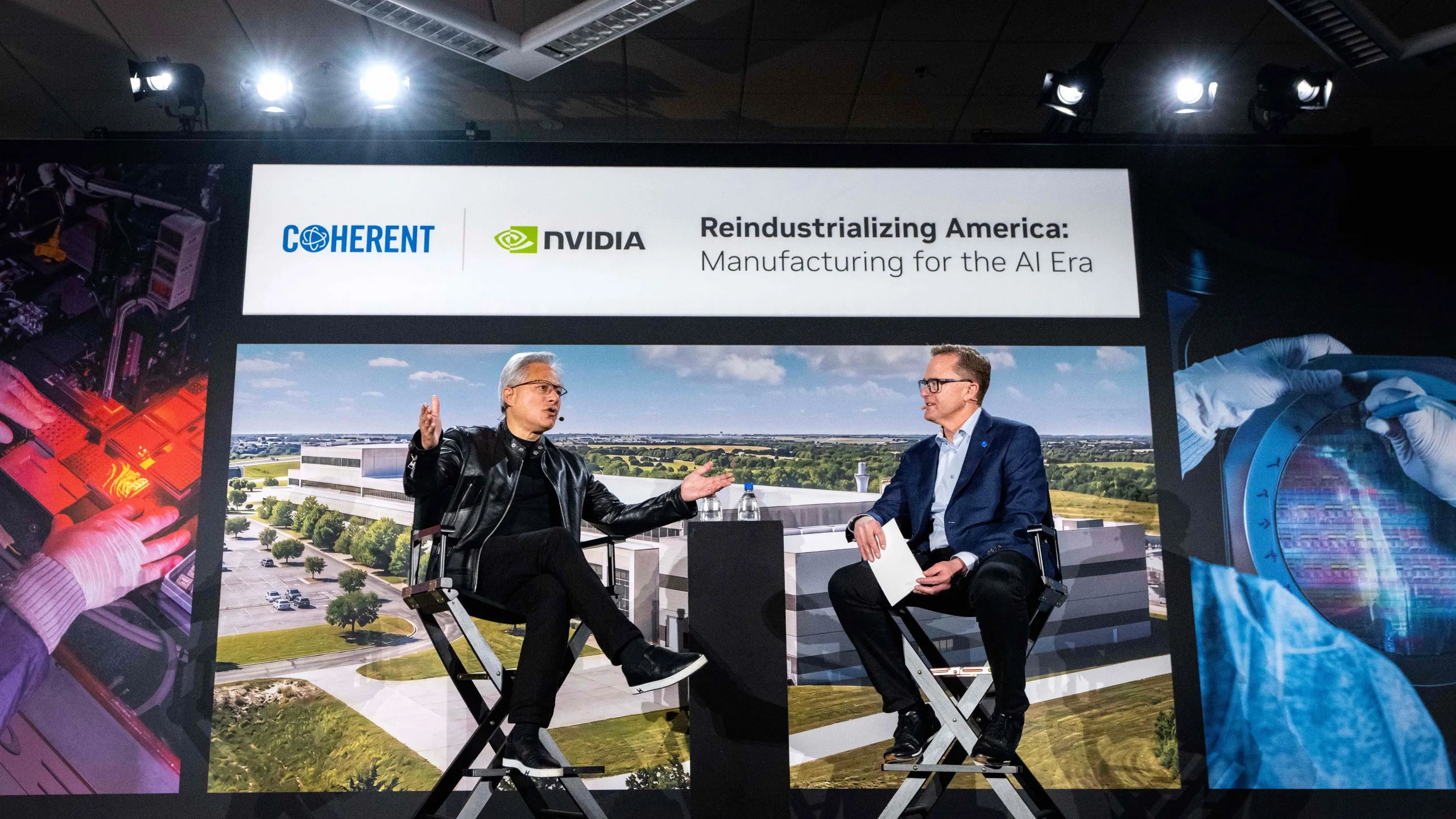
TLE DESK: Nvidia chief executive Jensen Huang has said artificial intelligence will create new manufacturing jobs rather than replace workers, as the company unveiled a major expansion of its AI infrastructure through a $2 billion partnership with Coherent in Texas.
Speaking at a groundbreaking ceremony in Sherman, Texas, Huang described AI-powered facilities as the foundation of a new industrial era.
“AI factories are the infrastructure of the new industrial revolution,” Huang said.
The project centres on expanding Coherent’s manufacturing facility, which will produce advanced materials used in lasers that enable Nvidia’s AI chips to communicate with one another at high speed. The technology is designed to improve computing power, efficiency and performance while reducing energy consumption.
The expansion represents a key test of Huang’s argument that AI will generate employment opportunities even as the technology increasingly automates tasks traditionally performed by humans.
Coherent CEO Jim Anderson said the facility’s growth is being driven by soaring demand for AI infrastructure.
“The tremendous AI demand has given us the opportunity to expand capacity even further than originally planned,” Anderson said.
According to the company, the project is expected to create around 1,000 jobs, including approximately 550 positions in advanced manufacturing, engineering and technical fields. The factory’s floor space will double, while production capacity is expected to quadruple.
The facility will manufacture Indium Phosphide, a critical material used in optical communication systems that allow AI chips to operate together as a single integrated system. Nvidia says the technology could cut power consumption by up to 50 percent while significantly increasing processing speeds.
The investment comes as AI spending accelerates across the technology sector. Economists Jessica Wachter and Jonathan Wachter recently estimated that the five largest US technology companies invested about $380 billion in AI-related infrastructure last year, with that figure potentially doubling this year.
They suggested AI’s contribution to the US economy could grow substantially over the coming years, rising from around 3 percent of gross domestic product to as much as 39 percent under some projections.
The Texas facility has also received support from both Democratic and Republican administrations. The project secured $33 million under the CHIPS and Science Act during former President Joe Biden’s administration, followed by an additional $17 million grant under President Donald Trump.
Trump has repeatedly praised Huang and highlighted AI as a critical industry for maintaining US technological leadership.
“It’s an amazing industry,” Trump said recently. “It’s bigger than any industry anyone’s ever seen.”
Nvidia, now one of the world’s most valuable companies, is increasingly expanding beyond chip production to provide complete AI systems. Company executives say the strategy includes strengthening domestic supply chains, with chip manufacturing concentrated in Arizona and system assembly operations growing in Texas.
Huang has argued that these investments will help bring more advanced manufacturing back to the United States while supporting the next phase of AI-driven economic growth.