

















Asian stocks sink as oil surges on US-Iran deadlock
TLE DESK: Most Asian shares fell in morning trade on Monday, extending recent global market losses, as the impasse in the Middle East pushed oil prices more than two per cent higher.
Washington and Tehran agreed to a truce in April, but negotiations to end the conflict have stalled and sporadic attacks in the region have continued.
US President Donald Trump issued a fresh warning to Iran on Sunday, saying it must move quickly towards a peace deal or “there won’t be anything left of them”.
The war has caused an effective blockade of the Strait of Hormuz, through which around 20 per cent of global oil exports normally pass.
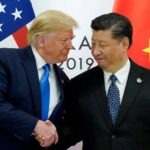
The strait “remains meaningfully closed – now approaching eleven weeks – after the Trump-Xi summit in Beijing concluded without a breakthrough on reopening the waterway”, said MUFG’s Michael Wan on Monday.
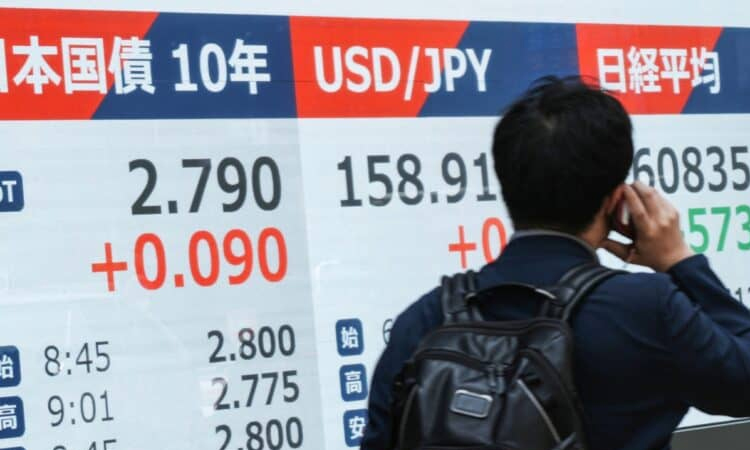
Tokyo shares lost 1.0 per cent and Hong Kong fell 1.4 per cent, while Shanghai was flat. Sydney, Bangkok, Taipei, Singapore and Wellington also declined, with Jakarta tumbling 2.7 per cent.
Seoul, which has hit repeated record highs in recent days on the back of the artificial intelligence stock boom, was trading 1.2 per cent higher.
“Global government yields rose sharply heading into the start of this week, as three forces collided: surging oil prices, fading hopes for a Strait of Hormuz resolution, and mounting fiscal concerns especially in the UK and US,” Wan said.
However, last week’s trade talks between China and the United States have provided “a degree of relief for Asian markets”, he added.
Data released on Monday showed China’s consumer spending in April grew at the slowest pace in more than three years – a stark sign of the challenges Beijing faces in reigniting domestic activity.
In Tokyo, shares in memory chip maker Kioxia had not yet started trading after a reported surge of buy orders following its strong quarterly results on Friday.
Kioxia, the world’s third-largest producer of NAND flash memory chips used for storage in AI data centres, has seen its stock soar nearly 300 per cent over the past year.
The company has forecast an operating profit of 1.3 trillion yen ($8.2 billion) for April-June, saying it is “riding the large wave of AI demand, which has led to record high revenue and profits”.
In South Korea, Samsung Electronics – which has also benefited hugely from the AI memory chip boom – resumed union talks in a bid to avert a strike over bonus payments due to begin on Thursday.
Later on Monday, traders will focus on a meeting of G7 finance ministers and central bank chiefs in Paris, where bond sell-offs are expected to be in the spotlight.
All eyes will then turn to quarterly results from US chip giant Nvidia on Wednesday, which will be closely scrutinised as tech investors question whether the huge spending on AI data centres will deliver justified returns.
West Texas Intermediate rose 2.5 per cent to $108.00 a barrel and Brent North Sea Crude climbed 2.1 per cent to $111.52 a barrel.
Tokyo’s Nikkei 225 fell 1.0 per cent to 60,797.08, Hong Kong’s Hang Seng Index dropped 1.4 per cent to 25,593.23 and Shanghai’s Composite index was flat at 4,133.75.