
















Egypt train collision kills seven, injures at least 125 near Cairo
Two passenger trains collided in Giza province after one struck the rear of a stationary train, prompting an investigation into the latest major railway accident in a country with a longstanding record of rail safety problems.
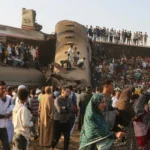
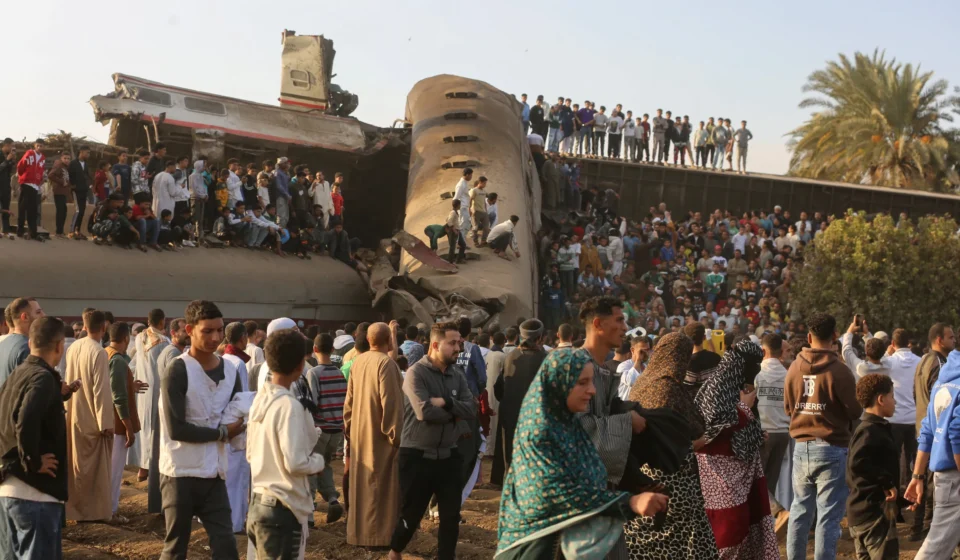
At least seven people, including a train conductor, were killed and 125 others injured when two passenger trains collided in southern Egypt on Sunday, 8 November. The accident occurred in the al-Ayyat district of Giza province, approximately 52 kilometres south of Cairo, according to Egyptian authorities cited by the Associated Press (AP).
The Egyptian Health Ministry confirmed the casualty figures and said more than 70 injured passengers had been discharged after receiving medical treatment. The collision involved a train travelling towards Fayoum province and another heading south towards Aswan.
According to the Transportation Ministry, the Fayoum-bound train struck the rear of the Cairo–Aswan train. The Chief Prosecutor’s Office later said an initial inspection indicated that the latter train had been stationary on the same track and travelling in the same direction when the collision occurred.
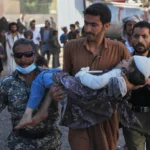
Residents living near the accident site rushed to help passengers trapped inside the damaged carriages. Ayman Gamal, a resident of Kafr Girza in al-Ayyat, told AP that local people pulled survivors from the wreckage and called emergency services.
He estimated that around 80 injured passengers were transported by ambulance to nearby hospitals. Some passengers trapped inside one of the stationary train’s carriages were already dead when rescuers recovered them, he said.
Survivors described scenes of confusion and panic. At al-Wasta Central Hospital in neighbouring Beni Suef province, some injured passengers said they had struggled to breathe because of dust raised during the collision. Nearby residents helped them escape from the damaged carriages.
Farha Gamal, a survivor travelling on the Fayoum-bound train, told AP that she saw passengers who appeared to have died and others struggling to find their way out. She also described some of the carriages as severely mangled.
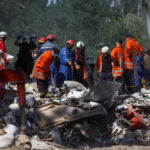
Emergency response teams and cranes were deployed to remove the wreckage. The Egyptian Railway Authority said the operation was intended to restore train services to their normal schedules as soon as possible.
The Chief Prosecutor’s Office said investigators had arrived at the scene late on Sunday. Their initial inspection identified the collision between the Fayoum-bound train and the final carriage of the stationary Cairo–Aswan train as the immediate circumstances of the accident.
President Abdel-Fattah el-Sissi said he had ordered a prompt investigation into the incident. Authorities had not announced a final determination of responsibility or identified the underlying technical or operational cause in the AP report.
The investigation is expected to examine the circumstances surrounding the trains’ movement, the condition of the railway infrastructure and the safety procedures in place. These remain matters for investigators to establish.
The accident has renewed attention to Egypt’s railway safety record. Train collisions and derailments have occurred repeatedly in the country, where the railway system has faced longstanding criticism over management, maintenance and equipment conditions.
The government has announced modernisation initiatives in recent years, but major accidents continue to raise questions about the effectiveness and pace of improvements.
In September, a driver and assistant were injured when two freight trains collided in the same al-Ayyat district. The latest passenger train collision has therefore brought renewed scrutiny to railway operations in an area that has experienced another serious incident within a relatively short period.
Egypt’s deadliest railway accident occurred in 2002, when a fire aboard an overnight train travelling from Cairo towards southern Egypt killed more than 300 people.
The latest crash highlights the human cost of weaknesses in railway safety and the importance of effective operational controls, equipment maintenance and timely emergency response. However, the precise causes of Sunday’s collision will depend on the findings of the official investigation.
Sources
