




















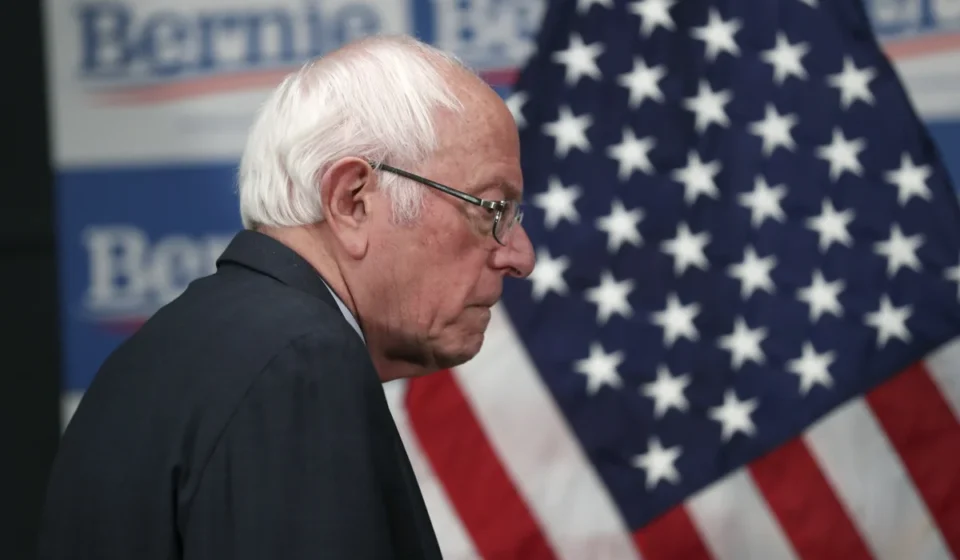
Bernie sees room for co-op with Trump after Republican midterm defeat
The Vermont senator says he is willing to work with the president on wages and healthcare, while expressing little concern about Stephen Miller’s appointment as White House chief of staff.
US Senator Bernie Sanders has signalled a cautious willingness to work with President Donald Trump on economic and social policy following the Republican Party’s defeat in the midterm elections, even as he criticised the president’s political conduct and questioned the direction of his administration.
Speaking to NBC News’ Kristen Welker on Meet the Press on Sunday, Sanders discussed his priorities for the next congressional session, including a proposed $20-an-hour federal minimum wage and universal healthcare. He also addressed Trump’s decision to appoint Stephen Miller as White House chief of staff, following the departure of Susie Wiles.
According to The Independent, Sanders described Trump as politically capable despite his strong personal criticism of the president. He suggested that Trump might be receptive to raising wages and expanding healthcare coverage if those policies offered an opportunity to claim political credit.
Asked whether Miller was the right person for the White House chief of staff position, Sanders shifted attention towards the president’s policy decisions and the possibility of legislative cooperation.
Miller is widely associated with the Trump administration’s restrictive immigration agenda. His appointment places a prominent advocate of that policy approach in a central position within the White House.
Sanders said he was not particularly concerned about Miller’s appointment and suggested that the president might be more important in determining the administration’s direction during its remaining two years.
He also expressed a willingness to explore cooperation with Trump, although he stopped short of predicting that an agreement would be possible.
The remarks suggest that Sanders intends to pursue policy opportunities even amid sharp disagreements with the administration. His approach places particular emphasis on wages and healthcare, issues that could attract support beyond traditional party boundaries.
The economic situation remains central to the political environment following the Republican defeat.
According to the AP Voter Poll conducted by SSRS, 39% of midterm voters identified the economy as the country’s most important issue. The state of democracy ranked second at 33%, followed by immigration at 14% and healthcare at 8%.
The figures indicate that economic concerns featured prominently in voters’ assessments, although they do not establish that a single issue determined the election result.
Sanders has long argued that low wages and unequal access to healthcare are central problems in the US economy. His proposed $20-an-hour minimum wage and universal healthcare programme reflect a broader progressive agenda focused on household incomes and access to essential services.
His suggestion that Trump might be open to some of these proposals is notable given the political divisions between the two figures. However, any cooperation would depend on the administration’s willingness to support specific legislative measures and on the positions taken by lawmakers in both parties.
Trump has also indicated that he may be willing to work with Democrats after the Republican election setback.
In an interview with Fox News, he said there were several areas in which cooperation could be possible, including immigration. At the same time, he emphasised that he would use his presidential veto power against legislation he opposed.
His comments illustrate the constraints facing the next phase of US policymaking. Democratic control of both chambers of Congress would give the party greater influence over legislation and oversight, but the president would retain substantial executive authority and the ability to veto bills.
The relationship between the White House and Congress is therefore likely to depend on whether both sides can identify areas of agreement while managing disagreements over spending, immigration, healthcare and economic policy.
The Republican losses have triggered changes within Trump’s administration and renewed debate over the political direction of the presidency.
Trump has sought to distance himself from responsibility for the election outcome, arguing that he was not personally on the ballot. He also suggested that Republican candidates would have performed better had he been a candidate himself.
The result has nevertheless increased pressure on the administration to respond to voters’ concerns and navigate a Congress in which Democrats will have greater legislative influence.
For Sanders, the immediate opportunity lies in using the changed political balance to advance proposals on wages and healthcare. Whether that produces meaningful cooperation with Trump remains uncertain.
The coming congressional session will test whether the administration’s stated openness to bipartisan agreements can translate into policy outcomes, or whether disagreements between the White House and Democratic lawmakers will dominate the legislative agenda.
Source: The Independent — Trump gets vicious backhanded compliment from Bernie Sanders over Stephen Miller, by Rachel Dobkin, 8 November 2026. The article’s reporting cites Sanders’ interview on NBC’s Meet the Press and the AP Voter Poll conducted by SSRS.
