



















Trump appoints S Miller as WH chief of staff, signalling tougher political approach
The promotion of the president’s hardline immigration adviser follows Republican midterm losses and sets up a potentially confrontational relationship with a newly empowered Democratic Congress.
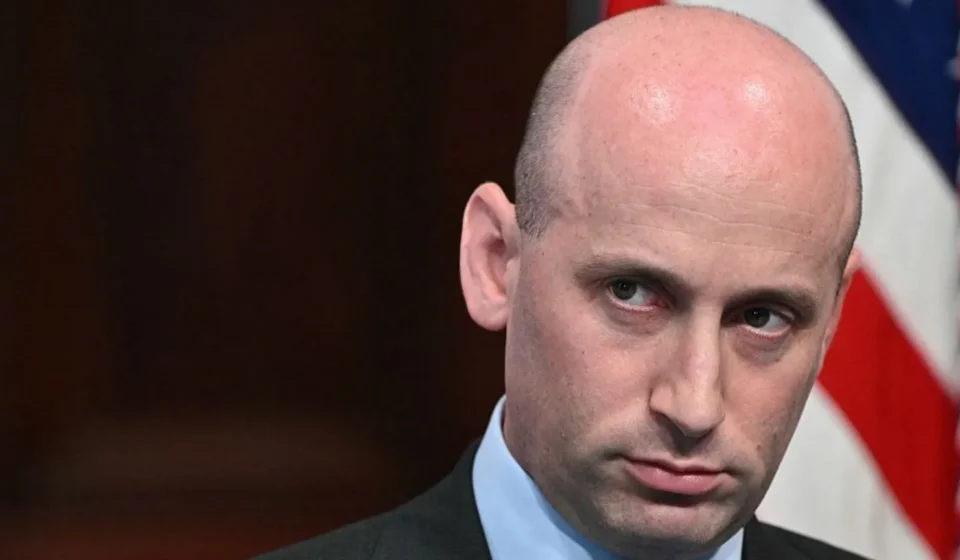
US President Donald Trump has appointed Stephen Miller as White House chief of staff, replacing Susie Wiles in a move that signals a more combative approach to the political challenges facing his administration after the Republican Party’s sweeping defeat in the midterm elections.
Announced on Friday, the appointment places one of Trump’s closest and most influential political advisers in one of the most powerful positions in the White House. Miller has been a central figure in shaping the administration’s immigration agenda and has long been associated with its hardline political strategy.
The decision comes just days after Trump said he was willing to work with Democrats following their electoral gains in Congress. Miller’s elevation, however, raises questions about whether the administration intends to pursue cooperation or prepare for a prolonged confrontation with its political opponents.
In a post on X, Miller described his new responsibility as a mission to support the president and defend the country. Trump praised his loyalty and effectiveness, saying Miller had been with him since the beginning of his political career.
Miller has played a leading role in developing and promoting the administration’s aggressive immigration enforcement policies, including expanded funding for deportation operations across the United States.
His influence has extended beyond immigration. According to the BBC, he has reportedly played a significant role in US military operations in Venezuela and actions against suspected drug-trafficking operations in the Caribbean and eastern Pacific. Critics have condemned some of these operations as extrajudicial killings.
Miller also attracted controversy following the fatal shooting of Alex Pretti by federal immigration officials during a major deportation operation in Minneapolis. He initially described Pretti as a domestic terrorist and an assassin, before subsequently acknowledging that federal agents might not have followed proper procedures.
Miller joined Trump’s 2016 presidential campaign as a strategist and became a prominent advocate of the president’s political agenda. He remained loyal to Trump after the 2020 election defeat and returned to the White House in the second administration as deputy chief of staff for policy.
His appointment as chief of staff therefore formalises an influence he has already exercised across major policy areas.
Miller replaces Susie Wiles, who helped manage Trump’s successful 2024 presidential campaign and became known for a comparatively restrained approach to White House operations.
Wiles maintained a reputation for avoiding the internal conflicts, staffing upheavals and dramatic policy reversals that characterised Trump’s first administration. Her departure follows a period of declining political standing for the president, culminating in the Republican losses in the midterm elections.
The BBC reported that Trump had become increasingly dissatisfied with Wiles in recent months. Reports about individuals in her professional circle securing lucrative consulting opportunities through their connections to the president also contributed to scrutiny surrounding her position.
The change in leadership could affect how the White House manages internal decision-making, relations with Congress and the administration’s public response to political criticism.
The new chief of staff faces an immediate challenge in dealing with a Congress in which Democrats have strengthened their position following the midterm elections.
Miller has attracted particularly strong criticism from Democratic leaders. House Democratic leader Hakeem Jeffries described him as a dangerous extremist and called for his removal from government. Miller has also drawn criticism from some Republican lawmakers, including retiring North Carolina Senator Thom Tillis, who has publicly questioned his proposals and policy influence.
Other Republicans have defended him. Utah Senator Mike Lee praised Miller as a longstanding conservative advocate and a loyal supporter of Trump.
The divide suggests that Miller’s appointment could make bipartisan negotiations more difficult, particularly as congressional Democrats prepare to increase investigations and oversight of the administration.
His relationship with the newly elected Democratic senator James Talarico may also become a point of political tension. Miller had previously made a controversial social media remark about Talarico’s Senate candidacy, prompting a sharp response from the Democratic Party.
The appointment also raises questions about whether the administration will reconsider its immigration enforcement strategy after the Republican electoral losses.
The BBC cited polling showing that 58% of voters believed the administration’s immigration enforcement actions had gone too far. Hispanic voters also moved decisively away from Republican candidates in the midterm elections.
Vice President JD Vance had suggested a possible adjustment to enforcement priorities, including greater attention to businesses employing undocumented workers. Miller’s promotion may complicate the prospect of such a shift, given his established position on immigration policy.
The political challenge is significant. The administration must contend with public criticism of enforcement practices while responding to pressure from its conservative supporters to maintain a restrictive approach.
For Democrats, immigration enforcement is likely to remain an important subject for congressional oversight. Miller’s direct involvement in policy development could make him a central figure in future hearings and political disputes.
The chief of staff is responsible for managing access to the president, coordinating the administration’s agenda and negotiating with Congress and other political interests. The role requires both internal management and the ability to maintain working relationships across Washington.
Miller’s political profile suggests that the White House may place greater emphasis on defending Trump’s agenda and confronting its critics. That approach could appeal to the president’s core supporters but create additional difficulties in securing legislative cooperation.
The midterm results have changed the political environment facing the administration. Democrats have gained greater leverage to investigate executive decisions, challenge policy implementation and shape legislative debates. The extent to which Trump can govern effectively will depend partly on how his administration responds to those institutional constraints.
Miller’s appointment does not, by itself, establish how the White House will handle every future dispute. But it places a close political ally with a record of hardline positions at the centre of the administration’s next phase.
The decision therefore raises a broader question about Trump’s post-election strategy: whether the administration will adapt its approach to a changed political landscape or respond to electoral setbacks by intensifying the confrontation with its opponents.
Sources: BBC News, Anthony Zurcher, “With Stephen Miller pick, Trump readies for a battle”, 7 November 2026; BBC News, “Trump names Stephen Miller as new White House chief of staff”, 7 November 2026.
