


















South Asia’s winter smog returns as Lahore records world’s worst air quality
Lahore’s AQI reaches 447 as pollution spreads across northern India and Pakistan, exposing the region’s recurring struggle with seasonal emissions, weak winds and fragmented air-quality management.
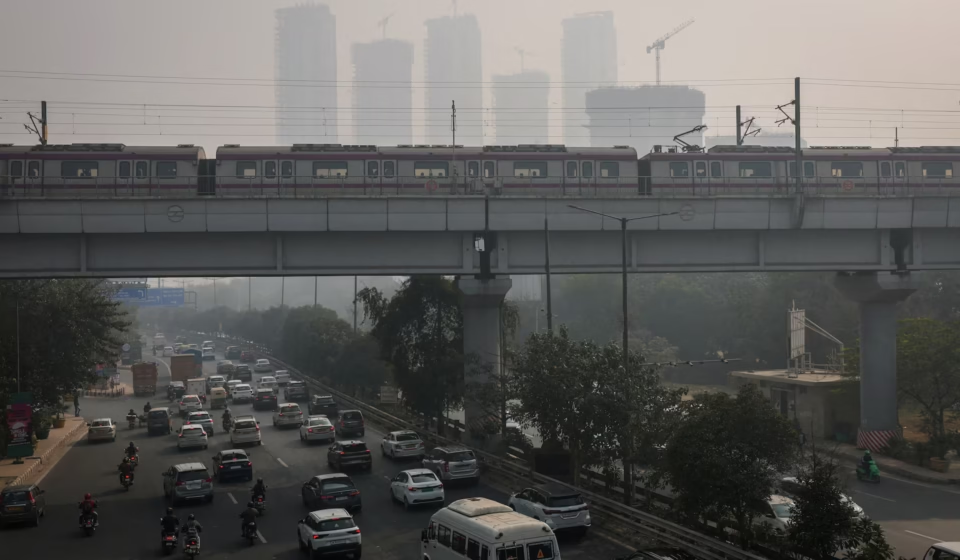
Air pollution has intensified across parts of northern India and Pakistan as the pre-winter smog season begins, with Lahore recording the world’s highest air-quality index reading on Tuesday. The deterioration has renewed concerns over public health, urban pollution management and the difficulty of controlling emissions that move across administrative and national boundaries.
According to Swiss air-quality monitoring group IQAir, Lahore’s Air Quality Index (AQI) reached 447 on the morning of 3 November, placing the Pakistani city at the top of its global pollution rankings. An AQI reading of up to 50 is generally considered good, while Lahore’s level indicated extremely hazardous conditions.
The city’s concentration of fine particulate matter, known as PM2.5, was reported at 60 times the World Health Organization’s annual exposure guideline. These particles, measuring 2.5 micrometres or less in diameter, can penetrate deep into the lungs and are associated with respiratory and cardiovascular diseases.
Delhi also experienced deteriorating air quality, although the reported readings varied substantially depending on the monitoring system. IQAir recorded an AQI of 215, while India’s Central Pollution Control Board classified the city’s air quality as very poor, with a reading of 332. The figures are not directly interchangeable because the two systems use different scales and methodologies.
The seasonal deterioration is linked to a combination of emissions and atmospheric conditions. As temperatures fall, colder and denser air can limit the vertical dispersion of pollutants. Sluggish winds further reduce the movement of polluted air, allowing emissions to accumulate near the ground.
Vehicle exhaust, construction activity, industrial emissions and agricultural residue burning contribute to the pollution burden. The combination can produce particularly severe conditions across the Indo-Gangetic Plain, where densely populated cities and agricultural areas share an interconnected atmospheric environment.
In Lahore, authorities attributed the worsening conditions partly to falling temperatures and weak winds. Pakistan’s government has intensified enforcement against brick kilns violating environmental regulations and continued urging farmers not to burn crop residue after harvesting.
These measures address identifiable sources of pollution, but their effectiveness depends on sustained enforcement and alternatives that make compliance economically practical. Farmers, for example, need affordable ways to manage crop waste, while industrial operators require incentives and monitoring systems to meet emissions standards.
Indian authorities have activated graded pollution-control measures in Delhi, including restrictions on polluting vehicles, construction activities and the use of coal and firewood in eateries. Public transport services are also being strengthened as officials seek to reduce emissions during the period of worsening air quality.
The timing is particularly significant because Diwali, the Hindu festival of lights, falls on 8 November this year. Fireworks can add to the concentration of particulate matter, potentially worsening already hazardous conditions.
India’s Supreme Court has permitted only low-polluting fireworks for three hours each on Saturday and Sunday. The restriction reflects the challenge of balancing festival-related activities with public-health concerns during a period of severe pollution.
However, fireworks are only one contributor to the seasonal problem. Even strict controls during the festival cannot address the broader sources of emissions from transport, industry, construction and agricultural practices.
The pollution episode highlights a persistent policy challenge for South Asia. Air-quality management is largely organised through national and local institutions, but atmospheric pollution does not follow political boundaries. Emissions generated in one area can contribute to deteriorating conditions elsewhere, making isolated interventions less effective.
Lahore and Delhi also face different administrative circumstances and use different monitoring frameworks. The variation between their reported AQI figures demonstrates the importance of transparent measurement standards and accessible public information. Comparisons between cities require clarity about the index used, the monitoring period and the underlying pollutant concentrations.
For policymakers, the immediate priorities include stronger emissions monitoring, cleaner public transport, enforcement of industrial standards, alternatives to crop-residue burning and improved coordination between neighbouring regions. Public-health authorities also need to communicate risks clearly, particularly for children, older people and those with existing respiratory or cardiovascular conditions.
The latest readings are a warning of the health and economic costs of recurring pollution. Poor air quality can increase pressure on healthcare services, reduce productivity and disrupt everyday activities. Yet the seasonal return of severe smog suggests that emergency restrictions alone are not enough.
South Asia’s challenge is to move from short-term pollution controls towards sustained reductions in emissions. Without coordinated action on transport, agriculture, industry and urban development, the region risks repeating the same cycle each winter: worsening air, temporary restrictions and renewed public-health concerns.
Sources
