


















Floods, border tensions and a region under mounting pressure
RMRN Desk: South Asian media coverage at the end of September is being shaped by two very different but increasingly connected stories: a series of climate-related disasters across India and Nepal, and renewed security tensions between Pakistan and Afghanistan. Alongside these hard-security and humanitarian developments, Bangladesh’s position in the wider regional economy and its dependence on cross-border connectivity are also becoming more visible. The overall media narrative suggests a region grappling with environmental vulnerability, unresolved security disputes, and weak regional coordination.
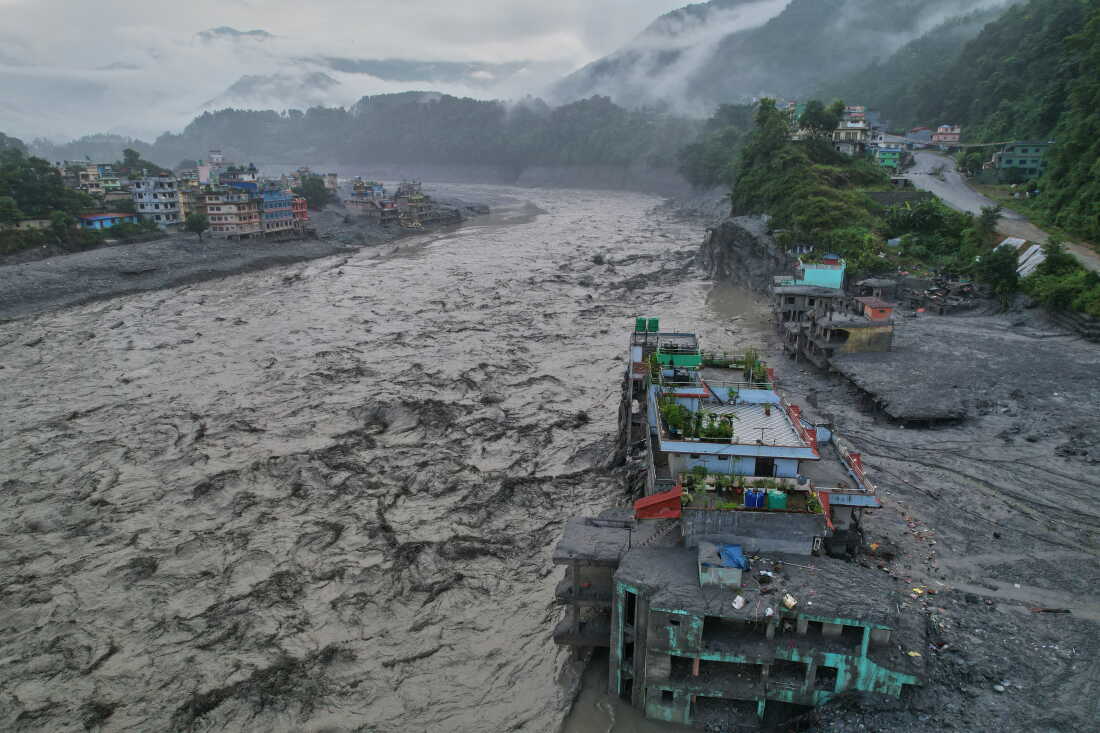
Severe flooding has become one of the region’s most prominent stories. Reuters reports that heavy rainfall and flooding have killed 56 people in India’s Uttar Pradesh and 14 people in Nepal, while dozens remain missing and large areas face continuing flood risks. In Nepal, authorities have issued flash-flood warnings across 49 of the country’s 77 districts, while major rivers including the Ganga and Kosi have risen above danger levels. Infrastructure, telecommunications and a hydropower project have also been affected.
The framing of the disaster is significant. International reporting largely treats the floods as a cross-border climate and disaster-management problem, rather than as isolated national emergencies. The geography of the affected river systems makes that framing particularly relevant: rainfall, upstream water flows, glacial conditions and downstream flooding do not follow national boundaries. The Diplomat has similarly linked recent flooding to questions of regional preparedness involving China, Nepal and India, highlighting the need for greater cooperation in the Hindu Kush Himalaya.
National media, however, naturally give greater prominence to the immediate domestic consequences. In India, the focus is heavily concentrated on casualties, rescue operations and damage in affected states, while Nepal’s coverage emphasizes the country’s repeated exposure to floods, landslides and infrastructure disruption. This creates a difference between the national humanitarian frame and the regional climate-security frame. International coverage is more likely to ask what the disasters reveal about regional resilience, whereas domestic reporting concentrates on who has been affected and how authorities are responding.
The second major regional narrative is the worsening relationship between Pakistan and Afghanistan. Recent reporting shows both governments presenting sharply different versions of cross-border clashes. The Associated Press reported that Pakistan said Afghan Taliban personnel were killed during a border confrontation, while Afghanistan denied the claim and said its forces had destroyed a Pakistani post. AP also noted that Pakistan has carried out airstrikes against alleged militant targets inside Afghanistan, while Kabul has disputed Pakistani allegations concerning militant activity.
This is a classic example of competing national narratives in South Asian media. Pakistani reporting tends to frame the problem through cross-border militancy and Pakistan’s right to defend its territory. Afghan authorities, meanwhile, emphasize Pakistani military actions and reject accusations that Kabul is allowing armed groups to operate against Pakistan. International outlets generally avoid accepting either government’s narrative as fact, explicitly identifying disputed claims and noting when they cannot be independently verified. AP’s treatment is particularly notable because it presents both versions while clearly separating government assertions from independently confirmed information.
The dispute also has a wider regional dimension. China, Qatar, Saudi Arabia and Turkey have been involved in diplomatic efforts connected to the Pakistan-Afghanistan tensions, demonstrating that the conflict is no longer simply a bilateral border dispute. The deterioration also has implications for trade routes, refugee movements, militant activity and regional connectivity.
For Bangladesh, the wider regional environment is increasingly connected to energy and strategic infrastructure. One current example is the disruption surrounding the delivery of Russian nuclear fuel for the Rooppur Nuclear Power Plant. The Times of India reported that Pakistan denied airspace clearance to a Russian cargo flight carrying nuclear fuel for Bangladesh and subsequently described the issue as technical and procedural. The incident illustrates how geopolitical tensions and restrictions on regional airspace can affect infrastructure projects far beyond the countries directly involved.
Economic connectivity remains another unresolved South Asian story. Bangladesh’s exports to SAARC countries have remained around $2 billion annually in recent years despite the bloc representing a market of nearly two billion people, according to Jago News. The contrast between the size of the regional market and the relatively limited level of intra-SAARC trade highlights one of the region’s longstanding contradictions: South Asia is geographically interconnected, but political tensions and weak regional institutions continue to limit economic integration.
That institutional weakness is also visible in the continuing stagnation of SAARC. Bangladesh’s Golam Sarwar is preparing to complete his term as secretary-general, while Bhutan has nominated Sonam Topgay as his successor. The development comes against the backdrop of a SAARC summit that has remained stalled for roughly a decade. The leadership transition therefore receives attention not simply as an organizational change, but as another reminder of the limited political momentum behind South Asian regional cooperation.
The media picture becomes even more interesting when climate and regional institutions are considered together. South Asia entered the 2026 monsoon season with forecasts of below-normal rainfall across much of the region, according to the World Meteorological Organization. Yet parts of India and Nepal have subsequently experienced extreme rainfall and devastating flooding. The contrast demonstrates why regional climate reporting increasingly requires more than simply comparing seasonal rainfall totals: the intensity, distribution and timing of extreme weather can produce severe local disasters even when aggregate rainfall is below or near normal.
Taken together, current South Asian media coverage reveals a region being reported through three overlapping narratives: climate vulnerability, unresolved security competition and incomplete regional integration. The flood coverage emphasizes the human cost of extreme weather and the limits of disaster preparedness; Pakistan-Afghanistan coverage centers on competing security narratives and disputed claims; and reporting on SAARC and regional trade exposes the institutional limitations that make collective responses difficult.
What is particularly notable is the limited sense of a single South Asian regional narrative. Indian, Pakistani, Afghan, Bangladeshi and Nepali media frequently interpret the same regional development through national interests and domestic political priorities. International outlets are more likely to connect those developments to broader questions of climate resilience, security and regional geopolitics. The result is a fragmented media landscape in which South Asia appears less as an integrated political region and more as a collection of interconnected crises.
The current coverage therefore points to a deeper regional contradiction: South Asian countries increasingly share the same risks—extreme weather, fragile borders, disrupted connectivity and economic vulnerability—while the institutions designed to manage those shared risks remain comparatively weak. That gap between increasingly regional problems and predominantly national responses is becoming one of the most important themes in South Asian media coverage.
