












Iran says Strait of Hormuz will never return to its pre-war status
Parliament Speaker Mohammad Bagher Ghalibaf says Tehran and Oman have reached an understanding over the strategic waterway, while Iran awaits Washington’s response to seven conditions for ending the conflict.
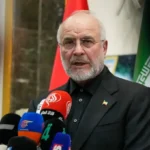
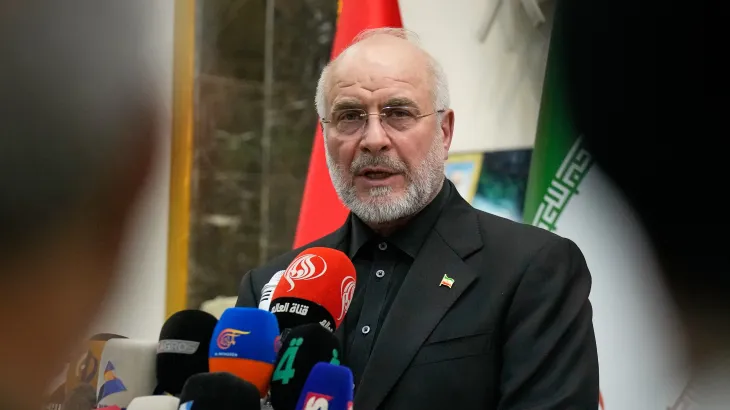
Iran has warned that the Strait of Hormuz will never return to the status it held before the US-Israel war, signalling that control and regulation of the strategic shipping route could remain a central issue in any future settlement. Parliament Speaker Mohammad Bagher Ghalibaf, who is also Tehran’s chief negotiator, made the statement in an exclusive interview with Al Jazeera published on Wednesday.
Ghalibaf said Iran and Oman had reached an understanding on overseeing the waterway as part of Tehran’s seven-point proposal for ending the eight-month conflict. He rejected the idea that the strait should be treated as an area of unrestricted international passage, arguing that its regulation falls under the authority of the two countries bordering it.
“There are no ‘free waters’ [international waters] there,” Ghalibaf told Al Jazeera, disputing the application of the 1982 United Nations Convention on the Law of the Sea to the strait. His position raises a significant legal and diplomatic question over the future governance of one of the world’s most important energy shipping corridors.
Ghalibaf said Tehran had conveyed its response to Washington through Qatar, which is acting as a mediator. Iran is now waiting for an official US reply.
The seven conditions outlined by the Iranian negotiator include the lifting of the US naval blockade and sanctions, the release of frozen Iranian funds, an end to fighting on all fronts and an explicit declaration that the war has ended.
He said the demands formed part of an Islamabad memorandum of understanding signed in June and must be implemented before negotiations with the United States can begin.
Ghalibaf maintained that an agreement remained possible if Washington adhered to what had already been agreed rather than introducing additional demands. He identified the lack of trust between the two governments as the principal obstacle to a settlement.
“The ball is now in the American court,” he said.
The position suggests that Tehran is seeking to establish the terms of a settlement before entering further negotiations. The conditions also link the future of the conflict to economic and maritime issues, including sanctions, frozen assets and access through the Strait of Hormuz.
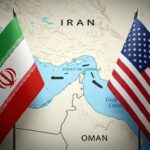
The Strait of Hormuz connects the Persian Gulf with the Gulf of Oman and the wider Arabian Sea. Its strategic importance to global energy markets makes any uncertainty over shipping access a concern for oil exporters, importers, shipping companies and governments.
Ghalibaf’s assertion that the waterway will not return to its previous status indicates that Iran intends to seek a lasting change in the arrangements governing passage. His reference to an understanding with Oman adds a regional dimension to the proposal.
However, the interview does not provide the full text of the reported understanding or explain how it would be implemented. Nor does it establish whether Oman has publicly endorsed Tehran’s interpretation of the arrangement.
The legal disagreement is also unresolved. Ghalibaf’s position represents Iran’s stated interpretation; it should not be treated as an established international legal settlement. Any new regulatory arrangement would have implications for neighbouring states and international shipping.
Ghalibaf also claimed that US officials had asked Russian President Vladimir Putin to facilitate direct negotiations with Tehran during a visit to Moscow. The interview did not provide further details about the request or indicate whether Russia had formally accepted a mediation role.
The reported approach points to the potential involvement of additional international actors as Washington and Tehran consider a way out of the conflict. Qatar has already served as a communication channel, while Russia could provide another diplomatic route if both sides agree.
Ghalibaf warned that renewed US attacks would lead to another defeat for Washington and increase political pressure on President Donald Trump, particularly when a new Congress takes office in January.
He also said Iran wanted to move beyond a prolonged condition of neither war nor peace, arguing that the country needed a sustainable deterrent capability, including military strength.
The interview also addressed the conflict in Yemen, where internationally recognised government forces, backed by Saudi Arabia, remain in conflict with the Houthi movement, also known as Ansar Allah.
Ghalibaf said outside parties should not interfere in the fighting. However, he indicated that Iran would be willing to help mediate if both the Yemeni government and Saudi Arabia requested its assistance.
Iran previously offered to facilitate discussions between Saudi Arabia and the Houthis in October following a series of deadly attacks on Saudi territory.
His remarks reflect Tehran’s stated willingness to play a diplomatic role in regional disputes while maintaining its position on the conflict in Yemen. Whether such mediation could gain support from the parties involved remains uncertain.
Iran’s position on Hormuz suggests that a ceasefire or political agreement may not automatically restore the pre-war arrangements governing regional shipping. The waterway’s future status, sanctions relief, frozen assets and the sequencing of negotiations could all become difficult elements of a settlement.
For the United States, the central questions include the conditions under which it would lift restrictions and accept a negotiated end to the conflict. For Iran, the demands presented by Ghalibaf indicate that economic relief and recognition of a changed regional security environment are central to its negotiating position.
The immediate diplomatic test is whether Washington responds formally to Tehran’s seven conditions and whether both sides can agree on a framework for negotiations. Until then, Ghalibaf’s remarks provide an indication of Iran’s demands, not evidence that a settlement has been reached.
The future of the Strait of Hormuz may consequently become one of the most consequential parts of the post-war negotiations, with implications extending well beyond the countries directly involved in the conflict.
Source: Al Jazeera — Hormuz Strait will ‘never return’ to pre-war status, Iran’s Ghalibaf says, 11 November 2026. Exclusive interview with Iranian Parliament Speaker Mohammad Bagher Ghalibaf.
