




















Democratic midterm sweep reshapes Washington, AI stocks $2.5tn sell-off
Democrats are projected to secure their largest House majority in nearly two decades and take control of the Senate, while investor concerns over data-centre regulation trigger a sharp technology-market correction.
The United States is entering a new period of divided political power after Democrats delivered a sweeping victory in the 2026 midterm elections, winning control of both chambers of Congress and defeating dozens of Republican incumbents. The result represents a major setback for President Donald Trump and creates a new political environment for his administration during its final two years.
CNN’s election projections indicated that Democrats had secured more than 250 seats in the House of Representatives, putting the party on course for its largest majority since the 2008 election. At least 30 Republican incumbents were projected to lose their seats, including lawmakers representing traditionally Republican districts as well as competitive constituencies.
In the Senate, Democrats were projected to have secured at least 54 seats, compared with 44 for Republicans, with Mississippi and Alaska still unresolved in the latest reporting. The outstanding contests could change the final balance, but the projected majority already gives Democrats control of the chamber.
The result is significant because Trump began his presidency with Republican control of Congress. Democratic control of both chambers will give the opposition party greater influence over legislation, congressional investigations, federal spending and confirmation proceedings. It also raises the prospect of more frequent confrontations between the White House and Congress.
The election has intensified debate within the Republican Party over the political and economic consequences of the US-Israeli war on Iran. President Trump and Vice President JD Vance acknowledged that the conflict contributed to the party’s electoral losses, while several Republican figures have directed criticism towards the administration’s handling of the war.
The emerging dispute has also reached the Pentagon. Defence Secretary Pete Hegseth faced a potential impeachment effort, with Republican Representative Thomas Massie saying he intended to initiate a vote when Congress returned. CNN reported that multiple Republican sources expected the effort to pass, although no impeachment decision had yet been made.
Pentagon officials and advisers mounted a public campaign in support of Hegseth, using the slogan “Stand. Fight. Defend the Republic” across social media. Hegseth dismissed the impeachment effort as a sham, while Trump said he intended to retain him.
The political consequences of the Iran conflict are therefore extending beyond foreign policy. The war has become part of a wider domestic debate involving living costs, energy prices, the administration’s priorities and the economic effects of military escalation.
The election also exposed growing tension between the expansion of artificial intelligence infrastructure and concerns about its environmental and local economic consequences.
The rapid construction of data centres has driven demand for semiconductors, electricity, cooling systems and other technology infrastructure. Major technology companies have committed substantial resources to the sector, making AI investment an important driver of expectations for technology earnings and future economic growth.
However, the expansion has generated opposition in communities concerned about electricity consumption, water use, land requirements and pressure on local infrastructure. These concerns became politically significant during the election campaign, particularly in states seeking to attract large data-centre investments.
In Texas, Democratic governor-elect Gina Hinojosa told CNN that future data-centre development would need stronger community protections and local participation. She argued that businesses should be able to invest while ensuring that residents benefit and have a say in projects affecting their communities.
Her position illustrates the policy uncertainty confronting the technology sector. Democratic control of Congress does not automatically mean that all AI infrastructure projects will be blocked. However, greater scrutiny of federal policy, energy infrastructure and environmental standards could affect the pace, cost and location of future development.
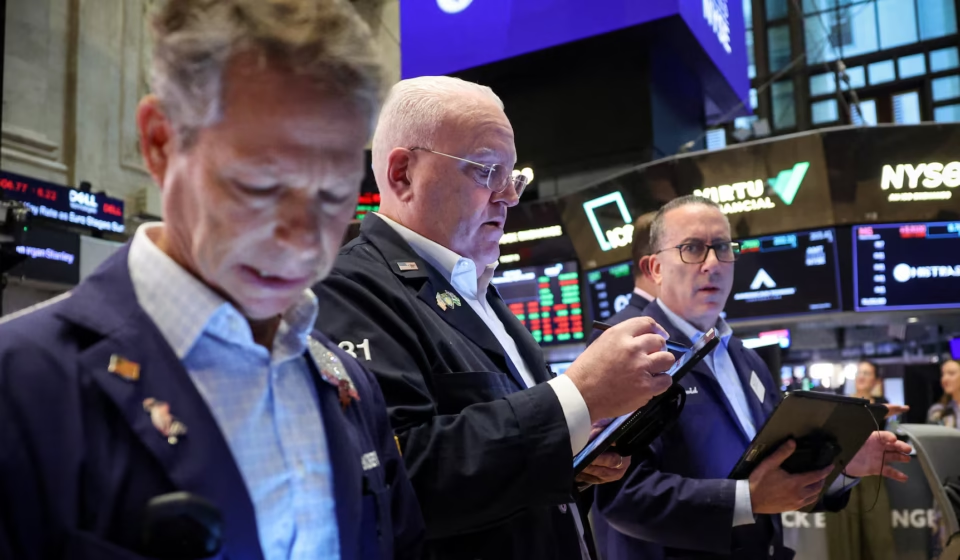
Investors responded sharply to the prospect of increased scrutiny of AI infrastructure. On Thursday, 5 November, the Nasdaq Composite fell 5.52%, entering correction territory after declining more than 10% from its October record. The Nasdaq 100 lost 6.4%, erasing approximately $2.5 trillion in market value, according to Reuters.
Technology and semiconductor companies experienced particularly heavy selling. The Philadelphia Semiconductor Index dropped around 12%, while Nvidia fell more than 9% and Advanced Micro Devices declined approximately 17%. Data-centre and cloud infrastructure companies also suffered substantial losses as investors reassessed the financing and future profitability of large-scale AI expansion.
The market reaction reflects several overlapping concerns. Investors are weighing the possibility of tighter regulation and slower project approvals against the already substantial capital requirements of the AI industry. Higher borrowing costs and uncertainty about how quickly infrastructure investment will generate returns have added to the pressure.
The sell-off should not be interpreted as evidence that the AI investment cycle has ended. Rather, it indicates that investors are reassessing the political, financial and operational risks associated with its continued expansion.
The effects extended into Asian markets on Friday. South Korea’s Kospi fell more than 8% after opening, triggering a temporary trading halt, while Japan’s Nikkei 225 declined around 6% and Taiwan’s Taiex dropped approximately 8% in morning trading, according to CNN. The movements underline the exposure of Asian semiconductor manufacturers and electronics suppliers to investment decisions made by major US technology companies.
The Democratic victory also carries implications beyond Washington and financial markets. Ukrainian President Volodymyr Zelensky said the result could improve his country’s prospects of receiving additional US assistance. European and Asian governments will also be watching how the new congressional balance affects American foreign policy, trade and security commitments.
At the local level, Los Angeles elected Nithya Raman as its next mayor, with Raman highlighting the significance of voters choosing an immigrant to lead a city shaped by migration. In California, Democratic state senator Scott Wiener was projected by CNN to win the race for the congressional seat being vacated by former House Speaker Nancy Pelosi.
The election has not yet produced a complete picture of the new Congress. The Mississippi and Alaska Senate contests remained unresolved in the latest reporting, while some House races were still awaiting final projections. Those outstanding results will determine the precise scale of the Democratic majority.
For Trump, the immediate challenge is managing an administration facing a Congress controlled by the opposition. For Democrats, the responsibility will be to translate electoral gains into legislative action while navigating the limits of congressional power and the president’s executive authority.
For businesses and investors, the most immediate uncertainty concerns the direction of US policy on technology infrastructure, energy, public spending and international conflict. The election has changed the political balance in Washington, but the extent to which that change reshapes economic policy will depend on what the new Congress chooses to pursue.
Sources
- CNN — Democrats have ousted at least 30 Republican incumbents, from swing districts to GOP strongholds
- Reuters — Democrats flex congressional majorities as Trump accepts electoral losses
- Reuters — Blue tsunami wipes out $2.5 trillion from Nasdaq, as investors fret about AI trade
- Associated Press — A brutal sell-off for AI stocks sends Wall Street reeling
