



















China’s yuan dilemma deepens, currency gains squeeze exporters
A stronger yuan is raising costs for Chinese manufacturers already operating on thin margins, even as the EU and IMF argue that the currency remains undervalued and contributes to global trade imbalances.
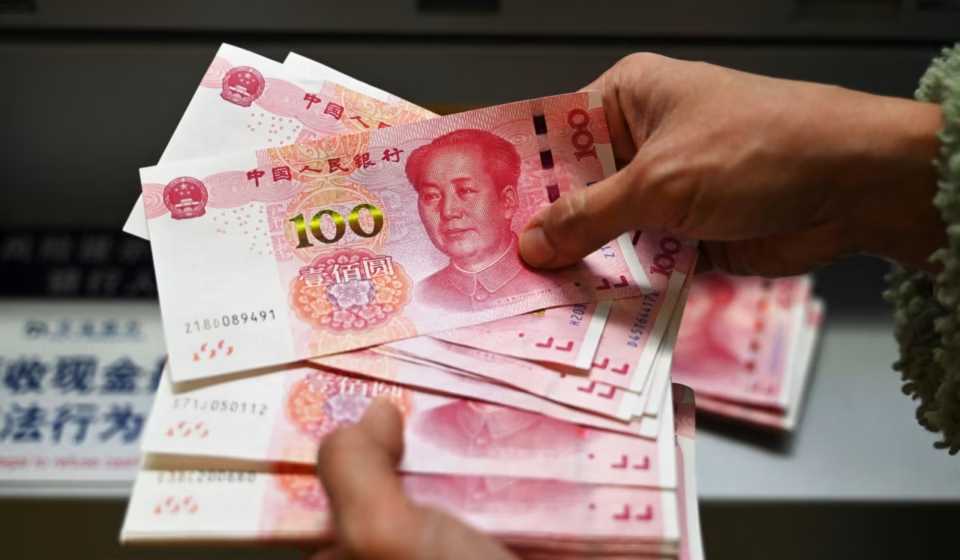
China is facing an increasingly difficult currency policy dilemma as the yuan strengthens against major currencies, putting pressure on exporters while drawing renewed criticism from international policymakers over its perceived undervaluation. The currency has appreciated nearly 5% against the US dollar and around 9% against the euro this year, creating a growing challenge for manufacturers whose profitability depends on competitive overseas prices.
The tension reflects a broader imbalance in China’s economy. European leaders and International Monetary Fund (IMF) officials argue that an undervalued yuan gives Chinese exporters an advantage in international markets. But Beijing is concerned that a rapid appreciation could erode already narrow profit margins, threaten manufacturing employment and weaken exports, particularly while domestic consumption remains subdued.
Reuters reported on 6 November that Chinese exporters across several industries were struggling to absorb the effects of the currency’s appreciation. Chen Lifeng, owner of Ningbo Tengsheng Garments in Zhejiang province, said the stronger yuan had made his products more expensive in Europe and had significantly reduced his company’s profits. He warned that further appreciation could threaten the business’s ability to continue operating.
The pressure is particularly significant for labour-intensive industries such as textiles, garments and home appliances, where margins are often limited and price competition is intense. A stronger yuan increases the foreign-currency cost of Chinese products unless exporters reduce prices or absorb the difference through lower profits.
The problem extends beyond traditional manufacturing. Chinese companies in higher-value sectors also face pressure because weak domestic demand encourages producers to compete aggressively in overseas markets, sometimes at the expense of profitability.
A Reuters analysis of 5,209 Chinese-listed companies with market capitalisation of at least $100 million found that their median net profit margin was 4.9% in the first half of 2026. The comparable median for 9,733 global competitors was 8.9%.
A separate study by Natixis found margins of around 2% in electric vehicles, batteries, solar and wind equipment, and semiconductors. These industries are central to Beijing’s strategy for developing higher-value manufacturing and future growth sectors. The findings suggest that China’s industrial expansion is not necessarily translating into stronger corporate profitability.
Standard Bank estimates that every 1% appreciation in the yuan’s real effective exchange rate reduces average export margins by approximately 30 basis points. The real effective exchange rate measures a currency’s value against a basket of trading partners’ currencies, adjusted for inflation.
The employment implications could be substantial. Lower-value manufacturers may respond to declining profitability by reducing production, postponing investment or laying off workers. Such adjustments could further weaken household income and domestic consumption, reinforcing the economic pressures that have contributed to China’s reliance on external demand.
The People’s Bank of China (PBOC) has indicated that it is uncomfortable with the pace of the yuan’s recent strengthening. On Tuesday, the central bank raised the foreign-currency reserve requirement for financial institutions, a measure that can reduce the supply of foreign currency available in the domestic market and moderate appreciation pressure.
Analysts expect Beijing to rely on incremental measures rather than a major change in its exchange-rate policy. Potential options include further adjustments to foreign-currency reserve requirements, weaker daily reference rates, guidance to banks on currency transactions and changes to rules governing overseas investment.
The PBOC could also use measures affecting forward foreign-exchange transactions to influence market expectations and the cost of betting on further dollar purchases.
CMB analyst Ding Muqiao told Reuters that there remained room for additional adjustments if necessary. The central bank’s approach suggests an effort to prevent excessive currency volatility without reversing the broader market-driven movement of the yuan.
Goldman Sachs expects the yuan to strengthen to 6.40 per US dollar over the next 12 months, from approximately 6.70 at the time of the Reuters report. If that forecast materialises, exporters could face further pressure unless productivity improvements, pricing adjustments or stronger domestic demand offset the currency effect.
The domestic concerns contrast with criticism from the IMF and European policymakers, who argue that the yuan remains significantly undervalued.
In July, the IMF estimated that the yuan’s real effective exchange rate was undervalued by between 17.3% and 25.3%. German Chancellor Friedrich Merz put the estimated undervaluation at 25% to 30%. Although the yuan has appreciated since those assessments, Bank for International Settlements data showed that its real effective exchange rate remained around 14% below its March 2022 peak in September.
The currency debate is closely connected to growing international concern about China’s trade surplus and the competitiveness of its manufacturing sector. Western policymakers have increasingly described the expansion of Chinese exports in advanced industrial products as a new phase of the so-called China Shock, arguing that import competition could threaten manufacturing employment in other economies.
Beijing rejects the claim that it deliberately keeps the yuan weak to support exports. The PBOC argues that China’s trade surplus is driven more by industrial upgrading and manufacturing competitiveness than by exchange-rate policy, and maintains that the currency is broadly market-driven and fairly valued under alternative assessments.
The disagreement is therefore not simply about the appropriate exchange rate. It reflects competing explanations of China’s external surplus: whether it is primarily the result of currency management or deeper structural imbalances involving production capacity, domestic demand, savings and consumption.
The debate has also exposed differences among economists over whether currency appreciation alone can correct China’s external imbalances.
Former IMF officials Gita Gopinath and Pierre-Olivier Gourinchas, alongside London Business School professor Hélène Rey, have argued that the exchange rate is more a symptom than a cause of the underlying imbalance. They warn that allowing the yuan to appreciate without strengthening domestic demand could intensify deflationary pressures.
By contrast, Brad Setser of the Council on Foreign Relations has argued that Beijing manages the currency in ways that support exporters and that a stronger yuan would improve the purchasing power of Chinese households.
These positions point to a central policy trade-off. A stronger currency can make imported goods cheaper and increase the international purchasing power of households, but it can also weaken the price competitiveness of exporters. Whether the overall effect improves economic balance depends partly on whether household consumption and domestic investment can expand sufficiently to compensate for weaker export growth.
A stronger yuan could also reduce the cost of imported energy, raw materials and components, potentially benefiting manufacturers that rely on foreign inputs. However, those gains may not be sufficient for businesses whose products compete primarily on price in overseas markets.
The possibility of international coordination over the yuan has revived comparisons with the 1985 Plaza Accord, under which the United States, Japan, West Germany and France agreed to coordinated action that contributed to a sharp decline in the US dollar.
European calls for a similar approach face resistance in Beijing. Chinese policymakers remain wary of the consequences of the Plaza Accord for Japan, whose subsequent economic stagnation is often associated in Chinese policy discussions with the agreement, although its other signatories did not experience the same trajectory.
Zhu Ning, chair professor of finance at the Shanghai Advanced Institute of Finance, told Reuters that Chinese policymakers were familiar with the economic shocks and consequences Japan experienced after the agreement. The prospect of accepting external pressure for rapid currency appreciation is therefore politically and economically sensitive.
For Beijing, the immediate challenge is to manage appreciation without damaging employment and industrial profitability. For its trading partners, the concern is that a relatively weak currency and China’s manufacturing capacity could continue to contribute to trade imbalances and pressure on domestic industries.
The yuan’s dilemma ultimately reflects a wider structural problem in the Chinese economy. Currency policy can influence export prices, but it cannot independently resolve weak domestic demand, excess industrial capacity or low corporate margins. Without a stronger domestic consumption base, China may remain dependent on exports even as the currency debate intensifies with its trading partners.
