

















European officials fear Washington’s latest initiative could weaken NATO’s role, sideline Ukraine and give Moscow influence over the continent’s security arrangements.
A proposal by US President Donald Trump to develop a new Europe-wide security arrangement involving Russia has triggered scepticism among European governments, with officials warning that negotiations conducted without their participation could undermine existing security structures and strengthen Moscow’s position.
The initiative emerged after Trump met Russian President Vladimir Putin’s envoy Kirill Dmitriev on Thursday. Describing the proposal as a “big, beautiful agreement”, Trump said it could extend beyond Ukraine and potentially involve the whole of Europe. The announcement has raised concerns among NATO allies that Washington may seek to reshape the continent’s security arrangements without first consulting the countries directly affected.
EU foreign policy chief Kaja Kallas said on Friday that Europe already had established security institutions through NATO and the European Union. She argued that Ukraine must be integrated into this architecture and warned that Russia should not have the power to determine Europe’s security arrangements.
POLITICO reported that it had spoken to 12 NATO diplomats, EU envoys and European government officials, most of whom expressed reservations about the American proposal. Three alliance diplomats said NATO members had not been briefed in advance. Several officials questioned the initiative’s objectives and the possibility that Moscow could use negotiations to legitimise its demands for a greater role in European security.
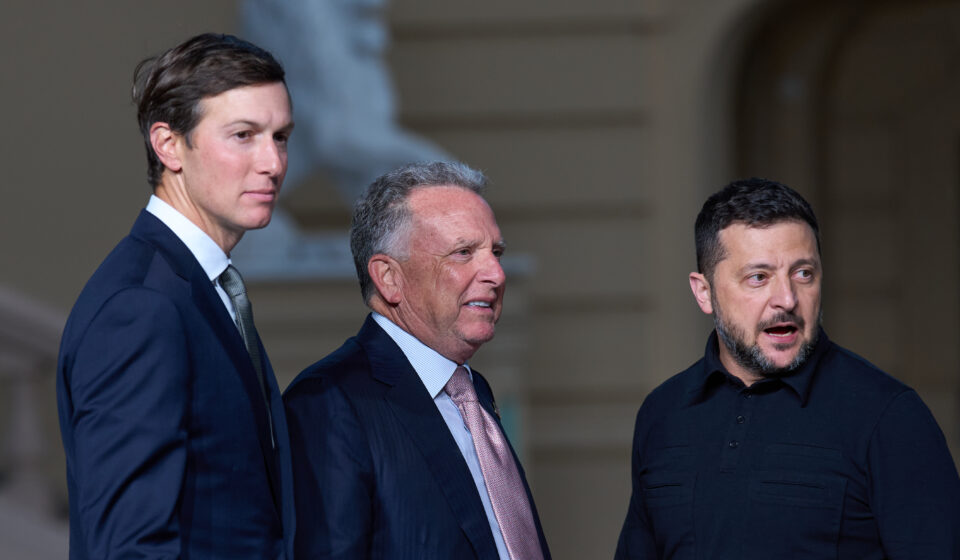
Trump’s son-in-law and special envoy Jared Kushner subsequently described five proposed objectives: permanent security consultations, reliable crisis communications, greater military transparency, reciprocal measures to reduce escalation risks and a long-term framework for European security and stability.
Kushner presented the proposal as an effort to address the security concerns of all sides, reduce the risk of future conflict and establish a more predictable security environment.
However, European officials remain uncertain about how these objectives would work in practice, particularly while Russia’s full-scale war against Ukraine continues. One NATO diplomat told POLITICO that discussions about a new security architecture at this stage could allow Moscow to legitimise its arguments without demonstrating a willingness to respect existing agreements.
The central disagreement concerns not only the substance of the proposal but also who would participate in designing it. European governments argue that arrangements affecting their security cannot be negotiated exclusively between Washington and Moscow.
The European Commission has begun consultations with member states following the announcement. Björn Seibert, chief of staff to Commission President Ursula von der Leyen, briefed EU ambassadors on Friday after discussions involving national security advisers.
One EU diplomat told POLITICO that Europe was willing to engage in discussions involving Kyiv and other European capitals, but confidence in Russia remained limited. The official also warned that an unfavourable outcome for Ukraine could have serious consequences for the wider continent.
Lithuanian President Gitanas Nausėda reiterated that European countries must participate in negotiations concerning Ukraine’s future and the continent’s security architecture. His remarks followed a meeting of Nordic and Baltic countries.
Polish Prime Minister Donald Tusk also urged caution, saying European governments needed to assess Russia’s intentions realistically. He suggested that Moscow might have fewer incentives to reach an agreement during the winter.
The positions reflect a broader European concern: any settlement that addresses the war in Ukraine without adequately considering the security interests of neighbouring countries could create further instability rather than resolve existing tensions.
The proposal comes as diplomatic efforts to end the war continue. Two rounds of working-level discussions on a Ukraine peace agreement took place in Brussels during the week, ahead of US-brokered meetings between Ukrainian and Russian representatives scheduled for 10–11 November in Abu Dhabi.
German Chancellor Friedrich Merz’s spokesperson, Stefan Kornelius, said a new sense of urgency had emerged around negotiations following the US midterm elections. The issue is expected to feature again at an informal gathering of EU leaders in Dublin next week.
The meeting had originally been planned around artificial intelligence, but developments concerning Ukraine and European security could become a major focus.
The diplomatic timetable places additional pressure on European governments to establish a common position. While some officials have indicated that the EU is not blocking engagement, they remain concerned that Washington and Moscow could negotiate arrangements that affect European countries without their consent.
Another source of concern is the possibility that Trump’s initiative could be connected to a forthcoming review of American military deployments in Europe, expected in December.
A NATO diplomat cited by POLITICO described the US military posture as a central uncertainty. Discussions about European security would take on a different character if Washington simultaneously altered its military presence on the continent.
The issue is particularly significant because American forces and military capabilities remain an important part of NATO’s deterrence structure. Any substantial change in their deployment could affect European defence planning and the distribution of responsibilities among alliance members.
The supplied report does not establish that the Trump administration has decided to reduce its forces or link troop deployments directly to the proposed agreement. Rather, European officials fear that the initiative could coincide with a broader reassessment of Washington’s military commitments.
The proposal exposes a fundamental tension in transatlantic relations. Washington is seeking a diplomatic framework that it says could reduce the risk of future conflict, while European governments are concerned that an agreement negotiated without their participation could weaken the institutions underpinning their security.
NATO and the European Union have different but complementary roles in Europe’s political and security architecture. Any new arrangement involving Russia would therefore raise questions about existing commitments, Ukraine’s future position and the ability of European governments to make decisions about their own defence.
For Ukraine, the stakes extend beyond the immediate outcome of peace negotiations. Its integration into European security structures, the protection of its sovereignty and the prevention of renewed Russian aggression remain central concerns.
The immediate question is whether the United States can develop a diplomatic initiative that includes Russia without marginalising Ukraine or the European allies whose security would be directly affected. Until the proposal’s terms, institutional framework and relationship with NATO are clarified, European scepticism is likely to remain a significant obstacle to its acceptance.
Sources
- POLITICO — Victor Jack, Jacopo Barigazzi, Hans von der Burchard and Nicholas Vinocur, Trump’s ‘big, beautiful’ European security plan isn’t convincing Europe, 6 November 2026. Article listing and original-source reference. The listing identifies POLITICO as the original publisher.
- Euronews — EU rejects Trump’s ‘big beautiful’ security deal with Russia and ‘all of Europe’, 6 November 2026.
- Reuters — Ukraine must be part of Europe’s security architecture, EU foreign policy chief says, 6 November 2026.
- Reuters — Kremlin accuses Europe of struggling to decide who will speak for it at future Ukraine security talks, 6 November 2026.
- RBC-Ukraine — Europe skeptical of Trump’s new security deal with Russia, 7 November 2026.
