



















Bulgaria’s presidential runoff puts Black Sea security and NATO strategy under scrutiny
A closely contested election, low voter turnout and deadly attacks on commercial shipping have intensified a political debate over Russia, Ukraine and the future of security in Europe’s Black Sea region.
Bulgaria is heading towards a presidential runoff on 1 November after an election overshadowed by deadly drone attacks on merchant ships in the Black Sea, exposing the growing intersection of domestic politics, maritime security and the war in Ukraine. The immediate contest is between incumbent President Iliana Iotova and former caretaker prime minister Andrey Gyurov, but the implications extend beyond the presidency to Bulgaria’s relations with Moscow, Kyiv and its Western allies.
Reuters reported on 26 October that Iotova received 34.6% of the vote, narrowly ahead of Gyurov on 32%, with 95% of ballots counted. Neither candidate secured the majority required to win outright. Turnout was approximately 22%, an unusually low level that adds a separate question about public confidence in political institutions. The Associated Press also reported that widespread distrust of politicians contributed to weak participation. The figures indicate a close contest, although the final result will depend on the completion of the count and the second round.
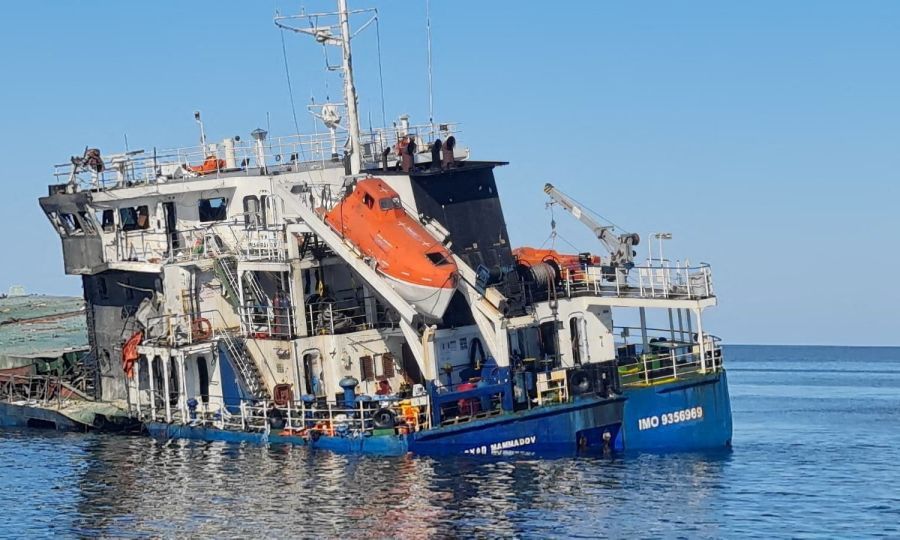
The election has acquired greater geopolitical significance because of a series of drone attacks on commercial vessels near Bulgaria’s Black Sea coast. The incidents have raised concerns that the operational risks associated with Russia’s war against Ukraine are spreading further into maritime areas adjacent to NATO territory. Bulgaria is a member of both NATO and the European Union, placing it at the intersection of regional security commitments, commercial shipping routes and competing European approaches to Russia.
The attacks have demonstrated how a conflict centred on Ukraine can generate risks well beyond the immediate battlefield. Commercial ships carry essential cargoes through the Black Sea, connecting regional producers and exporters with international markets. Damage to vessels, loss of crews and uncertainty over safe passage can increase insurance costs, complicate voyage planning and discourage shipping operators from using exposed routes.
The consequences are not confined to the ships directly affected. A sustained deterioration in maritime security could force operators to reassess routes, schedules and insurance arrangements, adding costs to regional trade. The extent of any wider commercial disruption will depend on the frequency of attacks, the vessels and cargoes involved, and the effectiveness of measures introduced by coastal states and their allies.
Reporting by The Guardian on 18 October documented a series of drone attacks on merchant vessels in the Black Sea, including incidents involving ships in the waters off Bulgaria and Romania. The report described the conflict’s expanding geographical reach and the danger facing civilian crews. Reuters separately reported on 16 October that Bulgaria had formally asked NATO for additional combat aircraft and anti-drone systems to strengthen its defences.
These requests point to a practical challenge for the alliance: protecting maritime approaches and national airspace against drones without allowing individual incidents to trigger a wider military confrontation. Surveillance, early warning, intelligence-sharing and the ability to identify the origin of an attack will be central to any response.
Responsibility for the strikes, however, must be distinguished from their strategic consequences. Bulgarian authorities have raised concerns about Russia, but establishing who carried out an attack requires evidence. In its reporting on 14 October, Reuters said Bulgarian Prime Minister Rumen Radev considered Russia a likely beneficiary of the attacks while acknowledging that Moscow’s responsibility could not be conclusively established. That distinction remains essential to an evidence-based assessment of the conflict.
The runoff places two different approaches to the war and Bulgaria’s international positioning before voters. Iotova, who became acting president after Radev resigned in January to enter parliamentary politics, advocates a diplomatic resolution and has emphasised the need to halt hostilities in the Black Sea. Her position is associated with a more cautious approach to the conflict and a willingness to pursue engagement with Moscow.
Gyurov, backed by pro-Western reformist parties, has expressed stronger support for Ukraine and closer cooperation with Western allies. During his time as caretaker prime minister, he signed a security cooperation agreement with Kyiv. His campaign has emphasised preparedness, diplomacy and a clear position within NATO.
The distinction is significant, although the presidency should not be mistaken for an office with unrestricted executive authority. Bulgaria’s president has important constitutional responsibilities, including serving as commander-in-chief, representing the country internationally and exercising a veto over legislation. The president can influence the national security debate, but many major policy decisions depend on the government and parliament.
Consequently, the runoff will not by itself determine Bulgaria’s entire foreign policy. It will, however, offer an indication of how voters respond to competing arguments about the balance between diplomatic engagement, support for Ukraine and stronger cooperation with NATO.
The Associated Press reported that Iotova is backed by Radev’s Moscow-friendly political camp, while Gyurov represents pro-Western reformist forces. The contest therefore reflects a broader European debate over whether security is best pursued through greater deterrence, negotiated de-escalation or a combination of both.
Bulgaria’s request for additional NATO capabilities underlines the economic importance of security in the Black Sea. Commercial shipping depends on predictable access, functioning ports and confidence that crews and cargoes can complete their journeys without unacceptable risk. When those conditions deteriorate, the resulting costs can extend through freight rates, insurance premiums, delivery schedules and supply-chain planning.
The potential impact should not be overstated. The attacks do not, on their own, establish the scale of disruption to regional trade or prove that shipping costs have risen across the market. Those conclusions require additional data from insurers, shipping operators, port authorities and trade statistics. Nevertheless, the incidents expose a vulnerability that governments and businesses cannot ignore: a maritime corridor can remain commercially important while becoming more difficult and expensive to operate.
NATO Secretary-General Mark Rutte said the alliance would continue working with its Black Sea members and adjust its deterrence and defence posture as necessary, according to Reuters’ 16 October report. Bulgaria has also sought coordination with Romania and Türkiye, the other NATO allies bordering the Black Sea. Cooperation among these countries could strengthen maritime awareness and improve the sharing of information about threats to civilian shipping.
The challenge is to improve protection while preserving a distinction between defensive measures and direct participation in the war. More surveillance and anti-drone capabilities could reduce vulnerabilities, but they would not automatically prevent attacks or establish responsibility after an incident. A sustainable response will also require credible investigations, coordination among coastal states and clear communication with commercial operators.
The low turnout is another important dimension of the election. With only around 22% of eligible voters participating, according to Reuters’ count reported on 26 October, the leading candidates face a contest in which mobilisation may be as important as their relative popularity in the first round.
The second round could also sharpen the debate over the cost and risks of Bulgaria’s security choices. Voters are being asked to assess not only their candidates’ positions on Russia and Ukraine, but also their capacity to protect national interests, maintain stable international relationships and respond to threats affecting commercial activity.
A victory for either candidate would not resolve the underlying security problem. The attacks on shipping, the uncertainty surrounding their origin and the wider war in Ukraine will continue to shape Bulgaria’s strategic environment regardless of the election result. Nor would a diplomatic approach necessarily remove the need for stronger defences; equally, a tougher security posture would not eliminate the need for diplomatic channels.
For European policymakers and businesses, the more consequential question is whether the Black Sea can remain a reliable commercial corridor while the war continues. Bulgaria’s election offers a political measure of how one frontline NATO member intends to navigate that challenge. The runoff on 1 November will better indicate voters’ preferences, but maritime security will depend on developments well beyond the ballot box.
Sources:
Reuters, Bulgaria heads to presidential runoff after close vote, 26 October 2026: https://www.reuters.com/world/bulgaria-heads-presidential-runoff-after-close-vote-2026-10-26/
Associated Press, Presidential race in Bulgaria heads to runoff due to record low turnout, 25 October 2026: https://apnews.com/article/71e668caf5e926fd16395c392bc1920c
Reuters, Bulgaria seeks NATO anti-drone systems, says defence minister, 16 October 2026: https://www.marketscreener.com/news/bulgaria-seeks-nato-anti-drone-systems-says-defence-minister-ce785cdad881f326
The Guardian, Intensifying drone attacks on ships in Black Sea bring war ever closer to Nato shores, 18 October 2026: https://www.theguardian.com/business/2026/oct/18/drone-attacks-ships-black-sea-russia-ukraine-war
Bulgarian National Radio, National Security Council condemns strikes on ships in the Black Sea, 7 October 2026: https://bnrnews.bg/en/post/538897/national-security-council-condemns-strikes-on-ships-in-the-black-sea
Reuters report republished by eKathimerini, Bulgaria says Russia likely behind Black Sea drone strikes, 14 October 2026: https://www.ekathimerini.com/politics/foreign-policy/1318152/
