

















Neha Bora refuses peace bond, legal battle over protest rights continues
The AISA president has rejected a ₹10,000 bond sought by Delhi Police, while the High Court has directed authorities to disclose their evidence and ensure procedural fairness.
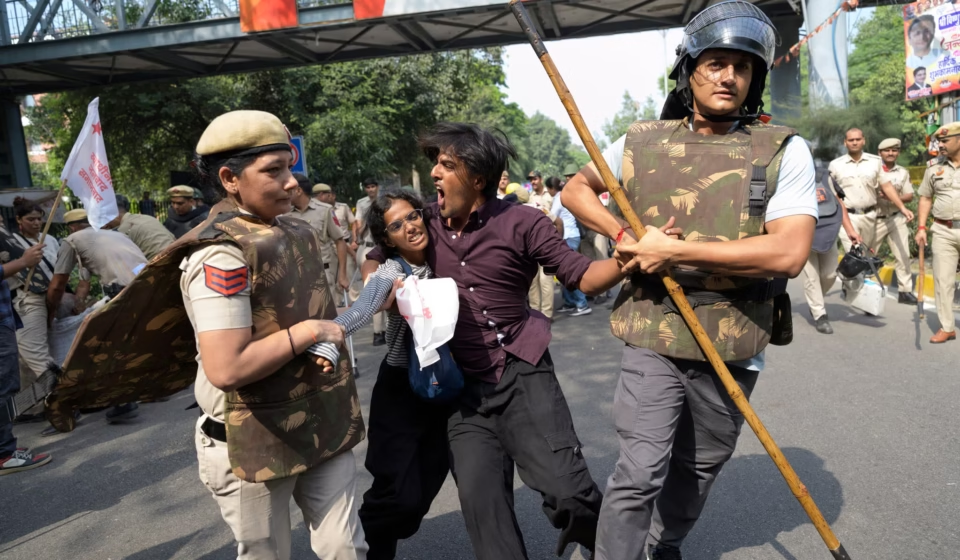
All India Students’ Association (AISA) president Neha Bora has refused to sign a ₹10,000 peace bond sought by Delhi Police, declaring that she will continue challenging proceedings she considers an infringement on democratic dissent. The dispute has intensified scrutiny of preventive policing as protests over India’s electoral-roll revision continue.
Bora appeared before a Special Executive Magistrate at Mandir Marg Police Station in New Delhi on 24 October, a day after the Delhi High Court dismissed her petition challenging the police notice. During the hearing, the magistrate provided her lawyer with documents cited by police to support their apprehension that her actions could lead to a breach of peace. Bora was given until 29 October to submit a response, according to her lawyer.
The notice, issued on 17 October under Section 126 of the Bharatiya Nagarik Suraksha Sanhita (BNSS), required Bora to explain why she should not furnish a personal bond of ₹10,000 with one surety to maintain peace during an inquiry.
The High Court rejected Bora’s challenge to the show-cause notice, finding that there was sufficient material for the preventive proceedings to be initiated. The court did not, however, make a final determination of the allegations against her or direct that the bond be signed immediately.
Instead, it directed authorities to provide Bora with all material on which they intended to rely and instructed the magistrate to uphold the principles of natural justice before making any order requiring her to furnish the bond. The ruling leaves the magistrate to consider her response and decide the next steps under the law.
The police case reportedly refers to alleged sloganeering at Mandi House on 16 October, demonstrations near Jantar Mantar despite prohibitory orders and an allegation that Bora encouraged people to join a protest in Connaught Place. These remain allegations within preventive proceedings, rather than a finding of criminal guilt.
Bora has argued that the use of peace-bond proceedings against protesters risks treating political dissent as a threat to public order. At a press conference on 24 October, she reiterated that she would not sign the bond in its current form, saying the issue was important for protecting the right to peaceful demonstrations.
The legal dispute is connected to a wider campaign demanding the resignation of Chief Election Commissioner Gyanesh Kumar and opposing the Election Commission’s Special Intensive Revision (SIR) of electoral rolls. Protesters have raised concerns about the potential exclusion of eligible voters, while the authorities maintain that electoral-roll revision is an administrative exercise intended to improve accuracy.
The broader controversy has placed two questions at the centre of public debate: how the state should prevent disturbances during demonstrations, and how it can exercise those powers without unduly restricting peaceful political participation.
The next stage in Bora’s case is her response to the documents supplied by the magistrate. The proceedings will help determine whether the authorities can substantiate their apprehension of a breach of peace and whether a bond should be required.
The immediate outcome remains unresolved. Bora has refused to sign, the High Court has declined to quash the notice, and the magistrate must now consider the material and her response. The case has consequently become a test of how preventive powers are applied during politically contentious protests—and of the procedural safeguards available to those challenging them.
Sources: The Indian Express — AISA’s Neha refuses peace bond as magistrate gives her time till October 29; NDTV — Delhi High Court rejects challenge to peace-bond notice; Hindustan Times — Neha Bora given documents on which peace-bond notice was based.
