










Lebanon’s sovereignty becomes a frontline in the Iran conflict
An explosives seizure, Hezbollah’s resistance to state control and competing diplomatic agendas are exposing the struggle over who speaks for Lebanon as regional tensions intensify.
Lebanon is facing a strategic contest over the authority of the state, the future of Hezbollah’s independent military capabilities and the extent of Iran’s influence over the country’s security decisions. An explosives shipment intercepted en route to Beirut has become a focal point of that contest, drawing a public confrontation between the Lebanese government and Hezbollah, pressure from Washington and renewed diplomatic engagement between Beirut and Tehran.
The dispute is unfolding against a fragile regional security environment in which Lebanon’s relationship with Israel remains unresolved and Iran’s regional position is under pressure. But the significance of the latest developments is not limited to the prospect of renewed fighting. They also expose a fundamental question for Lebanon’s political system: can the government establish exclusive authority over weapons and decisions about conflict while a powerful armed movement maintains its own military structure and regional alliances?
Lebanese security forces intercepted a vehicle carrying hundreds of kilograms of explosives at the Dahr al-Baidar checkpoint on the route connecting the Bekaa Valley with the Beirut area in October. The shipment reportedly contained C-4 plastic explosives and TNT, and two people were detained. Lebanese officials said the material was being transported towards Beirut, while investigators pursued the circumstances surrounding the shipment and the people allegedly involved.
The precise quantity reported has varied across initial accounts. The Associated Press reported that judicial officials put the shipment at approximately 780 kilograms, while earlier reporting by L’Orient Today cited differing estimates from military and judicial sources. The discrepancy underscores why the details of the investigation should be attributed carefully rather than treated as settled in every account.
The political significance grew on 15 October, when Hezbollah parliamentarian Hassan Fadlallah publicly acknowledged that the explosives belonged to the group. He said they were intended to support its operations against Israeli forces and demanded the return of the shipment and the release of the detainees. Hezbollah’s explanation is a claim about intended use, not an independently established finding about the material’s ultimate destination or purpose.
Prime Minister Nawaf Salam, meanwhile, pledged a thorough investigation and said authorities would pursue those involved. Lebanese officials have emphasised the state’s responsibility to investigate weapons movements outside the legal framework. The government had already declared Hezbollah’s military activities illegal in March, making the seizure a direct test of whether that decision could be enforced.
The distinction between ownership and intended use is critical. Hezbollah’s admission establishes its claim to the material, but it does not settle whether its transportation complied with Lebanese law, whether all those involved had lawful authority to move it, or what the investigation may establish about the intended operation. Although some political figures have raised concerns about possible assassinations, the available reporting does not establish that the explosives were intended for such an attack.
For the government, the case is therefore about more than a single shipment. It concerns whether state security agencies can investigate a powerful political and armed organisation without being compelled to negotiate the limits of their authority with that organisation.
Hezbollah’s position reflects a long-running disagreement over the role of armed resistance in Lebanon. The movement presents its weapons as necessary to confront Israel, particularly while Israeli forces remain in parts of southern Lebanon. Its opponents argue that the continued existence of an independent armed structure undermines state sovereignty and leaves the country exposed to decisions made outside its formal institutions.
That disagreement has become sharper under President Joseph Aoun and Prime Minister Salam, whose government has sought to bring weapons under state authority. Hezbollah has resisted measures affecting its military capabilities, while continuing to invoke the threat posed by Israel as justification for retaining its arsenal.
The dispute is not merely constitutional or administrative. It affects the practical question of who can decide whether Lebanon enters a war, retaliates against an attack or accepts a diplomatic arrangement. A government cannot fully control national security policy if an armed organisation can independently determine when and where to engage an adversary. Conversely, Hezbollah argues that its military role responds to an unresolved security threat that the Lebanese state has struggled to deter.
The explosives seizure has brought these competing positions into unusually direct confrontation. By demanding the return of the material and the release of those detained, Hezbollah challenged the government’s handling of a security operation involving its own claimed assets. The government’s response will help determine whether its March decision represents an enforceable change in policy or a political declaration whose practical reach remains contested.
Lebanon’s institutions also face the challenge of maintaining consistent enforcement across security agencies that operate within a complex political environment. If investigations proceed transparently and according to law, the state may strengthen its credibility. If the case becomes another unresolved confrontation, the result could deepen public doubts about the government’s capacity to exercise authority uniformly.
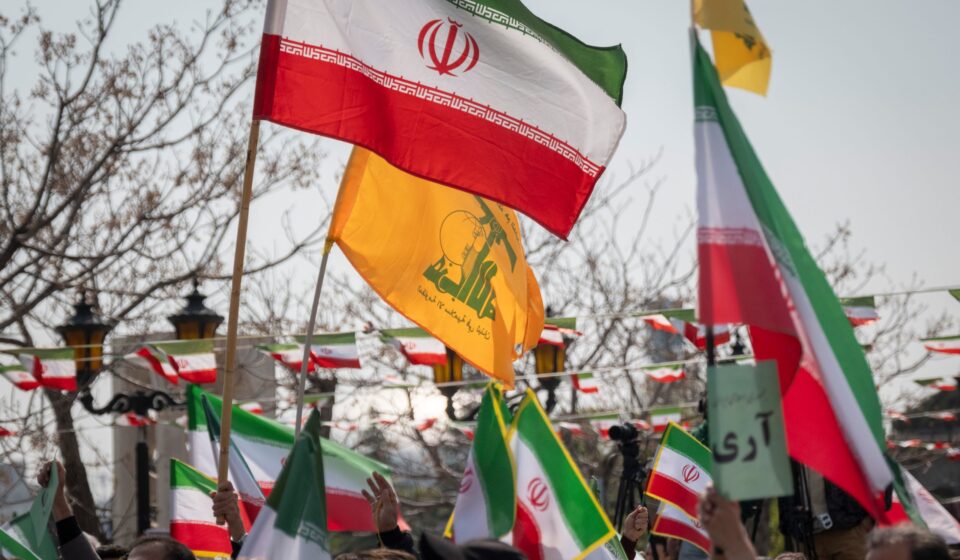
The dispute also has a regional dimension because Hezbollah has long maintained close political, military and financial ties with Iran. Tehran’s relationship with the movement has given it influence in the eastern Mediterranean and a means of applying pressure on Israel. Changes to Hezbollah’s military position therefore carry implications for Iran’s regional strategy as well as Lebanon’s domestic balance of power.
The decline of Iran’s regional position, including the loss of its former Syrian ally, has increased the strategic importance of the relationships and networks that remain. Yet the extent of Tehran’s influence should not be confused with proof that every Hezbollah decision is directly ordered by Iran. Hezbollah has its own leadership, domestic constituency and political interests, even as its alliance with Tehran remains central to its military posture.
The latest diplomatic contacts illustrate the tension between these relationships and Lebanon’s claim to independent foreign policy. On 17 October, Lebanese Foreign Minister Youssef Rajji met his Iranian counterpart, Abbas Araghchi, in Baghdad on the sidelines of the Organisation of Islamic Cooperation’s foreign ministers’ meeting. L’Orient Today reported that the discussion took place amid a widening rift between Beirut and Hezbollah, as well as a diplomatic dispute over Iran’s designated ambassador to Lebanon.
Lebanon had withdrawn its approval for the ambassador’s accreditation and declared him persona non grata in March, accusing him of interfering in domestic affairs. Tehran rejected that position, and the dispute remained unresolved in October. The ambassadorial question has consequently become a measure of the wider disagreement over whether Lebanon can set the terms of its relationship with Iran independently.
Iran publicly frames its policy as support for Lebanese sovereignty and opposition to Israeli attacks. Lebanese officials, however, have expressed concern about Tehran’s influence through Hezbollah and have argued that the Lebanese state alone is authorised to negotiate on behalf of the country. These positions reveal a gap between the diplomatic language of sovereignty and the practical distribution of political and military power.
It would be premature to conclude from the explosives seizure and the diplomatic dispute alone that Iran has ordered a new escalation through Hezbollah. The developments are consistent with a period of heightened strategic tension, but establishing a direct operational link would require additional evidence. The more defensible conclusion is that the relationship between Tehran and Hezbollah is increasingly central to Lebanon’s struggle over the control of weapons and the conduct of foreign policy.
The United States has also become directly involved in the dispute. Lebanese and regional reporting said Secretary of State Marco Rubio contacted President Joseph Aoun after the explosives seizure and pressed for accountability. Washington has opposed returning the material to Hezbollah, reinforcing the Lebanese government’s position that the case should be handled through state institutions and the legal process.
US involvement reflects the broader connection between Lebanon’s internal security arrangements and Washington’s strategy towards Iran. From the American perspective, limiting Hezbollah’s independent military capacity could reduce Iran’s ability to threaten Israel and project power across the region. For Lebanon, however, external pressure creates its own political complications: the government must assert national authority while avoiding the impression that its security policy is being dictated from abroad.
This tension is especially sensitive because Lebanon remains vulnerable to renewed conflict with Israel. A policy that seeks to strengthen the state’s control over weapons must address both the domestic challenge posed by an independent armed group and the external security threat that Hezbollah cites to justify its existence. If the latter remains unresolved, disarmament efforts may encounter resistance from constituencies that view the movement as a deterrent against Israel.
The United States can influence the incentives facing Lebanon through diplomacy, security cooperation and political pressure. It cannot, however, substitute for a durable domestic settlement over the state’s authority, the role of Hezbollah and the protection of Lebanese territory. A policy perceived as externally imposed could deepen internal divisions even if its stated objective is to strengthen state institutions.
The future of Hezbollah’s weapons is inseparable from the unresolved security situation along Lebanon’s southern border. Reporting by Al Jazeera has described a US-administered framework intended to support a phased process involving Israeli withdrawal from areas it occupies and the deployment of the Lebanese army as part of arrangements to bring weapons under state control. Implementation has faced obstacles, while Israeli military activity and demolitions in southern Lebanon have continued to fuel insecurity.
This creates a difficult security dilemma. The Lebanese government wants to strengthen the state’s monopoly on force, but Hezbollah argues that its weapons remain necessary while Israel occupies Lebanese territory and poses a military threat. Israel, in turn, has security demands and has maintained military positions and operations that Beirut considers violations of its sovereignty.
Without credible security arrangements, each side can use the actions of the others to justify maintaining its own position. Hezbollah can point to Israeli activity as evidence that disarmament is premature; Israel can cite Hezbollah’s independent arsenal as a continuing threat; and the Lebanese government can struggle to enforce its decisions while lacking the political consensus and security capacity needed to resolve the confrontation.
A durable settlement would require more than the seizure of weapons shipments. It would need credible guarantees against renewed attacks, implementation of agreed security arrangements, protection of civilians and a workable process for placing armed capabilities under state authority. It would also require political agreement within Lebanon about how national defence should be organised and who is entitled to decide on military action.
The immediate outcome of the explosives investigation remains uncertain. The available reporting does not establish that the shipment was intended for a specific attack, and the claims made by Hezbollah and its political opponents must be distinguished from findings reached through a judicial process. What is already clear is that the case has exposed a deeper confrontation over the state’s authority and the limits of Hezbollah’s independent military role.
For Iran, Hezbollah remains a significant regional partner, but the movement’s future position will depend on developments inside Lebanon as well as the wider balance of power. For Israel, the presence of an armed organisation near its northern border remains a central security concern. For the United States, the dispute intersects with its efforts to constrain Iranian influence. For Lebanon itself, the challenge is to prevent these external rivalries from determining the country’s security policy without meaningful state control or domestic consent.
Three developments will be particularly important to watch: whether the investigation proceeds transparently and identifies those responsible for transporting the explosives; whether the Lebanese government can enforce its decisions concerning weapons outside state control; and whether diplomacy produces meaningful progress on the Israeli-Lebanese security framework.
The central issue is not simply whether Iran retains influence in Lebanon, nor whether Hezbollah can preserve its military capabilities. It is whether Lebanon can establish a credible system in which the state has the authority and capacity to decide questions of war and peace, while addressing the security concerns that have allowed an independent armed structure to persist.
Lebanon’s sovereignty will be measured less by the declarations of its leaders or the positions of outside powers than by the institutions’ ability to enforce the law, protect the population and negotiate security arrangements in the national interest. Until that authority becomes effective in practice, every weapons seizure, diplomatic confrontation and border escalation will continue to carry consequences far beyond Lebanon’s borders.
Sources: Associated Press — Lebanon’s PM vows thorough investigation after explosives-laden truck seized at checkpoint, Al Jazeera — Division in Lebanon over Hezbollah’s confiscated explosives, L’Orient Today — ISF seizes hundreds of kilograms of explosives at Dahr al-Baidar checkpoint, arrests two, L’Orient Today — Rajji meets with Araghchi in Baghdad, LBCI — Rubio’s call to Aoun raises stakes over Hezbollah explosives.
