


















Power shortages threaten AI data centre boom
Analyst warns that 45% of planned capacity for 2027 may not be built, raising questions about Nvidia’s future demand and financing risks.
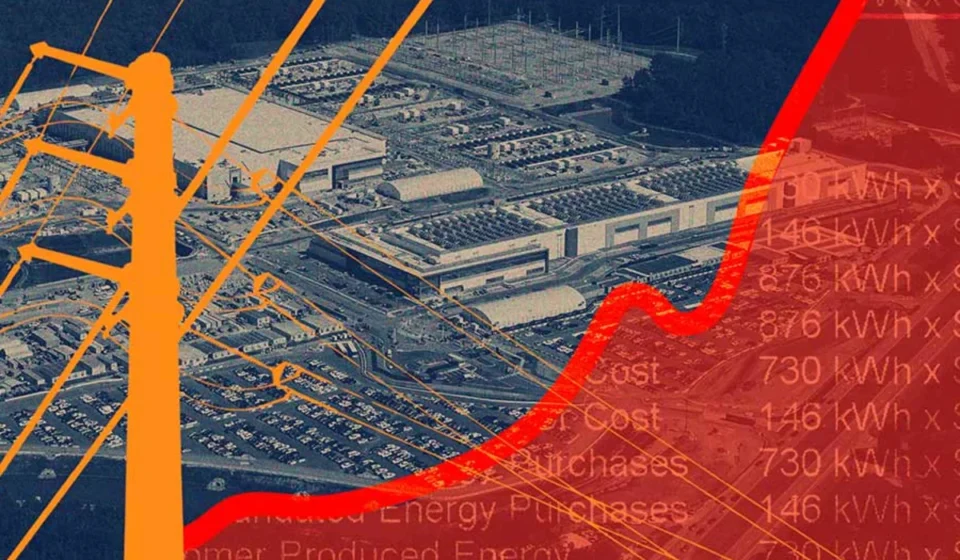
Nearly half of the artificial intelligence data centre capacity announced for 2027 may fail to materialise, according to a Wall Street analyst, highlighting growing infrastructure constraints that could affect future demand for Nvidia’s chips.
Jay Goldberg of Seaport Research Partners estimates that only 30 gigawatts of the 55 gigawatts of planned capacity will be delivered next year. The projection implies a potential shortfall of 45%, although it remains an analyst forecast rather than a confirmed assessment of construction outcomes. Goldberg’s concerns, reported by Barron’s and Benzinga, centre on shortages of skilled electricians, gas turbines and electricity-grid connections.
The warning comes as technology companies accelerate investment in AI computing infrastructure. Data centres require substantial and reliable electricity supplies, alongside land, cooling systems, equipment and financing. Delays in any of these areas can prevent facilities from operating on schedule, even when demand for computing power remains strong.
A recent UK project illustrates the problem. Microsoft withdrew as the anchor customer for an Nvidia-backed Nscale data centre in Loughton, Essex, after delays pushed the expected grid connection into the 2030s. The site was designed to support more than 23,000 Nvidia GPUs. Microsoft said the decision concerned that particular site and reaffirmed its wider relationship with Nscale. The company is exploring alternative power sources and other locations.
The consequences for Nvidia, the leading supplier of AI accelerators, could extend beyond construction delays. If data centres cannot become operational on time, customers may postpone purchasing and deploying chips, affecting the timing of revenue. Nvidia itself acknowledged in its latest quarterly filing that shortages of power, land, facilities and capital could delay customer deployments and affect financial performance.
Nvidia reported supply and capacity commitments of $279 billion as of 26 July 2026, up from $119 billion in the previous quarter. It also disclosed $36 billion in cloud-service commitments associated with AI cloud providers purchasing its hardware. These figures reflect the scale of the company’s supply-chain and infrastructure arrangements, but they should not be interpreted as equivalent to completed sales or guaranteed future revenue.
Goldberg has also raised concerns about Nvidia’s financial exposure to some customers and partners. Investments, loans and credit guarantees can help smaller cloud providers finance infrastructure and buy chips, but they may also increase the company’s exposure if those businesses struggle to secure funding or generate sufficient returns. The central question is whether investment across the AI ecosystem will translate into sustainable end-user demand and profitable computing services.
However, the outlook is contested. Research firm SemiAnalysis has identified more than 24 gigawatts of capacity in advanced stages of construction across 40 campuses, according to the report. That suggests a substantial pipeline of projects is progressing, even as other developments face delays. A facility that opens late may also shift chip purchases to a later period or redirect demand to another data centre with available power rather than eliminate it altogether.
The distinction matters for the wider AI industry. A slowdown in infrastructure delivery would not automatically mean that demand for AI services has collapsed. It could instead expose a mismatch between the speed of investment announcements and the practical capacity to build, power and finance the facilities required. Investors and technology companies will need to assess not only planned spending but also construction progress, grid access, customer financing and the utilisation of installed computing capacity.
For Nvidia, the immediate risk is that infrastructure bottlenecks delay purchases while its commitments to suppliers and AI cloud partners remain substantial. Whether this becomes a lasting demand problem will depend on how quickly power constraints are resolved, whether customers can finance their expansion and whether AI computing demand continues to justify the scale of investment.
Sources: Yahoo Finance and Benzinga: AI data centre capacity forecast, Barron’s: Analyst warns of risks to Nvidia’s AI growth, Reuters: Microsoft withdraws from UK data centre project over power delays, US Securities and Exchange Commission: Nvidia quarterly report, Data Center Dynamics: Microsoft exits delayed Nscale project.
