




















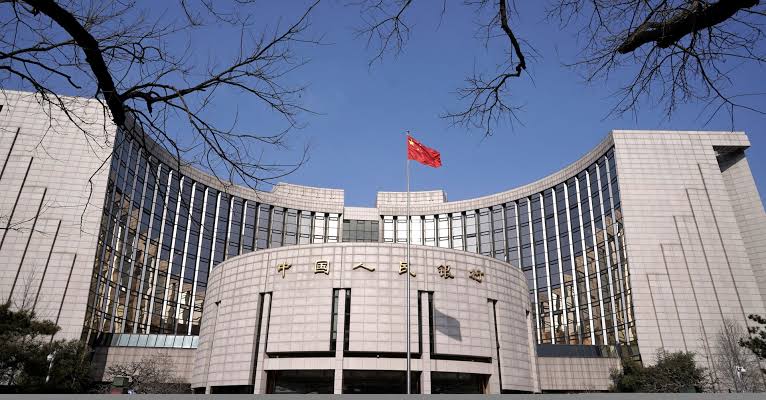
China’s cenbank to monitor AI’s impact on inflation, monetary policy
People’s Bank of China Governor Pan Gongsheng says policymakers must prepare for AI’s uneven economic effects, as investment-driven inflation pressures could eventually give way to productivity-led disinflation.
China’s central bank will closely monitor how artificial intelligence affects economic growth, employment, financial markets and monetary policy, as policymakers assess the consequences of rapid technological change for the world’s second-largest economy.
People’s Bank of China (PBOC) Governor Pan Gongsheng outlined the approach at the Financial Street Forum in Beijing on 19 October. He said the central bank would assess AI’s macroeconomic implications and prepare policy responses in advance rather than wait for its effects to become fully apparent.
According to Bloomberg’s report on Pan’s remarks, the governor emphasised that AI’s effects would vary across countries, regions and industries. He said the technology had not yet significantly affected overall employment, although it was already changing the structure of jobs.
Pan identified a potential timing gap between AI’s effects on demand and supply. In the short term, investment in AI infrastructure and applications could boost economic activity and put upward pressure on prices. Over the medium to long term, productivity improvements could expand the economy’s productive capacity and reduce inflationary pressure.
The governor also noted that the AI boom had become a significant driver of global equity-market gains, while financial markets were exhibiting high levels of correlation and volatility. These developments make AI relevant not only to industrial policy and technological competitiveness but also to financial stability and central-bank decision-making.
In his published speech, available through the Bank for International Settlements, Pan outlined three priorities for the PBOC: monitoring AI’s macroeconomic effects, providing financial support for AI development, and cautiously advancing AI adoption within the financial sector.
The PBOC’s approach reflects the difficulty of assessing AI’s economic effects while the technology is still developing. Investment in data centres, computing infrastructure, semiconductor technology and AI applications can stimulate demand before the resulting productivity gains become fully visible.
That sequence matters for monetary policy. When businesses increase investment, demand for equipment, electricity, construction and specialised services can rise. If supply cannot respond quickly enough, the resulting spending may add to inflationary pressure.
Over time, however, AI-enabled automation, improved resource allocation and faster information processing could allow businesses to produce more with the same inputs. If those productivity gains spread across the economy, they could reduce unit costs and moderate price increases.
The timing and scale of these effects remain uncertain. Productivity gains may be concentrated in particular industries, while the benefits and adjustment costs are distributed unevenly among workers and businesses.
For a central bank, the challenge is to distinguish temporary demand pressures from more persistent changes in productive capacity. Tightening monetary policy in response to investment-driven inflation without accounting for future supply gains could unnecessarily constrain activity. Conversely, assuming that anticipated productivity improvements will quickly reduce inflation could lead policymakers to underestimate near-term price pressures.
Pan’s emphasis on forward-looking assessment suggests that the PBOC intends to incorporate these competing possibilities into its economic analysis. It does not, however, amount to an announcement of a new AI-specific interest-rate policy.
AI’s employment effects are another part of the central bank’s assessment. Pan’s distinction between total employment and job structure is important: a technology can change the composition of the labour market before producing a measurable decline in aggregate employment.
Some tasks may become automated, while demand increases for workers who develop, operate and integrate AI systems. Other occupations may be reshaped as AI changes how work is organised. The overall employment outcome will depend on the pace of adoption, the creation of new activities, worker retraining and the ability of businesses to expand.
The distribution of productivity gains also matters. If efficiency improvements primarily increase corporate profits or accrue to a narrow group of highly skilled workers, household income and consumption may not rise in line with productive capacity.
That possibility has wider macroeconomic implications. Stronger productive capacity does not automatically translate into stronger domestic demand. If household spending remains weak, businesses may struggle to sell the additional output generated through technological investment.
The PBOC’s assessment therefore needs to consider not only how much AI can increase output but also how its gains affect wages, employment, investment and consumption. These relationships will influence the technology’s eventual contribution to sustainable growth.
Pan’s remarks also place AI within the broader debate over financial stability. Expectations of future productivity gains have supported investment in AI-related companies and infrastructure, while equity markets have become increasingly sensitive to the commercial prospects of the technology.
Investment can be economically productive even when asset prices rise rapidly. The risk emerges when market valuations become excessively dependent on optimistic assumptions about future earnings, adoption rates or technological breakthroughs.
High correlations between financial markets can amplify that vulnerability. If investors simultaneously revise their expectations for AI-related companies, losses may spread across markets, affecting financing conditions and investor confidence.
For China, the central bank’s monitoring role includes assessing how such developments could influence financial conditions, capital allocation and the transmission of monetary policy. The objective is not simply to predict whether AI investment will continue growing, but to understand how the associated risks could affect the wider economy.
Pan also identified practical applications for AI within the financial system, including suspicious-transaction detection, risk management and financial inclusion. The PBOC plans to explore its use in monetary-policy analysis, financial-risk identification, payments, credit reporting and anti-money-laundering activities.
These applications could improve efficiency and strengthen financial oversight. They also create risks involving data security, model reliability and the potential for automated systems to produce or amplify errors. Pan said financial institutions would be guided to address data-security and AI-model risks as adoption advances.
The significance of the PBOC’s announcement lies in its recognition that AI could affect both sides of the economic equation. It may increase demand through investment before raising productive capacity sufficiently to ease inflation. The same technology could therefore create different policy challenges at different stages of its adoption.
This distinction is particularly important for China, where policymakers are pursuing technological upgrading while seeking more sustainable economic growth. AI investment can support industrial modernisation, but its long-term contribution will depend on whether productivity gains translate into broader improvements in incomes, consumption and business performance.
The central bank’s three-part approach connects these challenges. Monitoring the macroeconomic effects helps policymakers understand changes in demand, supply and employment. Financing support can help AI companies develop technologies and commercialise innovations. Cautious adoption within finance can improve operational efficiency while addressing new risks.
However, the effectiveness of this approach will depend on implementation. Financial support alone cannot guarantee commercially viable innovation, and rapid technological adoption does not automatically produce economy-wide productivity gains. Skills, competition, infrastructure, data governance and the distribution of economic benefits will all influence the outcome.
There is also a broader international implication. If AI investment becomes a major driver of global equity prices and changes the productive capacity of economies, central banks will need to reassess how they interpret inflation, employment and financial conditions. The consequences will not be uniform: countries differ in their technological capabilities, industrial structures and capacity to absorb labour-market disruption.
For monetary policymakers, the central challenge is to avoid treating AI as either an automatic source of disinflation or an investment boom that must inevitably generate inflation. Both outcomes are possible, depending on the timing, scale and distribution of its effects.
The PBOC has signalled that it intends to study these changes before adjusting its response. The next test will be whether its assessment can distinguish temporary investment pressures from lasting productivity improvements and translate that understanding into effective monetary, financial and regulatory decisions.
Sources:
- Bloomberg — PBOC’s Pan says to monitor AI impact on economy, monetary policy, 19 October 2026
- Bank for International Settlements — Pan Gongsheng’s speech at the Financial Street Forum, 19 October 2026
- Reuters — China’s central bank studies making the overnight rate its main policy rate, 19 October 2026
- Beijing News — PBOC governor addresses the economic impact of AI, monetary policy and financial support, 19 October 2026
- National Bureau of Economic Research — Research on productivity, technological change and economic growth
