














Israel’s election may change its leader, but not its strategy towards Iran
As Israelis prepare to vote on 27 October, analysts expect continuity in the country’s security doctrine, military posture and opposition to Palestinian statehood, regardless of who forms the next government.
Israel’s forthcoming parliamentary election is unlikely to produce a fundamental shift in the country’s approach to Iran, military deterrence or Palestinian statehood, according to regional policymakers and analysts cited by Reuters. The vote could change the country’s leadership, but the strategic assumptions shaping its foreign and security policies are expected to remain largely intact.
In an analysis published on 21 October, Reuters correspondent Samia Nakhoul reported that the wars following the Hamas-led attacks on southern Israeli communities on 7 October 2023 had reinforced a security doctrine centred on confronting Iran, maintaining military positions beyond Israel’s borders and using force to deter perceived threats.
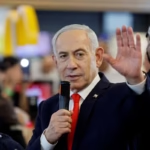
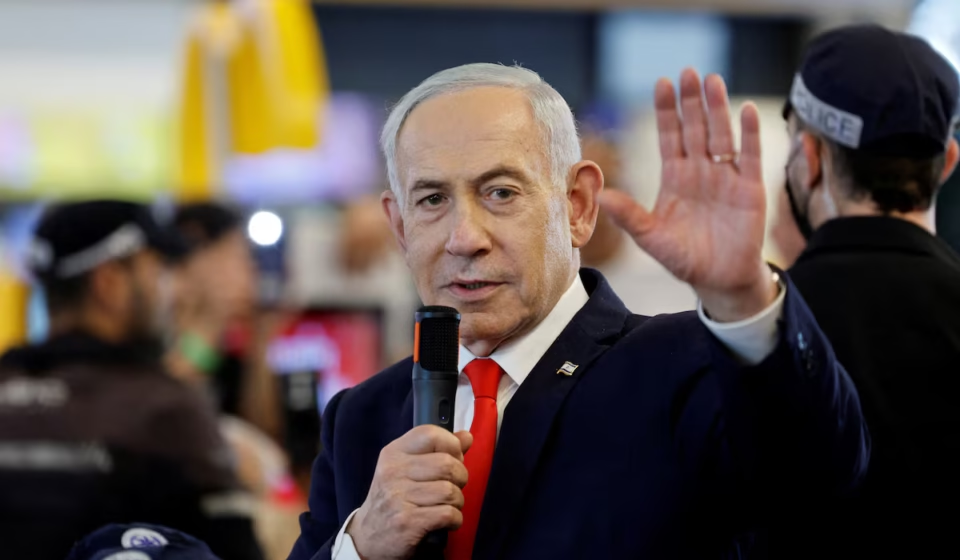
Prime Minister Benjamin Netanyahu’s Likud party and its ultranationalist allies face an opposition led by former military chief Gadi Eisenkot and his Yashar party. Israel’s election is scheduled for 27 October, according to the Israel Democracy Institute’s election timeline and the country’s official election information service.
The political contest comes amid continuing regional tensions involving Iran, Gaza, Lebanon and the occupied West Bank. Netanyahu has advocated a more offensive security posture, including pre-emptive military action against emerging threats. Reuters reported that his re-election could encourage a more aggressive campaign against Tehran and further expansion of Israeli settlements in the West Bank.
However, the possibility of a change in government does not necessarily imply a corresponding change in policy. Palestinian analyst Ghassan al-Khatib told Reuters that Israel’s political parties broadly agree on opposing Palestinian statehood and supporting further settlement expansion. A government led by Netanyahu’s opponents might seek to improve Israel’s international standing by adopting a different approach to settler violence or reducing the visibility of settlement expansion, without fundamentally reversing the underlying policy.
The United States has also expressed opposition to Israeli annexation of the West Bank. A State Department spokesperson told Reuters that Washington regarded stability in the territory as important to Israel’s security and its own regional peace objectives.
Netanyahu’s stated ambitions extend beyond containing Iran’s regional influence. According to Reuters, he has called for the overthrow of the Iranian government, describing regime change as necessary to remove what he considers a major security threat.
That position raises questions about the limits of military pressure. Analysts cited by Reuters argued that air strikes and attacks on Iran-aligned groups might not be sufficient to compel Tehran to abandon its core security interests. Iran could instead seek to withstand prolonged pressure, retain influence through regional partners and strengthen its determination to develop a nuclear deterrent.
Michael Young of the Carnegie Middle East Center argued that Israel’s security establishment and much of its political class share a strategic outlook focused on confronting Iran, maintaining forward defence and preserving military deterrence.
The result is a potential cycle of confrontation in which military operations weaken individual adversaries without resolving the wider political disputes sustaining the conflict.
Hezbollah in Lebanon and Hamas in Gaza have suffered significant military setbacks, Reuters reported, but analysts cautioned that the broader network of Iran-aligned groups had survived. A prolonged conflict could therefore leave the region facing recurring confrontations rather than a durable security settlement.
The implications extend beyond the Iran–Israel confrontation. The occupied West Bank remains a major source of instability, particularly amid settlement expansion, settler violence, Palestinian frustration and the absence of a credible political process towards statehood.
Joost Hiltermann of the International Crisis Group warned, in comments reported by Reuters, that these conditions could make the territory vulnerable to a wider uprising following even a relatively minor trigger.
The election may influence how Israel manages these tensions, but it is not certain to alter their underlying causes. A government that places greater emphasis on diplomacy could seek to reduce international criticism or restrain certain practices without accepting Palestinian statehood or reversing settlement policies.
This distinction matters because changes in diplomatic tone do not necessarily translate into substantive political concessions. Without an agreed political framework, immediate security measures may contain particular incidents while leaving the broader conflict unresolved.
The United Nations has repeatedly addressed settlement activity through Security Council Resolution 2334, which calls on Israel to cease settlement activity in the occupied Palestinian territory, including East Jerusalem. A September 2026 briefing by the UN Special Coordinator for the Middle East Peace Process reiterated the resolution’s relevance to the continuing dispute.
Israel’s confrontation with Iran also presents competing priorities for Arab governments, particularly in the Gulf. Some regional leaders oppose Netanyahu’s policies in Gaza, the West Bank, Syria and Lebanon while continuing to regard Iranian regional influence as a security concern.
Abdulaziz Sager, chairman of the Gulf Research Center, told Reuters that a settlement with Iran was necessary to prevent further escalation. His assessment reflects a dilemma for regional policymakers: they may favour limits on Iranian influence without endorsing the broader consequences of Israel’s military strategy.
A prolonged confrontation could place additional pressure on regional diplomacy, complicate efforts to stabilise neighbouring countries and make it harder to establish durable arrangements for security and political cooperation.
For Gulf governments, the central question is whether pressure on Iran can produce a more stable regional balance or instead generate further conflict. That calculation may remain relevant regardless of the outcome of Israel’s election.
The strongest conclusion supported by the available reporting is that Israel’s election is taking place within a political environment that favours continuity in several core security objectives. Iran remains a principal adversary, military deterrence remains central to Israeli strategy, and the prospects for Palestinian statehood remain uncertain.
However, continuity should not be confused with complete uniformity. Leadership can affect the timing, scale and diplomatic presentation of military operations. A different government could place greater emphasis on repairing international relations, managing settlement-related criticism or pursuing negotiations. These changes could have practical consequences even if the broad strategic direction remains intact.
The election also cannot, by itself, determine the outcome of the regional confrontation. Iran’s decisions, US policy, the position of Gulf governments and the actions of armed groups will all influence the trajectory of the conflict. Domestic political incentives in Israel may shape the use of force, but they are only one part of a wider strategic calculation.
There is also a distinction between a government’s declared objectives and its capacity to achieve them. Regime change in Iran, the elimination of armed groups and the establishment of lasting deterrence are different objectives, each involving different military and political challenges. Success against a particular adversary does not automatically produce a sustainable regional settlement.
For Palestinians, the central issue is whether any change in Israeli leadership opens a credible political route towards self-determination. For neighbouring Arab states, it is whether regional security can be achieved without further escalation. For international policymakers, it is whether deterrence can be combined with diplomacy to prevent recurring wars.
Israel’s 27 October election may therefore prove consequential for the style and intensity of its regional policy. Yet unless the underlying disputes over Iran, occupied territory and Palestinian statehood are addressed, a change in leadership alone is unlikely to deliver a fundamental transformation of Middle Eastern security.
Sources:
- Reuters — Israel’s election may change its leader, but not Iran war policy, 21 October 2026
- Israel Democracy Institute — 2026 election timeline
- Israel Ministry of the Interior — Official election information
- United Nations — Security Council briefing on Resolution 2334, 28 September 2026
- The Times of Israel — Netanyahu’s pre-election security briefing and pledge to topple Iran’s regime
- Associated Press — Major candidates in Israel’s 2026 election
