









Europe’s far right to advance anti-immigration agenda
Nationalist leaders are linking unrest over living costs, housing and public services to immigration and public order, while the wider political implications remain contested.
Europe’s far-right political leaders have seized on recent street unrest to criticise centrist and left-wing governments and promote tougher immigration and security policies, according to a report published by The Guardian on 21 October.
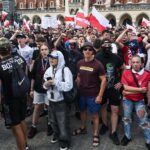
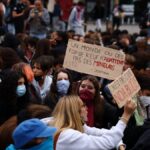
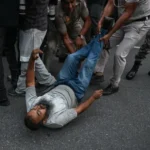
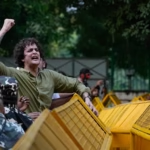
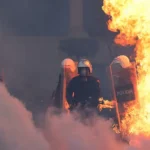
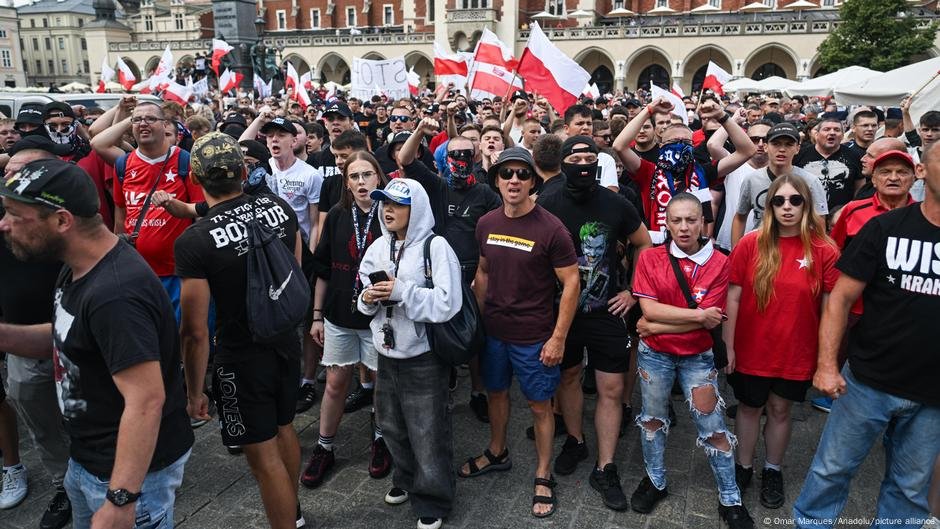
The unrest followed demonstrations over the cost of living, housing affordability and deteriorating public services across several European countries. Although many protests began peacefully, some escalated into clashes, looting and violence. Far-right parties have used these incidents to argue that existing governments have failed to maintain public order.
In France, National Rally (RN) president Jordan Bardella described the government as “impotent” in its response to rioting and looting. RN leader Marine Le Pen said the state had lost control amid what she characterised as migration, budgetary and security chaos. She has linked the unrest to immigration and what she considers a loss of state authority.
Germany’s Alternative für Deutschland (AfD) has warned that violence in France could spread across the border, despite the absence of major protests in Germany. Co-leader Alice Weidel connected the French disturbances to mass migration and left-wing extremism.
In Portugal, Chega leader André Ventura attributed the housing crisis primarily to what he called an uncontrolled influx of people from abroad. In Spain, Vox leader Santiago Abascal accused housing protesters of serving Prime Minister Pedro Sánchez’s political interests rather than advocating for housing and employment. The Guardian also reported that Vox had previously made a misleading claim linking an elderly woman’s eviction to immigration.
Belgium’s Vlaams Belang framed clashes in Brussels and Liège as evidence of failed integration and open-border policies, describing the violence as imported.
Italy’s Prime Minister Giorgia Meloni took a law-and-order approach following disturbances in Milan and Bologna. Her government introduced emergency measures imposing tougher penalties for violent participation in demonstrations, violence by organisers and vandalism, including penalties for parents whose children engage in such acts. Meloni also highlighted the immigrant backgrounds of some people detained after the Milan riots.
Beyond established parties, French far-right figure Éric Zemmour called for an end to immigration and the deportation of foreign offenders. In the United States, President Donald Trump and Vice-President JD Vance also portrayed the unrest in France as a warning about immigration and multiculturalism.
These are statements and political positions reported by The Guardian. They do not, by themselves, establish that immigration caused the unrest.
The political contest is not only about how governments respond to violence. It is also about which explanations become dominant when citizens express dissatisfaction with economic conditions and public services.
Housing costs, household finances and public-service pressures formed part of the protest context described by The Guardian. Far-right leaders have sought to redirect attention towards immigration, national identity and security. This framing offers a relatively clear political explanation for complex grievances and allows parties to present stricter migration controls as a solution.
However, the relationship between immigration and the protests cannot be established simply by citing the backgrounds of people arrested. Arrest figures do not demonstrate the causes of a wider movement, nor do they establish that the actions of individuals represent the views or behaviour of an entire community.
Italy illustrates a related political dynamic. Because Meloni leads the government, her response has focused on expanding law-and-order measures rather than blaming an opposition administration for the unrest. Such measures may be presented as necessary for public safety, but their effects on peaceful protest, civil liberties and political participation require separate scrutiny.
The international dimension is also significant. Trump and Vance have used European unrest to support arguments in American political debate. This shows how domestic disturbances can become material for transnational political messaging, although the statements alone do not establish how much they influence voters.
The electoral consequences remain uncertain. The Guardian identifies upcoming contests in France, Spain and Italy as an important backdrop, but the reported events do not prove that the far right will gain votes because of the unrest. That outcome would require evidence from polling, election results and voter research.
The central distinction is between the documented use of protest violence in political messaging and the broader claims made to explain the violence. The former is reported political activity; the latter requires evidence that goes beyond rhetoric.
As European governments respond to unrest, the key questions are whether policy measures address the underlying economic grievances, whether public order can be maintained without disproportionate restrictions on peaceful assembly, and whether claims about immigration are supported by evidence rather than political assertion.
Source note: This article draws on Jon Henley and Guardian correspondents, The Guardian, 21 October 2026. The reported statements are attributed to the individuals and parties identified in that report. The analysis section presents interpretation and identifies conclusions that the reported evidence alone cannot establish.
