

















France protests escalate, cost-of-living anger spreads across Europe
France faces mounting pressure after nationwide demonstrations over living costs, school conditions and public services descended into violence in several cities. Italy also witnessed clashes, while Portugal saw demonstrations over housing affordability.
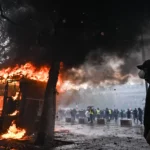
France is confronting one of its most serious episodes of public unrest in years after demonstrations over rising living costs, deteriorating school conditions and weakening public services were followed by widespread clashes, arson and looting. More than 1,800 people had been arrested by 18 October, according to Interior Minister Laurent Nuñez, while more than 500 police officers, gendarmes and firefighters were reported injured.
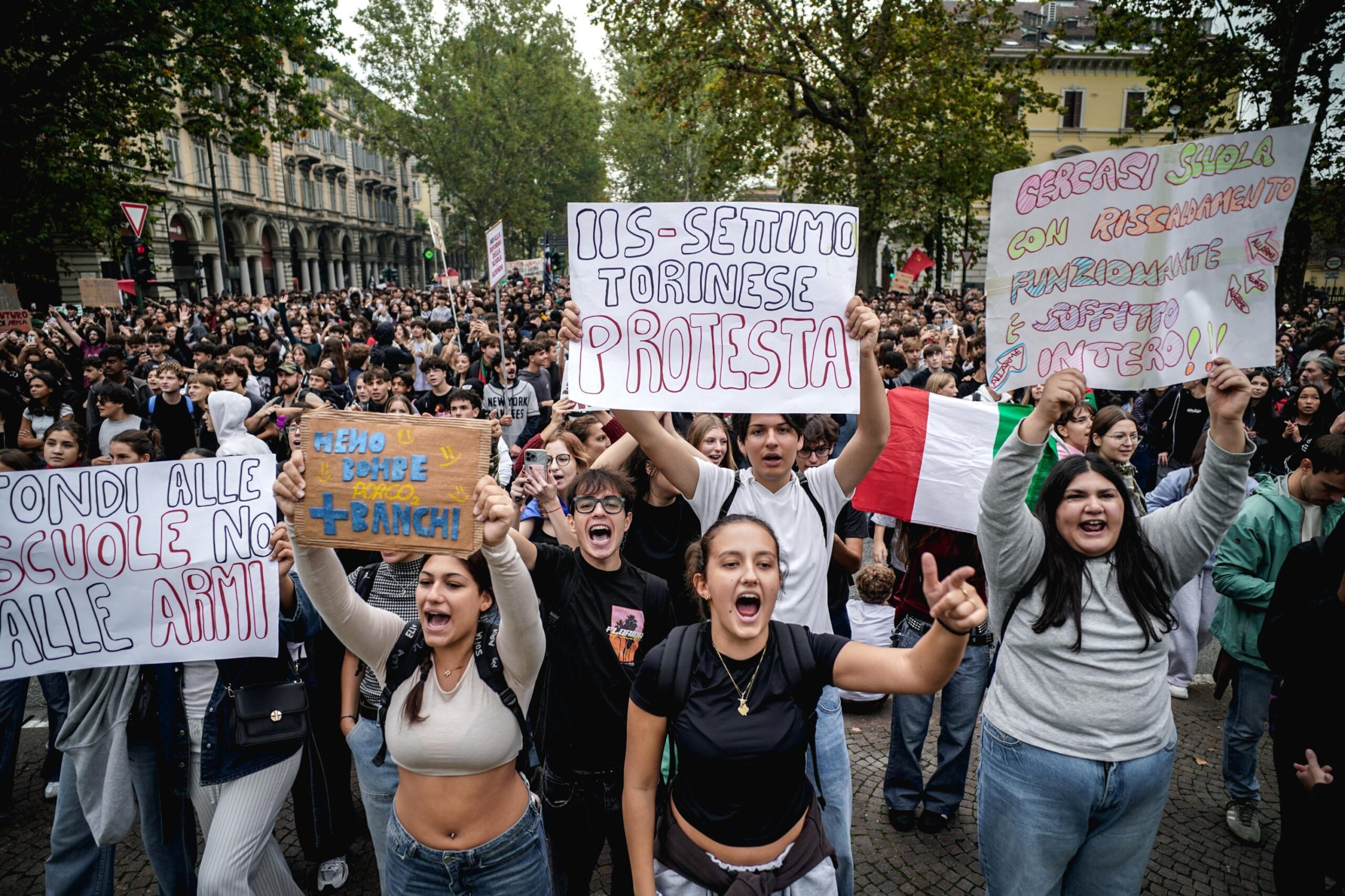
The protests on 17 October drew large crowds across the country. Authorities estimated national participation at approximately 550,000, while organisers put the figure at around 800,000. In Paris alone, police estimated that 110,000 people joined the demonstrations. Many participants marched peacefully, but violence erupted in several cities, including Paris, Marseille, Lyon, Bordeaux and Limoges.
The Guardian’s live coverage on 18 October reported extensive damage to commercial streets in Paris and a major fire at Limoges town hall, a historic municipal building. Authorities said investigations were under way to identify those responsible for attacks on public buildings, businesses and security personnel. The reported arrest and injury figures remain subject to official updates.
The latest demonstrations grew out of student protests that began the previous month in disadvantaged suburbs north of Paris. Complaints about teacher shortages, inadequate school facilities and declining educational standards developed into wider opposition to high living costs, inequality and pressure on France’s social welfare system.
Trade unions and other groups helped broaden the mobilisation. Their demands included higher wages and pensions, lower prices and stronger public services. The grievances echo themes associated with France’s 2018 Yellow Vest movement, although the two movements emerged in different political and economic circumstances.
President Emmanuel Macron was scheduled to address the public on the evening of 18 October. The government has defended the right to peaceful protest while promising legal action against those responsible for violence. Officials have blamed radical left-wing groups and criminal actors for attacks during the demonstrations, but those characterisations represent the government’s assessment and do not establish the political affiliation of every person arrested.
The distinction is important: the scale of peaceful participation and the actions of violent groups should not be treated as interchangeable. At the same time, the destruction has intensified pressure on the government to restore public order and respond to the underlying grievances.
France was not the only European country to experience unrest on 17 October. In Italy, a demonstration in Milan that began with opposition to war and rising living costs escalated into confrontations between masked protesters and police.
According to reports cited by The Guardian, demonstrators threw stones and paving blocks, set fire to makeshift barricades and damaged property. Police deployed tear gas and water cannon to disperse crowds. At least two officers were reported injured, while approximately 50 demonstrators were detained, according to the Italian news agency LaPresse.
The violence followed a broader pattern in which demonstrations addressing economic or political grievances can become the setting for confrontations involving smaller groups. The reported incidents do not, on their own, establish that the protests in Italy and France were centrally coordinated or part of a single movement.
In Portugal, demonstrations over housing and living costs were reported to be more peaceful. Hundreds gathered at Lisbon’s Rossio Square after marches that drew participants in different parts of the country.
Protesters raised concerns about housing affordability, taxation and the pressure on working households. Their demands underline how access to secure housing has become a prominent issue in European public debate, particularly where rents and everyday expenses place growing pressure on household budgets.
The contrast with France and Italy is significant. Similar economic anxieties can produce different forms of mobilisation depending on local political conditions, the organisation of demonstrations and interactions between protesters and authorities.
The events point to a broader challenge for European governments: maintaining public confidence while households face pressure from living costs and concerns about the quality of public services. Inflation, housing affordability, wages and the availability of education and other essential services can become politically explosive when people believe that their living standards or prospects are deteriorating.
However, demonstrations in different countries should not automatically be described as a unified European uprising. France’s movement has been closely associated with student grievances and wider dissatisfaction with public spending and social inequality. Italy’s reported unrest involved demonstrations against war and rising living costs, while housing affordability featured prominently in Portugal.
These differences matter for policymakers. A security response may be necessary where people face violence or property destruction, but it cannot by itself resolve concerns about wages, housing, schools or public services. Conversely, economic grievances do not justify attacks on people, businesses or public institutions.
France’s immediate priority is to contain further violence and establish accountability for those responsible. Its longer-term challenge is to determine whether the mobilisation reflects a temporary escalation or a deeper crisis of confidence in the country’s social and economic settlement.
Sources: The Guardian — France protests live coverage, 18 October 2026; Reuters — France faces aftermath of worst unrest in years, 18 October 2026; [Associated Press — French police arrest 1,800 after violent clashes and lootin
