



















France protests bring cost-of-living anger, student unrest into streets
Demonstrations across the country turn tense as police report hundreds of arrests; renewed Yellow Vest mobilisation adds pressure on Macron’s government ahead of 2027 election
France faced a fresh wave of public unrest on Saturday as students, trade unionists and Yellow Vest activists joined demonstrations over rising living costs, deteriorating public services and education concerns, with clashes between protesters and police reported in several cities.
The nationwide mobilisation followed weeks of student-led protests over conditions in schools, including inadequate facilities and teacher shortages. Organisers sought to broaden the movement by linking these grievances to wider frustration over household expenses, wages and the state of France’s public services.
The demonstrations also revived memories of the Yellow Vest movement, which emerged in 2018 amid opposition to fuel costs and perceived economic inequality. Activists promoted Saturday’s rallies under the banner of a renewed alliance between younger demonstrators and people affected by the rising cost of living.
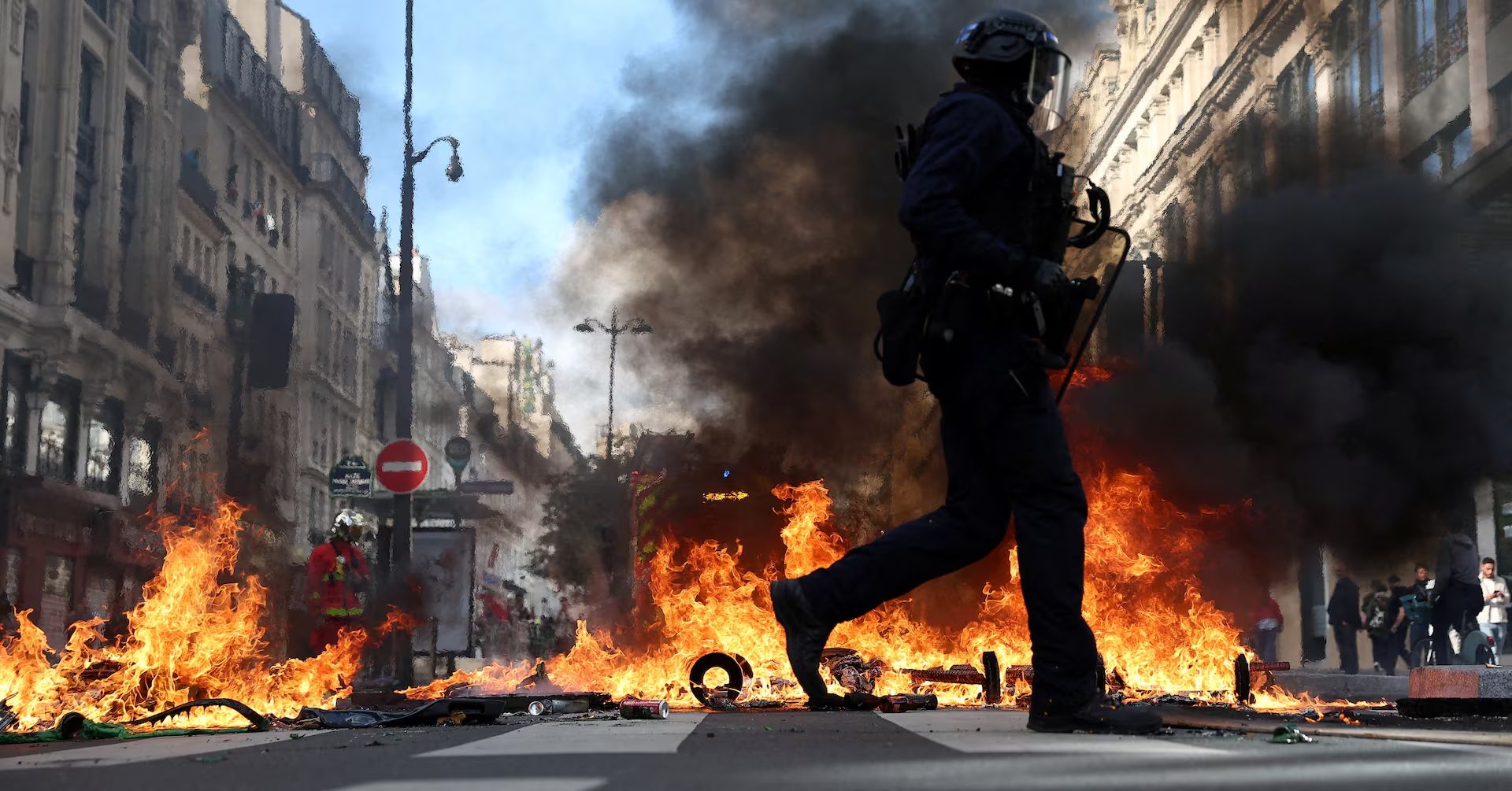
The protests were not uniformly peaceful. Reports from Paris, Marseille and other cities described confrontations, fires and property damage. French authorities reported 272 arrests nationwide, while police used tear gas in parts of the capital. Officials had warned before the demonstrations of possible violence and strengthened security arrangements around sensitive locations.
President Emmanuel Macron had called for calm and respect for people and property ahead of the rallies. Speaking during European Union discussions in Brussels, he acknowledged the right to protest while warning against violence and damage.
The government has also argued that legitimate student concerns risk being exploited for political purposes. Opposition parties have sought to position themselves around the unrest, although their approaches differ. Jean-Luc Mélenchon’s France Unbowed has expressed support for the student movement, while Marine Le Pen’s National Rally has emphasised law and order.
The demonstrations present a challenge for Prime Minister Sébastien Lecornu as his government seeks parliamentary support for a cost-cutting budget. Protesters, meanwhile, are demanding stronger protection against inflation, better-funded education and improved public services.
Anger over police conduct has added another dimension to the mobilisation. Several student demonstrations in recent weeks have been accompanied by reports of serious injuries and arrests. The use of crowd-control weapons has drawn scrutiny, including after a 15-year-old was seriously injured by a stun grenade.
The unrest comes months before France’s next presidential election, scheduled for April and May 2027. The extent to which the student movement, labour organisations and Yellow Vest activists can sustain a common campaign remains uncertain, but Saturday’s demonstrations have brought economic grievances and public-service concerns back to the centre of France’s political debate.
For Macron’s government, the immediate task is to contain violence while responding to demands that extend beyond the education system. For demonstrators, the challenge is to turn a broad coalition of discontent into a sustained movement with shared priorities.
Sources: Agence France-Presse (AFP); Associated Press; Reuters; Le Monde.
