












France’s school protests expose deeper crisis of public services
With 141 schools closed and teaching shortages persisting, Macron’s government faces pressure to improve education while managing mounting debt and a fragmented political landscape
France’s student protests have grown beyond complaints about dilapidated classrooms and staff shortages, exposing deeper tensions over public spending, inequality and the country’s increasingly polarised politics. As demonstrations continue, the government faces a difficult task: improving conditions in schools while operating under significant fiscal constraints and without a stable parliamentary majority.
Reuters reported on 9 October that 141 schools remained closed amid the protests, while nearly 10% of teaching hours in French public high schools were still unstaffed. Education Minister Édouard Geffray announced an emergency plan to deploy 3,000 qualified educators to schools most affected by staff shortages. Student unions welcomed the commitment but said it would not resolve the wider problems facing the education system.
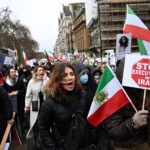
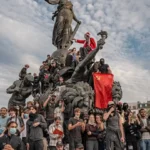
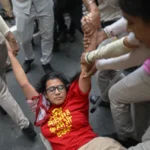
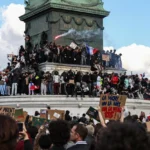
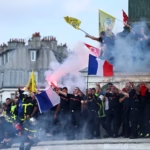
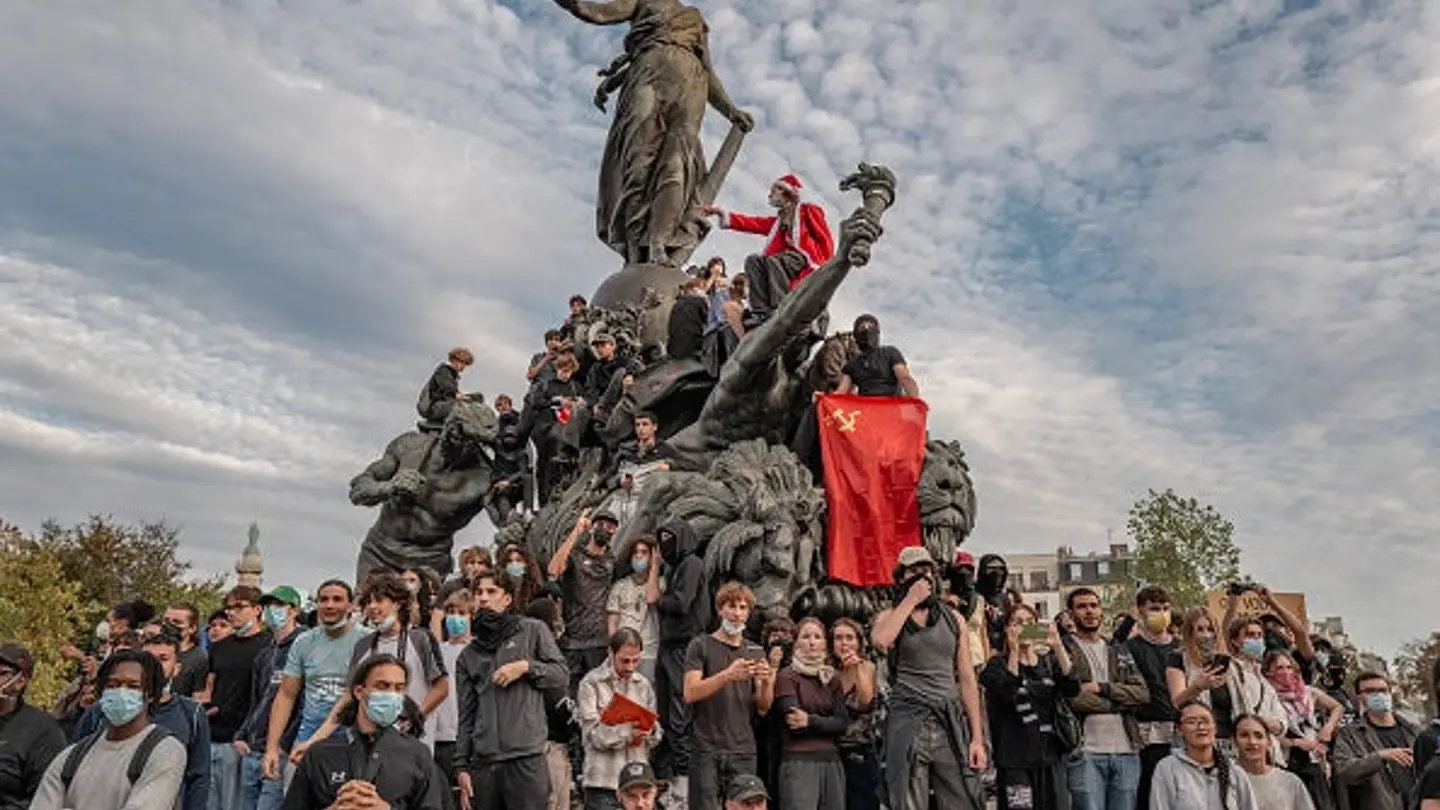
The demonstrations began in September, with students and teachers raising concerns about overcrowded classrooms, deteriorating buildings, inadequate facilities and the failure to replace absent teachers. The movement has since spread to schools and universities across the country, with clashes between protesters and police adding to the pressure on President Emmanuel Macron’s government.
France’s financial position complicates the government’s response. Eurostat data show that public debt reached 117.6% of gross domestic product in the first quarter of 2026, the third-highest ratio in the European Union after Greece and Italy. The figure illustrates the scale of the country’s fiscal challenge, although it does not by itself determine how much the government can spend on education.
In a Reuters analysis published on 8 October, the financial pressure on the government was identified as a key difference between the current unrest and earlier waves of French protests. Governments have often tried to ease social tensions through additional spending, but higher borrowing costs and investor concerns have made that approach more difficult.
The protests also raise questions about how education resources are allocated. France spends substantially on its education system, yet students continue to report basic problems with facilities, staffing and classroom conditions. National spending totals, however, cannot establish whether particular schools are adequately funded: staffing needs, building maintenance and responsibility for investment differ across levels of government.
The immediate deployment of additional educators may help relieve shortages in affected schools. It is less likely, on its own, to address ageing infrastructure, overcrowding or the unequal distribution of educational resources.
The crisis is unfolding within a fractured political system. Macron’s decision to call snap parliamentary elections in 2024 left the National Assembly divided, making it harder for the government to build support for major reforms. Disputes over pensions, public services and spending have further weakened the scope for political compromise.
The school protests have also become a battleground between the government and opposition parties. Officials have accused the left-wing La France Insoumise (LFI) party, led by Jean-Luc Mélenchon, of exploiting the unrest. LFI has rejected allegations that it orchestrated the violence and has criticised the government’s response.
A Le Monde investigation into a police intelligence assessment concerning protests in Seine-Saint-Denis found that the document described activity by radical-left organisations but did not conclusively establish that a single organisation directed the broader movement. The distinction is important: political groups may seek to influence or benefit from demonstrations without having initiated or controlled them.
For students, the central grievances remain educational. Treating the protests primarily as a contest between political parties risks diverting attention from the conditions that prompted the demonstrations in the first place.
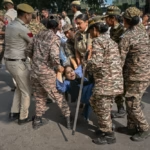
The use of force against student protesters has become a separate source of controversy. Reuters reported on 10 October that France’s police watchdog was examining multiple cases involving serious injuries during the demonstrations, including incidents involving tear gas and other crowd-control weapons. Police unions have defended the use of such equipment, while critics argue that some tactics have escalated confrontations.
The allegations require case-by-case investigation. Nevertheless, the dispute adds to public pressure on the government, which must manage violence and disruption while protecting the rights of students to demonstrate peacefully.
The protests illustrate the difficulty of sustaining public services when citizens expect improvements but governments face rising debt, limited political room for manoeuvre and competing spending demands.
France’s immediate response will be measured partly by whether the promised educators reach the schools that need them. The longer-term test is whether authorities can translate emergency measures into lasting improvements in buildings, staffing and learning conditions.
The unrest does not prove that France’s education system is collapsing, nor does it establish that the country’s fiscal position makes reform impossible. It does show that spending commitments, institutional responsibilities and political priorities are under growing scrutiny.
For Macron’s government, restoring confidence will require more than containing street demonstrations. It will require credible action on the problems students have identified, transparent decisions about education resources and a political response that distinguishes legitimate grievances from violence without treating the entire movement as politically orchestrated.
Sources: Reuters; Eurostat; Le Monde; The Guardian.
