




















France’s school protests expose the social cost of fiscal restraint
Student unrest over overcrowded classrooms, teacher shortages and deteriorating facilities puts pressure on the government as public debt limits its room to spend
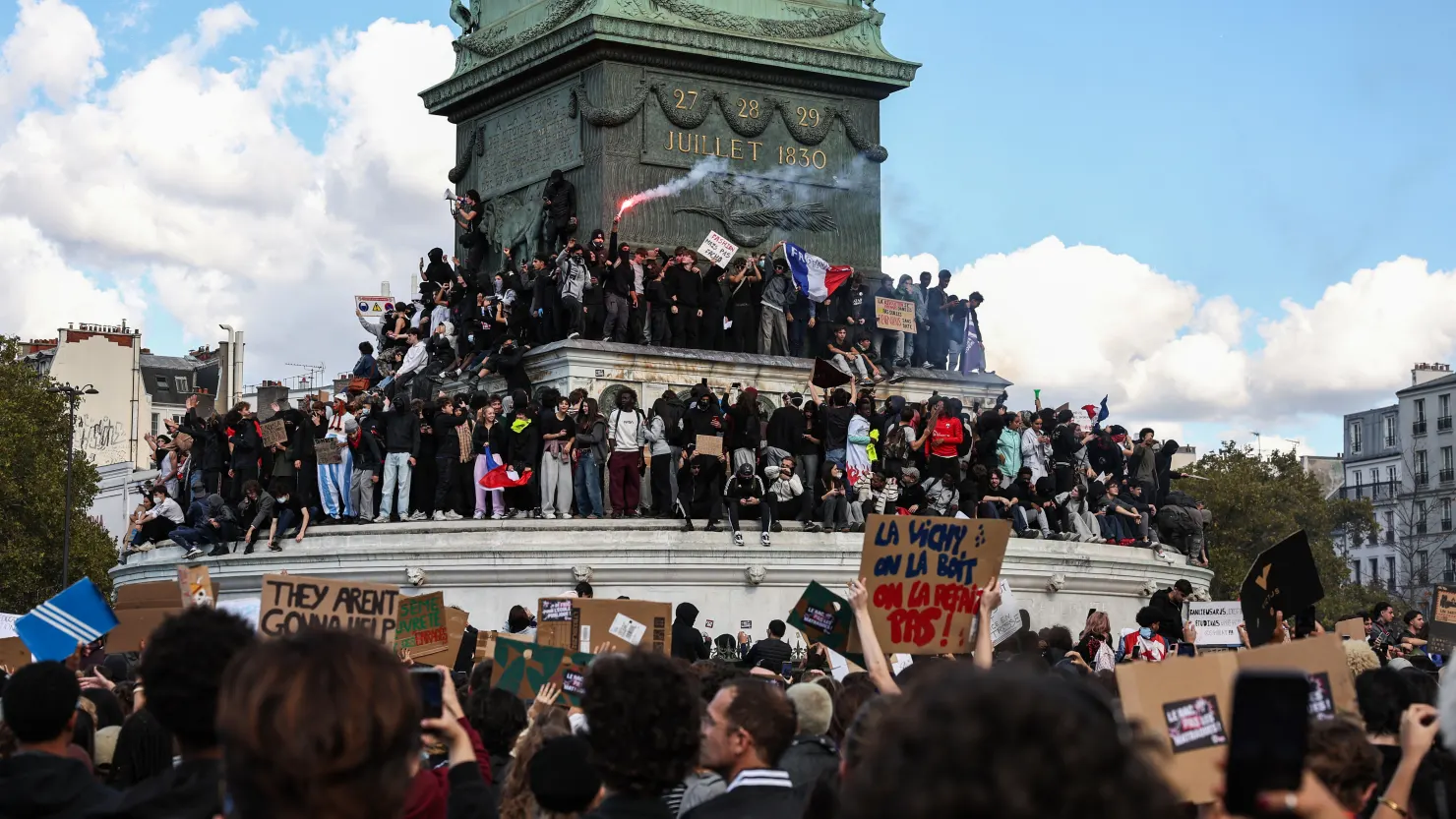
France’s growing student protest movement is exposing a deeper crisis in the country’s public services, with deteriorating school conditions fuelling anger among young people and intensifying political divisions ahead of the 2027 presidential election. The unrest presents Prime Minister Sébastien Lecornu’s government with a difficult choice: respond to demands for better-funded education while trying to control a rising public debt burden.
Reporting from France, the BBC describes demonstrations that began in the Paris suburb of Créteil and spread to cities including Lille, Marseille and Paris. Students have complained of overcrowded classrooms, staff shortages, broken facilities, long school days and inadequate canteen capacity. Teachers have also joined the protests, arguing that staffing gaps and poorly organised timetables are making it increasingly difficult to give pupils the attention they need.
The scale of the demonstrations remains disputed. French authorities reported that 250,000 people marched on Tuesday, while trade unions estimated participation at around 500,000, according to the BBC. The government has responded by promising 3,000 additional supply teachers, but protesters say the problems extend beyond temporary staffing measures.
The grievances point to pressures that go beyond individual schools. Students have also criticised France’s university admissions system, Parcoursup, which they argue can reproduce inequalities between pupils whose schools offer very different levels of support and resources.
The government’s promise to deploy additional teachers is an immediate concession, but the broader demands involve investment in school buildings, classroom capacity, staffing and learning conditions. Such changes require sustained funding and planning rather than a short-term response to demonstrations.
Reuters reported on 9 October that student unions intended to continue protests despite the government’s commitment to additional educators. The agency also reported that around 10% of teaching hours in French public high schools remained unstaffed, highlighting the scale of the recruitment and deployment challenge.
The dispute has also become a test of public confidence. For many students, the protests reflect a wider feeling that political institutions are failing to respond to everyday concerns. That perception could prove difficult to reverse if government announcements are not followed by visible improvements.
The education crisis is unfolding against a strained fiscal backdrop. France’s public debt reached 115.6% of gross domestic product (GDP) in 2025, while its budget deficit stood at 5.1% of GDP, according to the national statistics agency INSEE.
The government must therefore balance additional spending demands against pressure to reduce borrowing. Cutting or restraining public expenditure may reassure investors, but doing so without addressing deteriorating services could intensify public dissatisfaction. Conversely, increasing spending without a credible funding plan risks making fiscal consolidation harder.
The political difficulty is that both objectives matter: France needs to demonstrate that its public finances are sustainable while maintaining essential services. The school protests show how the consequences of underinvestment can become a source of political instability.
The tension also connects the education dispute with concerns in financial markets. Reuters reported on 8 October that France’s 10-year government bond yields had reached a 24-year high amid worries over the country’s budget and political uncertainty. Higher borrowing costs can increase the expense of servicing public debt, leaving less fiscal room for other priorities over time.
The unrest has also exposed the widening gap between France’s political camps. Far-right National Rally leader Marine Le Pen has condemned damage to schools and argued that parents should pay for vandalism committed by their children. On the hard left, Jean-Luc Mélenchon has voiced support for the demonstrators and sought to position his movement as a political voice for younger generations.
The BBC reports that the protests have become a focal point for competing political narratives, with politicians accusing one another of exploiting or escalating the unrest. As the 2027 presidential election approaches, the movement could strengthen arguments from both ends of the political spectrum that France’s established political centre has failed to deliver.
Policing has added another layer of tension. The BBC reported thousands of detentions, injuries among officers and pupils, and allegations of excessive force against minors. Police representatives, meanwhile, have blamed violence in some demonstrations on people they say are not connected to the schools. The competing accounts underscore the difficulty of maintaining public order while protecting the right to protest.
France’s school protests are unlikely to be resolved by one staffing announcement or a limited budget adjustment. Improving facilities, filling vacancies and addressing inequalities in access to higher education will require decisions that extend beyond the current political cycle.
The government’s challenge is therefore not simply to restore order, but to show that public institutions can respond to legitimate grievances while operating within a credible fiscal framework. If students and teachers see no meaningful change, the protests could become part of a broader crisis of confidence in the state.
For France, the central question is whether fiscal discipline can be pursued without further weakening public services that citizens expect the state to provide. The school unrest has made that conflict visible—and placed it at the centre of the country’s political debate.
Sources: BBC News, 10 October 2026; Reuters, 8–9 October 2026; INSEE.
