




















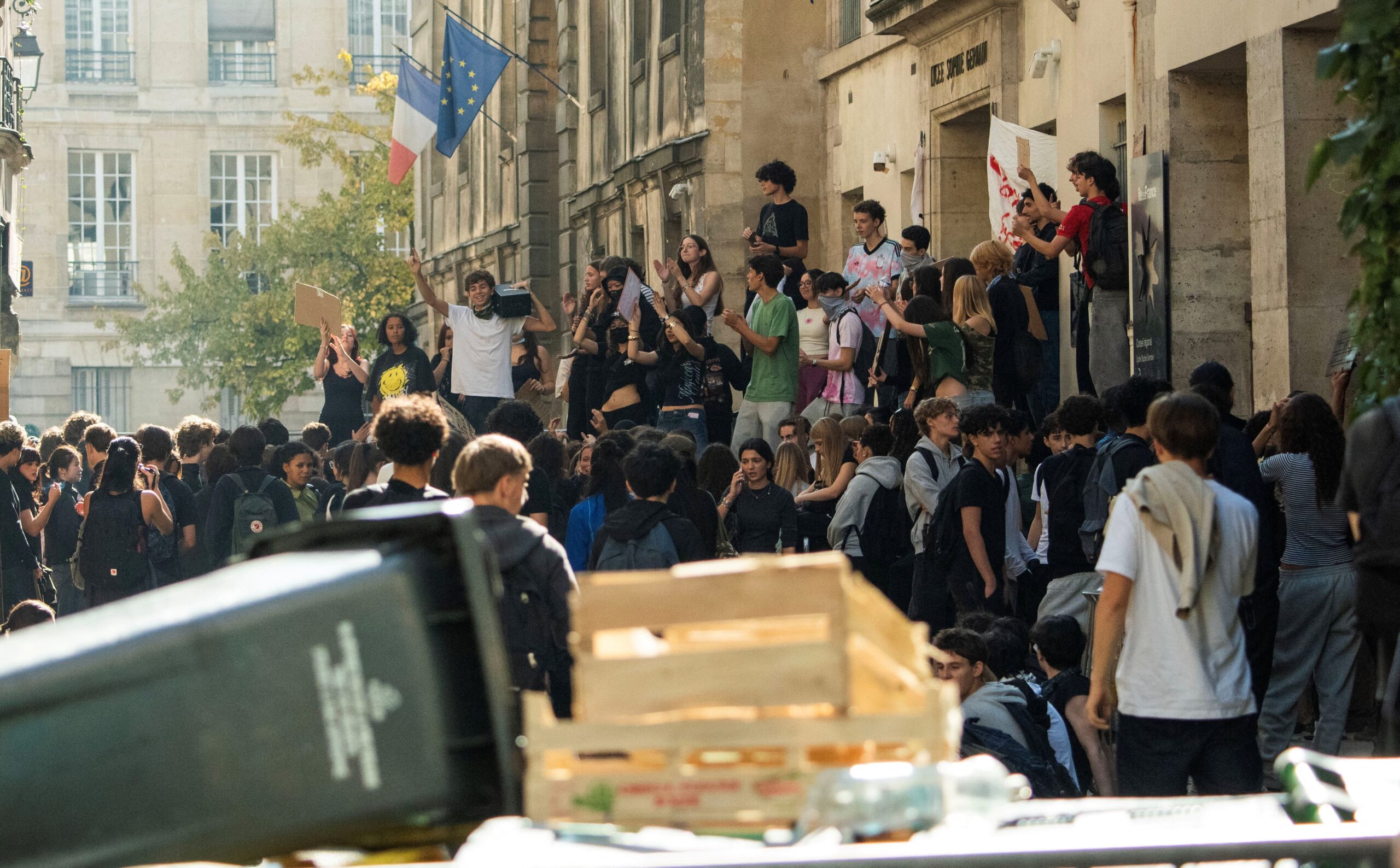
French student protests spread as pressure mounts over education spending
Student protests over deteriorating conditions in France’s schools have spread across the country, with demonstrations involving pupils, parents, university students and trade unions amid growing concerns over education funding and public spending.
Hundreds of schools have been partially or fully affected by the protests, although figures from the authorities and student organisations differ sharply. France’s education ministry said 891 schools had suspended classes either fully or partially, while the Union Syndicale Lycéenne, one of the main groups organising the protests, claimed that 2,000 high schools had been shut.
The demonstrations, which began in late September, have focused on teacher shortages, overcrowded classrooms, inadequate replacement staff, deteriorating school buildings and facilities poorly adapted to rising temperatures.
The protests escalated in several cities on Tuesday. Barricades were set alight in Lyon, protesters clashed with police in Strasbourg, while police used water cannon during demonstrations in Rennes.
In Lille, thousands of protesters gathered in the city centre, many of them teenagers. Police in riot gear were deployed around the local government building as chants and demonstrations continued.
The government said 215 students and 715 police officers had been injured since the protests began. Human rights organisations have also raised concerns over what they described as a disproportionate police response.
The unrest highlights a difficult policy challenge for the French government. Protesters are demanding greater investment in public education at a time when Paris is under pressure to rein in public spending and address its strained public finances.
The government’s ability to meet the demands is therefore likely to depend not only on its education priorities but also on how much fiscal space it has to increase spending on teachers, school infrastructure and public services.
The protests have also drawn support from France’s largest trade union, the Confédération Générale du Travail (CGT), as well as parents and university students, broadening the movement beyond secondary-school pupils.
For many students, the dispute is about more than classroom conditions. Demonstrators say repeated complaints about overcrowding, teacher shortages and deteriorating facilities have gone unanswered.
The growing mobilisation could consequently become a wider test of the government’s ability to balance fiscal consolidation with demands for stronger public services.
