




















More than 100,000 join fresh Yellow Vest protests across France
Demonstrations over living costs, wages, education and public services drew more than 100,000 people nationwide, according to official figures, as unions prepare further strikes over the government’s proposed minimum-wage increase.
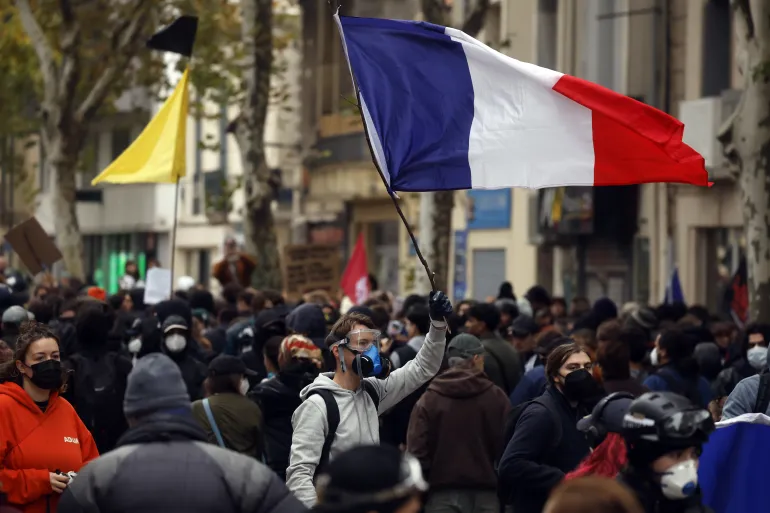
More than 100,000 people took to the streets across France on Saturday, 14 November, in a fresh wave of demonstrations led by Yellow Vest activists, student groups and trade unions over rising living costs, low wages and deteriorating public services. Although participation declined from the previous weekend, protests continued in major cities, with clashes and police use of tear gas reported in several locations.
According to a report by Al Jazeera, citing Agence France-Presse (AFP) and Reuters, France’s Interior Ministry estimated nationwide participation at 106,000, including 24,000 in Paris. Student unions put the turnout considerably higher, at 200,000 across the country, including nearly 100,000 in the capital. The official estimate was down from 146,000 nationwide and 46,000 in Paris during the previous weekend’s demonstrations.
The Interior Ministry reported that 219 people were detained across France on Saturday, while prosecutors recorded 45 arrests in Paris. Authorities described the demonstrations as largely calm, marking a decline in both participation and arrests compared with earlier protests.
The latest mobilisation reflects a combination of economic and social concerns. Protesters have criticised rising household expenses, low wages, declining educational standards, poor school conditions and police violence. Some demonstrators also carried placards opposing President Emmanuel Macron and his government’s policies.
France has experienced school blockades, demonstrations and strikes for more than a month. The movement brings together groups with different priorities, including high-school and university students, trade unions and supporters of the Yellow Vest movement.
The breadth of participation highlights how economic pressure and dissatisfaction with public services have become shared points of mobilisation. However, the demands are not identical across participating groups: students have focused particularly on education, while unions have emphasised wages and working conditions.
Despite the generally peaceful character of Saturday’s nationwide demonstrations, confrontations occurred in several cities.
In Marseille, where authorities had banned protests over the weekend, the prefecture reported that approximately 3,500 people nevertheless took to the streets. Local media reported that police used tear gas and water cannons, while fires were seen in a popular public square.
In Lyon, around 8,000 people reportedly demonstrated. Images shared by local media showed masked protesters gathering near street fires and police charging demonstrators with tear gas. Similar use of tear gas was reported in Nantes, Bordeaux and Paris.
The incidents follow earlier unrest during the protest movement. Demonstrations on 17 October were accompanied by looting in several cities, prompting authorities to increase police deployments and tighten controls on transport and protest permits. The violence reported at some events has remained concentrated around particular confrontations and should not be taken as representative of all demonstrators.
The next phase of mobilisation could take place on Tuesday, when trade unions have called for another day of strikes after rejecting the government’s proposed 0.6% increase in the minimum wage.
Union representatives dismissed the proposed increase as insufficient, describing it as little more than “crumbs” against the pressure facing workers. Their rejection suggests that the government’s wage offer has not resolved the dispute over purchasing power.
Tuesday’s planned action would also coincide with the eighth anniversary of the Yellow Vest movement, which emerged in 2018 following anger over fuel prices and broader economic grievances. The movement became a major challenge for Macron’s government, with demonstrations and blockades continuing over approximately two years.
The protest-tracking website 17octobregiletjaune.net has called for activists to mark the anniversary at the roundabouts and toll booths associated with the movement’s origins.
The latest demonstrations indicate that the grievances behind France’s protest movement extend beyond the original dispute over fuel prices. Household affordability, wages, education and public-service provision have become interconnected concerns, bringing students, workers and established protest groups into the same mobilisation.
The government’s proposed minimum-wage increase has so far failed to satisfy unions, while the continued presence of demonstrators in major cities suggests that public discontent has not subsided. Whether Tuesday’s planned strikes attract participation on a scale comparable with earlier demonstrations will provide another indication of the movement’s momentum.
For the government, the challenge is to address economic and public-service grievances while managing demonstrations and protecting the right to peaceful assembly. For the unions and student groups, sustaining participation across constituencies with different demands remains central to maintaining pressure on policymakers.
The latest figures and developments were reported by Al Jazeera, drawing on AFP and Reuters coverage, in its report on the 14 November Yellow Vest demonstrations across France. The report includes the Interior Ministry’s participation and detention figures, the higher estimates provided by student unions, accounts of disturbances in Marseille and Lyon, and the unions’ plans for further strikes on Tuesday.
Sources
