



















US faces loss of measles elimination status after 26 years as infections surge
The United States is facing the loss of a major public health achievement after more than two decades, as sustained measles transmission and falling vaccination coverage undermine its status as a country that had eliminated the disease.
An independent expert commission convened by the Pan American Health Organization (PAHO) has reviewed evidence indicating that measles has continued circulating in the United States. The commission’s assessment could end the country’s measles elimination status, which it has held since 2000. The final determination is expected from PAHO’s director, with an announcement anticipated next week.
The development follows a sharp rise in infections across the country. The US Centers for Disease Control and Prevention (CDC) reported 5,412 confirmed measles cases in 2026 as of 12 November, making this the highest annual total since the disease was considered eliminated. The agency recorded 43 new outbreaks during the year, with 96 per cent of confirmed cases associated with outbreaks that began in either 2025 or 2026.
The figures point to a shift from isolated outbreaks triggered by infected international travellers towards sustained transmission within communities. This is the central issue in the international review.
Why the elimination status is at risk
Measles elimination does not mean that a disease has been eradicated worldwide. It means that continuous transmission has been interrupted within a particular country or region. Imported cases can still occur, but public health authorities are expected to contain them before the virus establishes sustained local transmission.
Under the criteria used by PAHO, the continued spread of the same measles virus strain for at least 12 months can establish that transmission has become endemic again. Scientists examine the genetic sequences of viruses collected from patients to determine whether infections belong to the same transmission chain or resulted from separate introductions.
Evidence from Utah has been particularly significant. A study published as a preprint in August found that the same strain had circulated in the state for more than a year, accounting for more than 95 per cent of cases examined in the study. The outbreak spread from south-western Utah to central parts of the state and resulted in more than 600 cases between June 2025 and June 2026.
Other states, including South Carolina, Pennsylvania, Wisconsin and New York, have also experienced sustained outbreaks. The combination of prolonged transmission and genetic evidence has placed the country’s elimination status in jeopardy.
Falling vaccination coverage and rising health risks
The resurgence has coincided with declining childhood vaccination coverage and growing public disagreement over immunisation. According to the CDC, 96 per cent of reported measles cases in 2026 involved people who were unvaccinated or whose vaccination status was unknown.
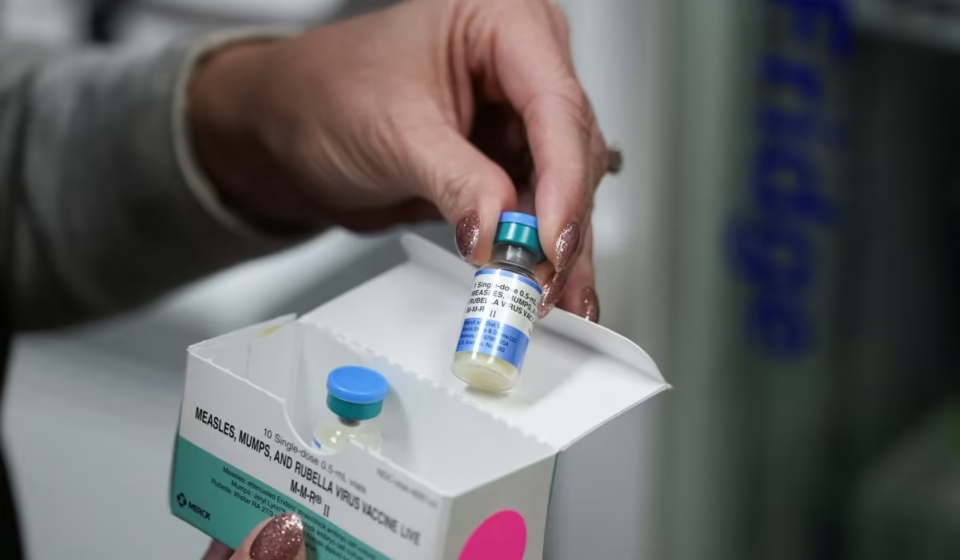
The measles, mumps and rubella (MMR) vaccine remains highly effective. Two doses provide approximately 97 per cent protection against measles. However, protection at community level depends on sufficiently high vaccination coverage, particularly because the virus is among the most contagious known to science. One infected person can typically transmit it to 12 to 18 others.
CDC figures show that 591 of the 5,412 reported cases in 2026 had resulted in hospitalisation by the latest reporting update. The agency’s national data listed six deaths, although state-level reports cited by US media have reported a higher toll. These figures may change as cases and deaths are reviewed and confirmed.
Measles can cause serious complications, including pneumonia, severe diarrhoea and inflammation of the brain. It can also weaken the immune system’s ability to remember and respond to infections encountered previously. Infants who are too young to receive the vaccine, pregnant women and people with weakened immune systems face particular risks.
A setback for public health institutions
The potential loss of elimination status represents more than a change in international classification. It raises questions about the country’s ability to sustain vaccination programmes, maintain public confidence in immunisation and respond rapidly to infectious disease outbreaks.
Public health specialists have warned that declining trust in vaccines, non-medical exemptions from school vaccination requirements and uncertainty surrounding national vaccine policy could make it harder to contain transmission.
The Trump administration has faced criticism from public health experts over statements and policy positions questioning aspects of vaccination. Health officials have also argued that declining vaccination rates began before the current administration, making the causes of the decline a longer-running policy challenge.
The CDC has indicated that losing elimination status would not, by itself, change the agency’s response to measles outbreaks. However, the scale of transmission means that public health authorities will continue to face pressure to strengthen surveillance, vaccination and outbreak containment.
The United States is not alone in confronting this reversal. Canada lost its measles elimination status in 2025 after a prolonged outbreak across several provinces. Mexico has also experienced a major resurgence and is under scrutiny as health authorities assess sustained transmission across the Americas.
Can the United States regain its status?
Regaining elimination status is possible, but it requires more than a temporary decline in reported cases. Authorities must interrupt continuous domestic transmission and demonstrate that the same virus strain is no longer spreading within the country over the required period. This would require stronger vaccination coverage, effective contact tracing, laboratory surveillance and rapid responses to new outbreaks.
The experience of the United States also carries wider implications for international public health. Measles outbreaks demonstrate how quickly progress achieved through decades of vaccination can be reversed when immunisation coverage falls and sustained transmission takes hold.
The final PAHO decision will formally determine the country’s status. Regardless of the classification, however, the immediate challenge remains clear: stopping transmission, protecting vulnerable communities and rebuilding the public health conditions that made measles elimination possible.
Sources: CNN – After 26 years, the US has lost its measles elimination status | Reuters – US faces loss of measles-free status as experts meet for review | Associated Press – The US and Mexico are on the verge of forfeiting a major health victory | US Centers for Disease Control and Prevention – Measles cases and outbreaks | Pan American Health Organization – Update on the review of measles elimination status | KFF – Measles elimination status: What it is and how the US could lose it
