


















Saudi missile interception highlights widening security, aviation crisis
Media monitoring report | Regional Media Research Network (RMRN)
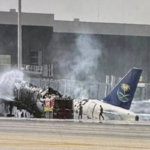
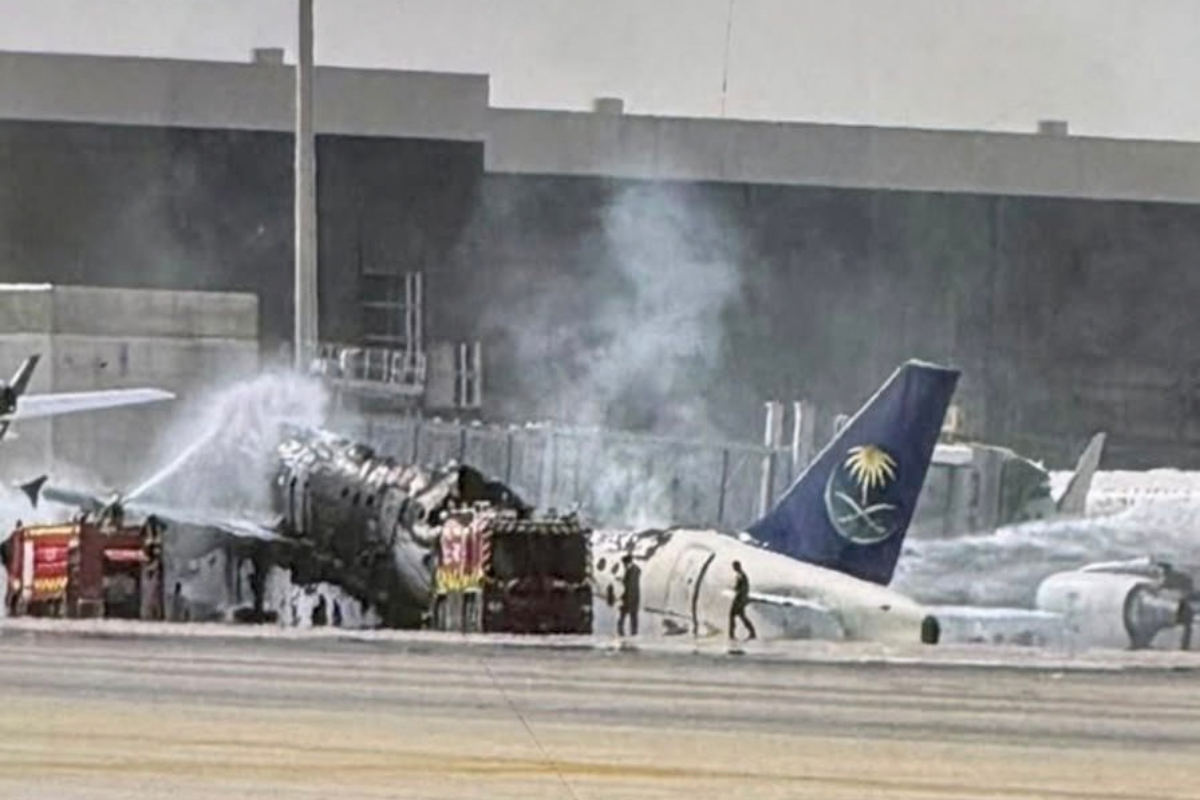
The Saudi-led coalition’s announcement that it intercepted a Houthi ballistic missile heading towards Khamis Mushait is part of a broader escalation in the conflict involving Saudi Arabia, Yemen’s Houthi movement and forces supporting Yemen’s internationally recognised government. However, the significance of the latest incident extends beyond the interception itself. A series of attacks on Saudi airports has disrupted civilian aviation, prompted international travel warnings and forced businesses and educational institutions in Riyadh to adjust their operations.
A comparison of Reuters, Associated Press (AP), Al Jazeera and Anadolu Agency reveals different editorial priorities. Reuters concentrates on aviation disruption and measurable operational consequences. AP widens the frame to regional security and the effects on businesses and civilians. Al Jazeera emphasises travel advisories and the international reach of the crisis. Anadolu Agency focuses on the missile interception and the associated civil-defence warning, while TBS places the incident within the sequence of cross-border attacks.
These differences matter because the same military development can be understood as a successful defensive operation, evidence of a deteriorating security environment or a trigger for wider economic disruption.
The central finding is that the interception is a specific military claim, while the broader crisis is demonstrated by separately reported disruptions to airports, flights and civilian activity. The two should be connected analytically without treating them as interchangeable evidence.
The immediate development: what is established?
On 12 October, the Saudi-led coalition announced that it had intercepted and destroyed a ballistic missile launched towards Khamis Mushait in southwestern Saudi Arabia. Coalition spokesman Major General Turki al-Malki communicated the claim through the social media platform X.
Anadolu Agency reported the announcement and noted that Saudi Civil Defence had issued a warning in nearby Abha before subsequently announcing that the immediate threat had passed. The Business Standard, citing the United News of Bangladesh (UNB), reported a related coalition announcement involving both a drone intercepted in the Eastern Province and a ballistic missile directed towards Khamis Mushait.
Verification distinction: These reports establish that the coalition announced an interception. They do not, by themselves, constitute independent technical verification of the missile’s trajectory, interception or destruction. Nor does the reported interception establish that the missile caused damage at its intended destination.
The distinction is particularly important during an active conflict, when official military statements may provide the first available information but independent access to operational evidence is limited.
There is also a chronological complication. Reuters’ reporting on the airport attacks, published on 11 October, already referred to a ballistic missile intercepted while heading towards Khamis Mushait, alongside other reported interceptions. The subsequent Monday reports describe another announcement concerning the same destination, but the available reports do not conclusively establish whether every reference relates to a separate launch or whether some accounts overlap in their reporting windows. The incidents should therefore not be added together without further confirmation.
Reuters: aviation disruption becomes the principal measure of escalation
Reuters’ 12 October report, Skies over Saudi capital Riyadh largely empty after deadly Houthi strikes on airport, places the aviation consequences at the centre of its coverage.
According to the report, Cirium data showed that King Khalid International Airport cancelled 99.7 per cent of its scheduled flights on Sunday. Approximately 60 per cent of Monday’s scheduled services were expected to be cancelled, while more than a third of flights across Saudi Arabia were not expected to operate. Reuters also reported that Lufthansa had cancelled Riyadh flights until 16 October and Air France-KLM had extended its suspension of services to and from the capital until the end of the month.
This approach moves the story beyond the exchange of missiles and air-defence claims. Flight cancellations, airline suspensions and aviation regulator warnings provide measurable indicators of how a security crisis affects ordinary economic activity.
The framing also changes the implied audience. A reader interested in aviation, business travel, tourism, logistics or investment can understand the consequences without needing detailed knowledge of the military situation in Yemen.
RMRN interpretation: Reuters’ emphasis on operational data makes aviation disruption a practical measure of escalation. The number of flights cancelled and the duration of airline suspensions help demonstrate the scale of disruption, although these figures do not independently establish which party was responsible for every attack.
The distinction between actual and expected cancellations is also important. Sunday’s cancellation figure was reported as observed data, whereas Monday’s figures were forecasts or estimates at the time of publication. They should not be presented as equivalent measurements.
Source: Reuters — Skies over Saudi capital Riyadh largely empty after deadly Houthi strikes on airport.
Associated Press: the crisis reaches workplaces and everyday life
The Associated Press broadens the focus beyond airports and military operations.
Its 12 October regional report states that businesses in Riyadh’s King Abdullah Financial District had instructed employees to work remotely following the increased attacks. AP also reported that authorities had asked schools in the capital to move classes online for the week. These details show how security concerns can affect financial institutions, employees, students and families even when an individual missile is intercepted before reaching its intended target.
This is a different but complementary framing to Reuters. Whereas Reuters uses aviation statistics to demonstrate the scale of disruption, AP brings the crisis into workplaces and public services.
The choice is analytically significant. Airports are strategic infrastructure, but the consequences of insecurity are not confined to airport premises. Remote working and online schooling indicate that the perceived threat is influencing decisions across the wider urban economy.
AP’s coverage also reports a separate development in Yemen: the Houthi-run Health Ministry blamed Saudi Arabia for airstrikes in Sana’a, reporting one death and 12 injuries. AP noted that Saudi Arabia had not immediately responded to that allegation.
This illustrates why regional reporting needs to distinguish between the different parties’ claims. A report of an alleged Saudi strike in Yemen is not the same as an independently verified account of that strike. Equally, the coalition’s missile-interception statement should not be treated as proof of the circumstances surrounding other attacks.
RMRN interpretation: AP’s reporting provides a broader picture of civilian and economic exposure. It also illustrates the importance of attribution when reporting competing claims from opposing parties.
Al Jazeera: international travel warnings and regional spillover
Al Jazeera’s 12 October report, Countries warn against travel to Saudi Arabia following Houthi attacks, foregrounds the international response.
The report identifies travel warnings issued by countries including the United States, Australia, Canada, Japan, South Korea and New Zealand. It describes restrictions or advisories affecting Riyadh and other Saudi locations, with the precise recommendations varying by government. It also reports disruption at airports beyond the capital, including Jeddah.
This framing shifts attention from the interception itself to the geographical reach of the security concern. Travel advisories are official assessments of risk for citizens abroad; they are not proof that every location covered by an advisory has been attacked or faces an identical level of danger.
Al Jazeera also quotes aviation analyst Brendan Sobie, who cautions that the wider consequences for regional aviation depend on the duration of the crisis, how long Riyadh airport remains closed and the restrictions imposed when it reopens. This introduces a conditional economic perspective rather than assuming that the current disruption will persist indefinitely.
The distinction between immediate disruption and longer-term impact is essential. Flight suspensions can be imposed quickly, but their eventual consequences for airlines, tourism, passenger confidence and regional connections depend on how the security situation evolves.
RMRN interpretation: Al Jazeera’s coverage frames the crisis as a regional mobility issue. It demonstrates how security concerns can influence international travel decisions even beyond the location of a specific incident.
However, travel warnings issued by multiple governments should not automatically be counted as independent confirmation of the underlying military claims. They are important evidence of official risk assessments, but they may draw on overlapping security information.
Source: Al Jazeera — Countries warn against travel to Saudi Arabia following Houthi attacks.
Anadolu Agency: the immediate security incident and civil-defence response
Anadolu Agency’s reporting is more tightly focused on the interception and the associated public warning.
Its account connects the coalition’s announcement to a civil-defence alert in Abha, which was subsequently lifted after authorities said the threat had passed. It also places the incident alongside the attacks on Riyadh airport over the preceding weekend.
This structure is useful for readers seeking an immediate answer to three questions: what the authorities say happened, where the missile was heading and what warning was issued to the public.
Compared with Reuters’ aviation-centred framing and Al Jazeera’s emphasis on international travel, Anadolu gives greater prominence to the military and civil-protection dimensions of the event.
That difference should not be confused with a disagreement over the facts. The outlets are selecting different elements of the same developing situation for their audiences.
RMRN interpretation: Anadolu’s account provides the immediate incident-level information. Its limitations are similar to those of other reports based on the coalition’s statement: the announcement can be documented, but the underlying military claim should remain attributed unless independent evidence becomes available.
Source: Anadolu Agency — Coalition intercepts Houthi ballistic missile targeting southwestern Saudi Arabia.
Comparative framing: what changes between outlets?
The sample reveals five distinct editorial emphases.
Reuters — measurable disruption. Flight cancellations, airline suspensions and aviation data are the principal indicators of the crisis’s scale. This gives the story a strong operational and economic dimension.
Associated Press — civilian and institutional effects. Remote working, online schooling and developments in Yemen broaden the picture beyond the immediate military incident.
Al Jazeera — regional mobility and external response. Travel warnings and the possible duration of aviation restrictions highlight how the crisis affects decisions made by governments, airlines and passengers outside Saudi Arabia.
Anadolu Agency — incident and public safety. The interception announcement and the civil-defence warning provide a direct account of the immediate security development.
These are differences in emphasis, not necessarily contradictions. A rigorous media-monitoring report should identify what each outlet prioritises and what it leaves outside the frame without assuming that every omission reflects political bias.
The sample also has an important limitation: these are selected reports published during a fast-moving crisis, not a representative analysis of every outlet’s coverage over time. The findings describe the material examined here and should not be generalised into permanent claims about each organisation’s editorial position.
The language of attribution: interception, attack and responsibility
The wording used in conflict reporting influences how readers interpret events.
The phrase “intercepted and destroyed” conveys a completed defensive operation. In this case, however, it originates from the Saudi-led coalition’s account. The most precise formulation is therefore that the coalition said it intercepted and destroyed the missile.
Similarly, describing the missile as Houthi-launched should be attributed to the coalition unless supported by separate verification. The political and military alignment between the Houthis and Iran does not, by itself, establish Iranian operational direction of this particular launch.
The airport attacks require the same discipline. Reuters reported that the Houthis claimed responsibility for an earlier strike that killed 13 people and injured more than 300. Al Jazeera reported that the latest Sunday attack, which killed one person and injured 11, had not been claimed by any group at the time of its report. The attacks therefore should not automatically be treated as having identical evidentiary status.
The same principle applies to Saudi actions in Yemen. AP reported allegations by Houthi authorities about airstrikes in Sana’a while noting that Saudi Arabia had not immediately responded. Responsible reporting preserves both the attribution and the uncertainty rather than presenting an allegation as an established fact.
RMRN finding: In a developing conflict, the difference between an official statement, a group’s claim of responsibility and independent verification is not a stylistic detail. It is a core element of factual accuracy.
Economic and strategic implications
The strongest evidence of the crisis’s immediate economic consequences comes from aviation data and reported operational changes.
Reuters’ flight-cancellation figures show substantial disruption at Riyadh airport, while its reporting on airline suspensions demonstrates that the consequences extend beyond Saudi domestic travel. Al Jazeera’s account of travel advisories and disruption at Jeddah adds a wider regional dimension. AP’s reporting on remote working and online schooling shows how the perceived security threat is influencing everyday activity within the capital.
Three implications follow.
First, aviation disruption is an economic consequence in its own right. Cancelled flights can affect passengers, airlines, connecting services and business travel without requiring further damage to infrastructure.
Second, the duration of disruption matters as much as its initial scale. A short closure followed by a safe, orderly reopening would have different consequences from prolonged restrictions. The available reporting does not establish the final duration or total economic cost.
Third, security risk can spread through decisions made by third parties. Airlines may suspend services, governments may issue advisories, and employers may adopt remote working. These responses can amplify the effects of an incident beyond its immediate physical location.
These are analytical implications, not claims that every potential cost has already materialised. The available sources do not provide a verified estimate of total financial losses, the full cost to Saudi tourism or the eventual effect on investment.
What the current reporting does not establish
A reliable monitoring report should identify evidence gaps as clearly as it identifies established developments.
The sources examined here do not independently establish:
- The complete technical details of the missile interception, including its precise flight path and the evidence supporting the claim that it was destroyed.
- Whether every report mentioning a missile directed towards Khamis Mushait refers to a separate launch.
- The identity of the operator or decision-maker responsible for every attack on Saudi infrastructure.
- The degree of Iranian operational involvement in the specific missile incident.
- The final number of cancelled flights across all Saudi airports or the total economic cost of the disruption.
- Whether the current escalation will lead to a sustained regional aviation crisis or a rapid restoration of services.
These gaps should guide subsequent monitoring rather than be filled with assumptions. New statements from Saudi authorities, Houthi representatives, aviation regulators, airlines and independent reporting organisations should be compared against the existing chronology.
The Saudi-led coalition’s announcement about the missile heading towards Khamis Mushait is one development within a wider period of heightened insecurity. The most consequential evidence in the current reporting is not confined to the interception claim: it includes substantial flight cancellations, airline suspensions, travel warnings and changes to workplace and school operations.
