
















Europe’s cost-of-living crisis fuels protests
Demonstrations across France, Portugal, Italy and Belgium expose mounting pressure on household budgets, with housing affordability and public services emerging as central grievances.
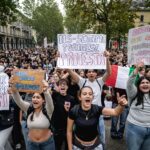
Thousands of people took to the streets across several European countries over the weekend of 17–18 October, protesting rising living costs, unaffordable housing, low wages and pressure on public services. Demonstrations in France, Portugal, Italy and Belgium highlighted growing frustration over whether household incomes can keep pace with essential expenses.
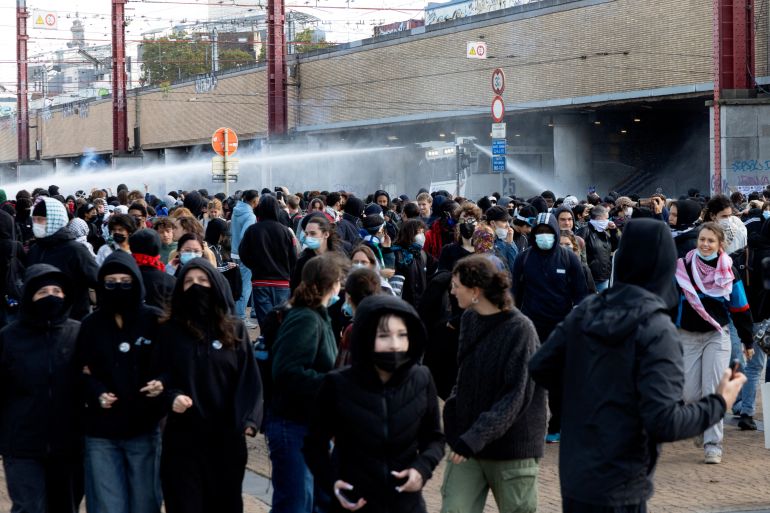
While many rallies began as peaceful demonstrations, some escalated into clashes with police, property damage and looting. The unrest has drawn attention to a wider economic challenge facing European governments: controlling the cost of living while addressing demands for better wages, education, housing and public services.
The protests were not organised as a single Europe-wide movement. However, their overlapping demands suggest that economic insecurity is becoming a shared political concern across countries with different labour markets and social policies.
In Lisbon, tens of thousands of people marched on 17 October in a demonstration organised by Portugal’s largest trade union federation, CGTP. Protesters called for higher wages and pensions, better public services and measures to address the housing crisis.
According to Reuters, the union demanded a general wage increase of at least 15%, with no increase below €150, alongside a minimum wage of €1,100 by 2027. It also called for a shorter working week and stronger collective bargaining protections.
Housing affordability has become a particularly acute concern. Portugal recorded a 16.5% annual increase in house prices in the second quarter of 2026, according to figures cited by Business Insider. Eurostat separately reported that Portuguese house prices rose by 14.2% when comparing the second quarter of 2026 with the 2025 annual average.
The two figures use different comparison periods and should not be treated as interchangeable. Both, however, point to sustained upward pressure on housing costs.
For renters, the gap between income and housing expenses is especially difficult. Business Insider reported that average rent in Lisbon was equivalent to 116% of the average salary. That estimate indicates a severe affordability problem, although individual housing costs vary by location, household size and rental arrangement.
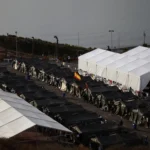
The dispute is not limited to the capital. Housing activists had established a tent camp in Porto to draw attention to rising rents before police cleared the site earlier in the week, Reuters reported.
In Brussels, demonstrations initially associated with education reforms and rising university costs became more confrontational on 17 October. Police used tear gas and water cannons during clashes, while demonstrations also took place in Liège.
Belgian authorities reported 195 arrests across the two cities, according to Business Insider’s account citing The Brussels Times.
The protests illustrate how education costs and wider economic pressures can intersect. For students and young workers, the prospect of entering employment does not necessarily guarantee access to affordable housing or sufficient income to meet everyday expenses.
The Belgian demonstrations also show why local grievances should not automatically be treated as identical to those elsewhere in Europe. Education reforms and budget cuts were prominent issues in Brussels, while housing and wages were central to Portugal’s mobilisation.
In Italy, demonstrations in Milan and other northern cities brought together concerns about the cost of living, low wages, public services and international conflicts. In Milan, clashes between some protesters and police were accompanied by reports of looting and damage to businesses.
Prime Minister Giorgia Meloni condemned the violence while defending the right to demonstrate. The distinction matters: public frustration over economic conditions does not make attacks on people or property legitimate, nor does disorder erase the underlying grievances raised by peaceful participants.
Inflation has added to the pressure on household budgets. Italy’s national statistics agency, Istat, reported that the country’s harmonised index of consumer prices rose by 4.2% year on year in September, compared with 3.2% in August. The increase was driven in part by higher energy prices and unprocessed food costs.
Housing has also become more expensive in major urban centres. Business Insider reported that residential asking prices in Milan were 49% higher in September than in 2018, based on data from property portal Immobiliare.it.
These indicators do not establish that inflation or housing costs alone caused the demonstrations. They do, however, provide context for the pressure on purchasing power and the public dissatisfaction reflected in the protests.
France experienced the most extensive unrest among the countries covered in the reports. Demonstrations against rising living costs and deteriorating public services spread across numerous cities, with authorities and media reporting large crowds, arrests and violent incidents.
Reuters and the Associated Press reported that the French demonstrations drew hundreds of thousands of participants, although estimates differed. Some events that began peacefully later involved clashes, looting and fires.
The unrest has reinforced a familiar tension in democratic societies: governments must protect public order while recognising the right to protest and responding to legitimate social and economic concerns. Violence by some participants should not be used to characterise every demonstrator, just as the existence of peaceful protests does not excuse criminal acts.
The protests in France have also become a reference point for coverage of demonstrations elsewhere in Europe. Nevertheless, similarities in timing and grievances do not prove that the events form a coordinated movement.
Energy prices are another part of the wider economic picture. Business Insider linked recent price pressures partly to geopolitical conflicts involving the United States, Israel and Iran, as well as Russia’s war against Ukraine.
Higher energy costs can feed through to transport, food distribution, manufacturing and household utility bills. Their impact varies by country, depending on energy sources, government support measures, taxation and the structure of national economies.
Yet the causes of the cost-of-living crisis extend beyond energy. Housing supply constraints, wage growth, education costs and the quality of public services also shape how households experience economic pressure.
The European Union’s latest housing data underline the scale of the issue. Eurostat reported that EU house prices increased by 4.7% year on year in the second quarter of 2026, while rents rose by 3.0%. Portugal recorded one of the bloc’s strongest increases in house prices.
The weekend’s demonstrations do not establish that Europe is entering a single, continent-wide uprising. They do reveal how different economic pressures can converge into public mobilisation, particularly when households feel that wages and public support are failing to keep pace with essential costs.
For policymakers, the challenge extends beyond restoring order after violent incidents. It includes improving access to housing, protecting purchasing power, strengthening public services and ensuring that economic growth translates into tangible gains for households.
For businesses, persistent cost pressures can influence consumer spending, wage negotiations and confidence. For governments, the political risk is that unresolved affordability problems become a recurring source of public anger.
The central question is therefore not simply whether protests will spread. It is whether European governments can respond to the material concerns driving them before frustration becomes more entrenched.
Sources
- Business Insider — Chaos and looting roiled major cities as Europeans poured into the streets to protest rising living costs
- Reuters — Tens of thousands march in Lisbon over housing and living costs
- Al Jazeera — Cost-of-living protests hit Belgium, Italy, Portugal and France
- Eurostat — House prices and rents continued to rise in Q2 2026
- Istat — Consumer prices, September 2026
