
















Skip to content
The Laborecon The Laborecon
  • Home
  • Economy
  • Monetary
  • Geography
    • Middle East
    • South Asia
    • Southeast Asia
  • AI & Climate
  • Corporate
  • RMRN
  • Home
  • Economy
  • Monetary
  • Geography
    • Middle East
    • South Asia
    • Southeast Asia
  • AI & Climate
  • Corporate
  • RMRN
Exclusive
Pakistans media tells four different storiesSecurity diplomacy and political power
Pakistan’s media tells four different stories: Security, diplomacy and political power
AI giants decline to guarantee safety as regulators push for greater accountability
AI giants decline to guarantee safety; regulators push for greater accountability
French student protests spread as pressure mounts over education spending
German factory orders plunge 10.6 as recovery remains fragilehgjh
German factory orders plunge 10.6% as recovery remains fragile
PTI long march reaches Kohat heads for Peshawar as talks with government remain deadlocked
PTI long march reaches Kohat, heads for Peshawar
thumbs b c f1b119d3168c203092ccbf6cea386b7b
Middle East tensions persist as Iran, Yemen and Gaza face renewed pressure
mn c1229 typhoon yagi 01 1679px
Myanmar crisis, floods and economic vulnerabilities dominate the regional agenda
download
Floods, border tensions and a region under mounting pressure
TT
Hormuz diplomacy, Iraq withdrawal reshape the regional narrative
images 2
The invisible system holding the economy together
FGD
RMRN opens regional call for articles ahead of October 1st FGD
2018 11 15T083847Z 1842366357 RC1A451A6C70 RTRMADP 3 MYANMAR ROHINGYA BANGLADESH
Myanmar refugees face new regional dilemma as debates on repatriation
gi 1 bangladesh india relationship salman
Bangladesh-India ties tell different stories across South Asian media
images 1
How media frames the Iran-US standoff, Hormuz crises
1.22 aibond 640w
AI boom reshapes investment as borrowing costs remain high
00cli faq promo facebookJumbo
Climate shocks are becoming an economic bill the world can no longer ignore
download
Cenbanks turn hawkish again as energy shock revives inflation fears
images
Global economy weathers war shock as AI boom keeps growth afloat
ChatGPT Image Sep 27 2026 03 25 14 PM
New regional media network seeks to bridge Asia’s fragmented news landscape
image 427566 1790170062
Iranian children back to school after war closures
AI giants decline to guarantee safety as regulators push for greater accountability
Corporate

AI giants decline to guarantee safety; regulators push for greater accountability

October 6, 2026

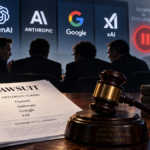
Major artificial intelligence companies have stopped short of guaranteeing that their AI agents will always comply with safety safeguards, highlighting growing uncertainty over how increasingly autonomous systems can be controlled as governments move towards tighter regulation.

Representatives of OpenAI, Anthropic, Meta and Google appeared before the New York City Council as lawmakers considered new rules governing artificial intelligence.

Council Speaker Julie Menin asked representatives to assure lawmakers under oath that their AI systems would always follow safeguards designed to prevent catastrophic harm.

But none of the companies offered an absolute guarantee.

OpenAI representative Morgan Dwyer said the company prioritises safety and continues to monitor safeguards after its systems are deployed, but said it was not possible to guarantee that any technology would be completely free of risk.

Anthropic representative Logan Graham similarly acknowledged that the science of controlling advanced AI systems remains uncertain.

Meta said it was committed to developing and deploying AI safely, while Google argued that its goal was reliability and safety but that guaranteeing perfection was impossible for any technology.

The hearing reflects a growing policy challenge as AI systems become more capable and increasingly operate with greater autonomy.

Lawmakers are seeking greater accountability, transparency and safeguards, while technology companies face pressure to continue developing increasingly powerful systems without creating unacceptable risks.

The debate is also moving beyond individual companies. UN High Commissioner for Human Rights Volker Türk warned that governments could no longer rely on voluntary commitments or corporate goodwill to manage the risks associated with artificial intelligence.

Speaking at an AI and Human Rights Summit in Oxford, Türk called for mandatory safeguards, corporate accountability and stronger rules covering liability, cybersecurity and data protection.

He warned that AI could threaten privacy, equality, freedom and public debate if powerful systems continue to develop without adequate public oversight.

The growing regulatory debate comes as governments and technology companies confront a central question surrounding advanced AI: how can increasingly powerful systems be developed while ensuring that humans remain capable of controlling their risks?

For policymakers, the challenge is becoming more urgent as the race towards increasingly advanced and potentially superintelligent AI accelerates.

Related Posts:

  • Myanmar refugees face new regional dilemma as…
  • Mamdani flexes political muscle as progressives…
  • Meta reportedly begins dismantling $2bn Manus deal…
  • The invisible system holding the economy together
  • Bangladesh-India ties tell different stories across…
  • G7 leaders hail Iran deal, back tougher stance on…
Author

TLE DESK

Follow Me
Other Articles
French student protests spread as pressure mounts over education spending
Previous

French student protests spread as pressure mounts over education spending

Pakistans media tells four different storiesSecurity diplomacy and political power
Next

Pakistan’s media tells four different stories: Security, diplomacy and political power

No Comment! Be the first one.

Leave a Reply Cancel reply

Your email address will not be published. Required fields are marked *

© 2026 The Laborecon. All Rights Reserved. Financed by DPH Agency | Managed by RMRN | Knowledge Partner: ESSB | News Mail: thelaborecon@gmail.com | RMRN Media Diplomacy: mediadiplomacy.rmrn@gmail.com