
















US and Russia resist push for binding rules on autonomous weapons
A UN meeting in Geneva is confronting divisions over whether to negotiate legally enforceable limits on weapons that can select and attack targets without direct human control, exposing competing priorities between military development and humanitarian safeguards.
The United States and Russia are expected to oppose efforts to begin negotiations on legally binding international rules for lethal autonomous weapons, placing a major obstacle in the path of a proposed global framework governing the use of artificial intelligence in warfare.
A United Nations-hosted meeting in Geneva, which began on Monday, 16 November, is considering whether states should launch negotiations on prohibitions and restrictions for Lethal Autonomous Weapons Systems (LAWS). According to a Reuters report by Olivia Le Poidevin, most of the 128 countries party to the Convention on Certain Conventional Weapons support moving towards negotiations on binding rules. However, major military powers, including the United States, Russia and Israel, oppose that approach, arguing that existing international humanitarian law provides an adequate framework.
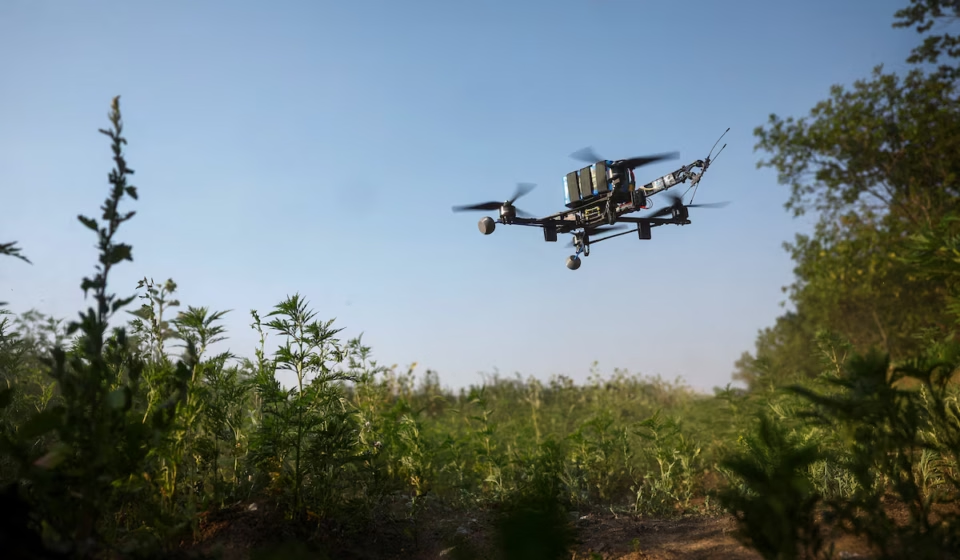
The dispute reflects a growing challenge for international security governance. Artificial intelligence is accelerating the development of drones, robots, tanks, submarines and other military platforms capable of carrying out lethal operations with varying degrees of human involvement. Semi-autonomous and AI-assisted weapons have already been used in conflicts in Ukraine, Sudan and the Middle East, according to Reuters.
The diplomatic process encountered difficulties from its opening day. Russia objected to a procedural rule that would allow observers, including the European Union and non-governmental organisations, to address the meeting. Its objection delayed the start of discussions, while countries including Ireland and Canada opposed the move.
The disagreement over participation is significant because humanitarian organisations and independent experts have played an important role in raising concerns about the consequences of autonomous weapons. Restricting their ability to contribute could narrow the range of perspectives considered during negotiations.
The meeting forms part of the seventh review conference of the Convention on Certain Conventional Weapons, an international framework governing weapons considered excessively injurious or indiscriminate. The conference is scheduled to run from 16 to 20 November 2026, with lethal autonomous weapons among the issues under consideration.
UN Secretary-General António Guterres has urged countries to move towards negotiating a legally binding instrument containing clear prohibitions and restrictions. In a video message cited by Reuters, he warned that autonomous weapon systems present humanitarian, legal, ethical and security challenges as the nature of warfare changes.
The main divide concerns the form and strength of any international agreement. The United States favours guidelines rather than legally binding restrictions, maintaining that existing humanitarian law already governs the conduct of warfare. Washington has proposed a five-year mandate for negotiations towards a non-binding agreement.
The chair of the Geneva discussions, by contrast, has proposed a two-year mandate to negotiate a legally binding protocol. The United Kingdom, Germany and France have supported negotiations on an instrument whose final legal status would remain open.
This leaves room for several possible outcomes, including a binding agreement, a non-binding framework or a hybrid arrangement combining both approaches. Two diplomats told Reuters that negotiations would be difficult but that a compromise could still emerge by the end of the week.
The distinction matters because voluntary guidelines and binding international obligations have different implications for compliance and accountability. A non-binding framework can establish common principles and encourage responsible practices, but it does not create the same legal obligations as a treaty or protocol. A binding instrument could establish clearer restrictions, although its practical effect would depend on the provisions adopted and their implementation by participating states.
Human rights organisations and humanitarian institutions have warned that weapons operating without meaningful human control could create serious risks for civilians and military personnel.
Verity Coyle of Human Rights Watch told Reuters that machines should never be allowed to decide who lives and dies on a battlefield. The organisation is urging governments to use the review conference to advance firm international restrictions.
Campaigners argue that autonomous systems may behave unpredictably, particularly in complex environments where civilian and military targets are difficult to distinguish. Errors in identification or target selection could result in deaths for which responsibility may be difficult to establish.
Anna Hehir, head of military AI governance at the Future of Life Institute, told Reuters that lethal autonomous weapons were no longer merely theoretical. She pointed to media reports of early use of fully autonomous systems in Ukraine. However, the extent and circumstances of such deployments remain important distinctions when assessing how widely fully autonomous weapons are being used.
The International Committee of the Red Cross has also warned about the humanitarian consequences of autonomous weapons. Pope Leo XIV has joined calls for safeguards, reflecting concerns that decisions over life and death should remain subject to human responsibility.
The debate comes as governments invest in military applications of artificial intelligence, including autonomous navigation, target recognition, surveillance and battlefield robotics. These technologies can reduce the need for direct human operation, but they also raise questions about the limits of machine decision-making in armed conflict.
Existing international humanitarian law applies to the conduct of warfare, including the use of emerging weapons technologies. The disagreement in Geneva is therefore not simply about whether international law applies, but whether additional, specific rules are needed to address the risks created by systems capable of selecting and engaging targets with limited or no human intervention.
For the United States and Russia, preserving flexibility in military development remains central to their opposition to a binding agreement. For countries supporting stronger restrictions, the absence of specific rules risks allowing technological deployment to move faster than international safeguards.
The outcome will also depend on the negotiating process. The Convention on Certain Conventional Weapons operates through consensus, giving participating states significant power to block decisions. That makes agreement difficult when major military powers and a large group of states favour different approaches.
The Geneva meeting is therefore testing whether governments can establish common limits before autonomous weapons become more deeply integrated into military operations. A compromise may keep negotiations moving, but the central question remains unresolved: how much authority should states allow machines to exercise over the use of lethal force, and what legal responsibility should apply when those systems cause harm?
Sources: Reuters — US and Russia to oppose talks on limiting autonomous weapons, 16 November 2026; Associated Press — Killer drones face a reckoning as UN conference of nations considers rules on lethal AI weapons, 17 November 2026; United Nations Office for Disarmament Affairs — Seventh Review Conference of the Convention on Certain Conventional Weapons, provisional programme; The Business Standard — US and Russia to oppose talks on limiting autonomous weapons, 16 November 2026; Reuters — Opposition by US and Russia raises doubts over autonomous weapons talks outcome, diplomats say, 4 September 2026.
