















Trump’s Asia tour brings Quad diplomacy, China tensions into focus
The US president’s Manila visit coincides with regional protests, unresolved South China Sea negotiations and preparations for a planned trilateral meeting with Xi Jinping and Vladimir Putin in Shenzhen.
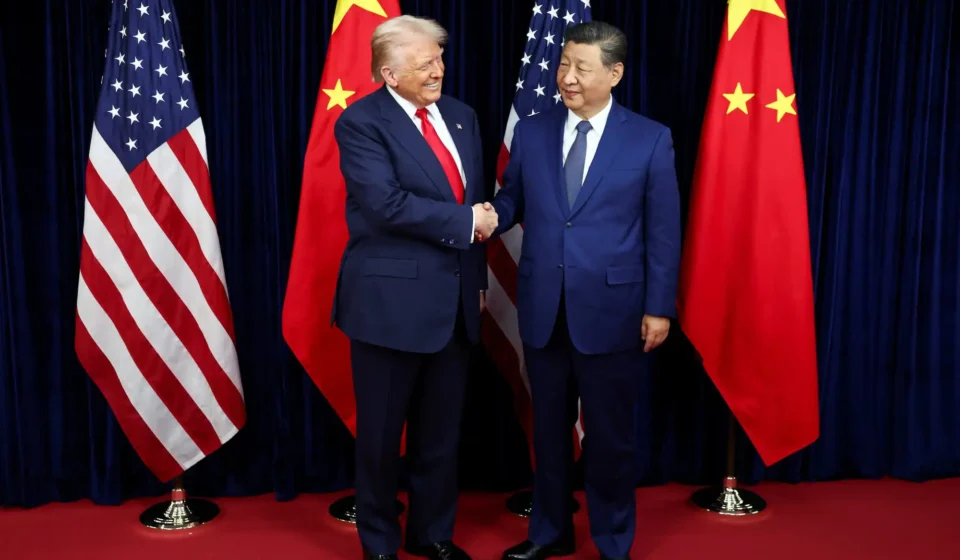
US President Donald Trump’s arrival in the Philippines is placing a series of competing geopolitical priorities at the centre of diplomacy in Asia, as leaders gather for the ASEAN and Asia-Pacific Economic Cooperation (APEC) summits. His visit includes a meeting with the leaders of India, Japan and Australia under the Quad framework, ahead of a planned encounter with Chinese President Xi Jinping and Russian President Vladimir Putin in Shenzhen later this week.
The diplomatic schedule comes amid tensions over the Middle East conflict, the economic consequences of US tariffs and strategic competition between Washington and Beijing. According to Reuters, Trump is arriving in Manila towards the end of the 49th ASEAN Summit, where he is expected to participate in discussions with regional leaders and meet Philippine President Ferdinand Marcos Jr. He is then due to travel to China for the APEC leaders’ meeting.
The sequence gives Washington an opportunity to engage regional partners before Trump’s expected discussions with Xi. It also places the Philippines, this year’s ASEAN chair, at the centre of several overlapping diplomatic priorities, from maritime security to trade and technology.
The Quad meeting involving the United States, India, Japan and Australia will be the first gathering of the group’s leaders during Trump’s second presidential term, according to Reuters. The four-country partnership has become an important platform for cooperation on Indo-Pacific security, maritime issues, technology and supply-chain resilience.
Reuters reported that discussions could cover maritime security, export controls, critical-mineral supply chains and artificial intelligence. These issues reflect the wider strategic competition between the United States and China, particularly over access to advanced technologies and materials needed for industrial and defence production.
Beijing views the Quad with suspicion, interpreting its activities as part of a wider effort to constrain China’s regional influence. The four participating governments, however, have presented the grouping as a mechanism for cooperation in support of a free and open Indo-Pacific.
The meeting’s timing is significant. It comes just before Trump’s planned engagement with Xi, creating an opportunity for Washington to demonstrate coordination with regional partners while preparing to negotiate directly with Beijing. How far the four governments can maintain common positions on China will remain an important question, given their different economic relationships and security priorities.
The South China Sea is another major issue confronting regional leaders. China and ASEAN have been negotiating a Code of Conduct for the disputed waters for more than two decades, but the parties failed to complete the agreement during the Philippines’ chairmanship in 2026.
Philippine Foreign Secretary Theresa Lazaro said the two sides had reached provisional agreement on about 80% of the draft text. However, significant differences remain, including the proposed code’s legal status and implementation. Malaysia’s Prime Minister Anwar Ibrahim said on Monday that ASEAN and China had not established a new deadline for concluding the negotiations.
Chinese Premier Li Qiang nevertheless expressed support for an early conclusion of an effective and substantive agreement during discussions with Southeast Asian leaders in Manila. He said the code should contribute to peace and stability in the region.
The negotiations involve overlapping maritime claims and competing interpretations of international law. China, Taiwan and four ASEAN members—Brunei, Malaysia, the Philippines and Vietnam—are involved in the wider territorial disputes. Indonesia also has maritime interests affected by tensions in the region.
The failure to reach an agreement in 2026 means negotiations are expected to continue under Singapore’s ASEAN chairmanship in 2027. The unresolved issues demonstrate the difficulty of securing a common framework when the parties disagree over the scope and legal force of the proposed rules.
Trump’s visit has also generated public demonstrations in Manila. Protesters have criticised US policy towards the Middle East conflict and called for the cancellation of the US-led Pax Silica initiative, which is associated with cooperation on semiconductor and industrial supply chains.
According to reporting by The Guardian and Philippine media, demonstrations have included anti-Trump slogans and the burning of effigies. Student groups and other civil society organisations have also raised concerns about the initiative and the country’s reliance on fossil fuels.
The protests illustrate how US foreign and economic policies are being debated beyond diplomatic meeting rooms. Pax Silica has become a point of contention among groups concerned about the Philippines’ industrial priorities, energy policy and relationship with Washington.
The demonstrations also come amid wider regional unease over the consequences of the Middle East conflict and the economic effects of trade tensions. For the Philippine government, hosting the US president requires balancing diplomatic engagement with domestic political concerns.
The Manila summit has brought together leaders from ASEAN’s 11 member states to discuss security, economic cooperation and regional stability. The agenda includes the South China Sea, Myanmar’s continuing humanitarian and political crisis, transboundary haze caused by forest fires in Indonesia, Taiwan and energy security.
The bloc’s institutional structure makes collective responses difficult. Unlike the European Union, ASEAN does not have a central authority capable of imposing decisions on its members. Its consensus-based approach can help preserve cooperation among governments with different political systems and strategic interests, but it can also limit the pace and scope of joint action.
The Myanmar crisis remains a particularly difficult issue. ASEAN has struggled to secure progress towards a political settlement following the military coup and continuing conflict. The bloc’s approach to Myanmar will remain an important test of its ability to influence developments within its own region.
Energy security has gained additional importance because of the Middle East conflict. Disruptions to energy supplies and shipping routes have increased pressure on Asian economies to assess their exposure to geopolitical risks. Meanwhile, the Philippines has identified artificial intelligence as a priority during its ASEAN chairmanship, adding technology governance and regional cooperation to the agenda.
The APEC Economic Leaders’ Meeting is scheduled for 18–19 November in Shenzhen, preceded by a chief executives’ summit on 17–18 November. Chinese organisers expect more than 2,000 political and business leaders at the CEO gathering, including representatives from 115 Fortune Global 500 companies, according to The Guardian.
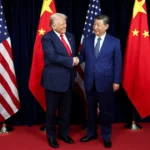
The most closely watched diplomatic event is the planned trilateral meeting involving Trump, Xi and Putin on Thursday. China’s foreign ministry had not provided details of the proposed agenda in the Guardian’s live coverage. US officials, however, indicated that Trump wanted to discuss nuclear arsenals and the war involving Iran. The Ukraine conflict has also featured in discussions about the meeting, although Washington has sent mixed signals about whether it will be formally addressed.
The proposed gathering would bring together leaders of three major powers at a time of heightened international tensions. Its significance will depend on whether the participants can identify areas for practical cooperation, particularly on nuclear risks and conflict management. The meeting’s planned status should not be confused with an agreement or a confirmed diplomatic breakthrough.
For Trump, the Asian tour combines alliance management, economic diplomacy and direct engagement with strategic competitors. For regional governments, it offers opportunities to strengthen cooperation with Washington while maintaining working relationships with Beijing and other major powers. The outcome will depend not only on the statements made at the summits but also on whether the participating governments can translate diplomatic commitments into practical agreements on trade, security, maritime disputes and regional stability.
Sources: The Guardian — World leaders gather for Apec and Asean summits ahead of Trump-Xi-Putin meeting: live updates; Reuters — Trump to kick off Asia trip with Quad talks in Manila ahead of China visit; Associated Press — Southeast Asian leaders open annual summit with major conflicts and their impact topping the agenda; Channel News Asia — ASEAN and China reach provisional agreement on 80% of South China Sea code, says Philippines; Al Jazeera — ASEAN and China fall short of agreeing on South China Sea code; GMA News — Protests staged against Trump’s arrival in the Philippines for ASEAN Summit 2026; Council on Foreign Relations — Trump heads to the ASEAN and APEC summits with big plans and slim prospects.
