


















NASA’s Voyager 1 approaches historic milestone, reaching one light-day from Earth
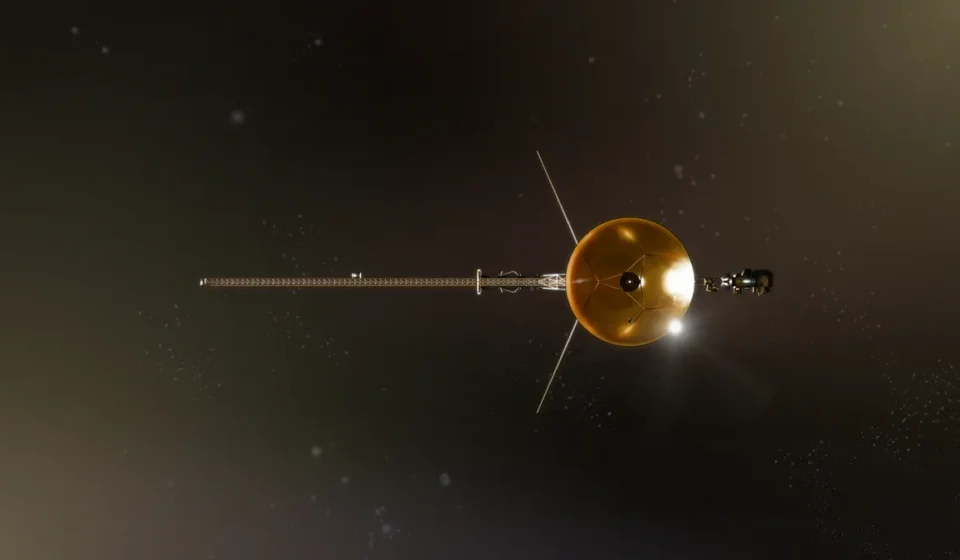
NASA’s Voyager 1 spacecraft is approaching a remarkable milestone in space exploration, as it prepares to reach a distance of one light-day from Earth on 18 November 2026. The achievement will mark another chapter in the nearly 50-year journey of humanity’s most distant operational spacecraft.
According to NASA, Voyager 1 is expected to cross the milestone at 5:16:07 am Eastern Standard Time on 18 November. At that point, the spacecraft will be approximately 16 billion miles (26 billion kilometres) from Earth.
A light-day represents the distance light travels in 24 hours. For Voyager 1, this means that a radio signal sent from Earth will take approximately one day to reach the spacecraft. A response will require another day to return, creating a round-trip communication delay of roughly 48 hours.
Nearly five decades beyond Earth
Voyager 1 was launched from Kennedy Space Center in Florida on 5 September 1977, following the launch of its twin spacecraft, Voyager 2, a few weeks earlier.
The original mission focused on exploring Jupiter and Saturn. Voyager 1 also conducted a close investigation of Saturn’s largest moon, Titan, before continuing towards the outer boundaries of the solar system.
The spacecraft officially entered interstellar space on 25 August 2012, becoming the first human-made object to cross the heliopause, the boundary where the influence of the solar wind gives way to the interstellar environment.
NASA officials describe the approaching one-light-day milestone as an important moment ahead of the mission’s 50th anniversary celebrations in August and September 2027.
During the milestone, Voyager 1 is expected to communicate through the Madrid station of NASA’s Deep Space Network, which supports communications with spacecraft operating far beyond Earth.
A mission operating on limited power
Despite its age and extreme operating environment, Voyager 1 continues to transmit scientific data from interstellar space. However, its power supply is gradually declining.
Both Voyager spacecraft are powered by radioisotope thermoelectric generators, which convert heat from radioactive decay into electricity. Their original electrical output was approximately 470 watts each. They now lose around four watts of power annually.
To extend the mission, engineers have progressively switched off scientific instruments and adjusted spacecraft operations to conserve electricity.
NASA officials have also highlighted the challenges associated with maintaining the spacecraft’s propulsion system. Hydrazine, used for attitude control, can become difficult to manage in the extremely cold conditions encountered in deep space.
The spacecraft’s age and the harsh environment make continued operations increasingly challenging, even as engineers seek to maximise the remaining scientific output.
Voyager 2 remains behind
Voyager 2, launched on 20 August 1977, is also operating in interstellar space but remains closer to Earth than its twin.
It is currently approximately 13.5 billion miles (21.7 billion kilometres) away. NASA estimates that it will not reach the one-light-day distance until 2035.
In 2022, Voyager project manager Suzanne Dodd said the spacecraft might continue operating into the 2030s, although their remaining lifespans depend on available power and the condition of their systems.
A journey extending far beyond the solar system
Voyager 1’s journey is expected to continue long after its scientific instruments and power supply cease functioning.
Its projected path will eventually take it relatively close to the star Gliese 445, in the constellation Ursa Minor. However, the spacecraft is expected to pass approximately 1.7 light-years from the star in around 40,000 years.
The Voyager programme has already transformed scientific understanding of the outer planets and the space beyond the heliosphere. Its continuing observations provide researchers with information about the interstellar environment that cannot be obtained through observations from Earth alone.
Reaching one light-day from Earth is therefore more than a measure of distance. It highlights the durability of a mission launched in 1977 and the extraordinary engineering that has allowed a human-made spacecraft to remain in contact with Earth across nearly five decades.
Sources: Space.com – NASA’s interstellar Voyager 1 probe is about to reach 1 light-day from Earth after nearly 50 years in space, by Elizabeth Howell, 17 November 2026; NASA – Voyager Mission; NASA – Voyager 1; NASA – Deep Space Network.
