













From losing his way at 14 to finding path in S Korea
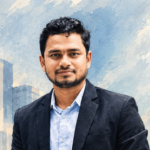
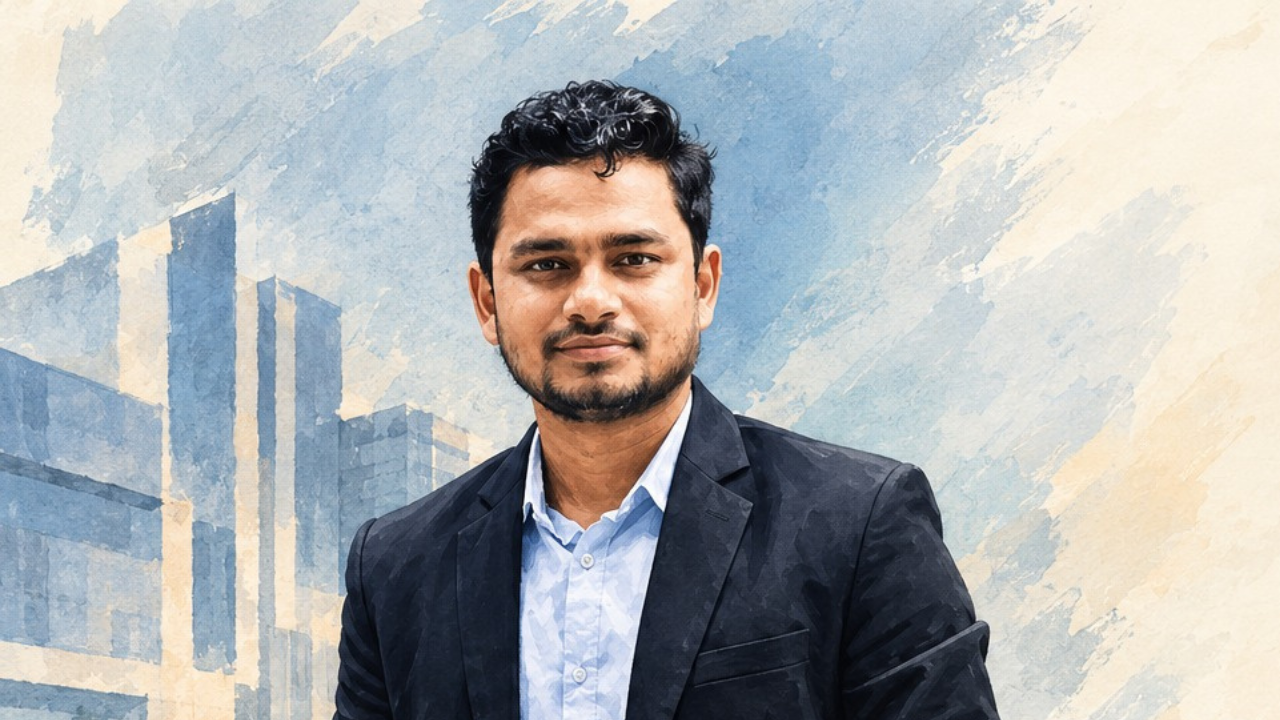
Asad Rahman once stopped going to school. He worked alongside fishermen, sold fish in the market, and wondered what came next. Years later, he is leaving Bangladesh for a second master’s degree in Global Business in Busan.
Staff Correspondent
There was a time when school no longer seemed to matter to Asad Rahman.
In class eight, he lost interest in his studies. The classroom that had once been part of his daily life began to feel distant, and for a while, his education appeared to be heading towards an early end.
It might have remained that way, had it not been for a friend. The friend asked him to come to school with him. It was a simple, almost ordinary request. But Asad went.
From class nine, he resumed his education, this time through the technical education system. That small decision would eventually take him much further than either of them could have imagined.
On 14 September, Asad left Bangladesh for Busan, South Korea, to begin another chapter of his life: a second master’s degree in Global Business at Kyungsung University. For a young man who once struggled simply to remain in education, the journey is remarkable.
But the most interesting part of Asad’s story is not where he is going. It is how many times he had to begin again to get there.
Success stories are often told backwards. They begin with the photograph of someone at an airport, a university acceptance letter or a professional title, and then trace the journey neatly to the present. Real life is rarely so tidy.
Before university, before leadership positions and before the microphone became familiar territory, Asad experienced the uncertainty that accompanies many ordinary young lives.
At different points, he worked alongside fishermen and sold fish in local markets. There were no guarantees that education would eventually lead him anywhere. There was simply the next day to get through.
Yet he kept moving. After returning to education, he completed his SSC and HSC through the vocational stream at Narayanganj Technical School & College. He later studied Economics at National University, completing his Bachelor of Social Science.
His undergraduate years were not entirely straightforward either. The COVID-19 pandemic, the sudden shift to online learning, and technical difficulties delayed his graduation. But again, he continued.
Finding a voice
University gave Asad something more than a degree.
It gave him a platform. From January 2022 to December 2023, he served as Secretary General of the Economics Students Society of Bangladesh (ESSB). The organisation works to support economics students in their academic and career development, and Asad became one of its key organisers and leaders.
Leadership did not come to him as a title alone. It meant organising people, speaking in front of audiences, coordinating programmes and learning how to take responsibility when things did not go according to plan.
His work earned him an ESSB Leadership Excellence Award in 2022.
But another door was opening at the same time. The microphone. More than 50 shows behind the microphone
Asad later became involved with The DhakaChat, an interview- and podcast-based digital media platform.
There, his role extended beyond simply appearing on camera. He worked as a multimedia director and became a familiar face in interviews, discussions, and webinars.
He hosted more than 50 live programmes and talk shows across his work with ESSB and DhakaChat. He also worked on ‘Youth in Politics’, DhakaChat’s weekly programme focusing on young people’s engagement with politics and public affairs.
In December 2023, DhakaChat formally recognised his contribution with a Certificate of Appreciation for hosting more than 50 live shows. For someone who had once struggled to remain in a classroom, standing in front of an audience and holding a conversation with confidence was another kind of transformation. He had found his voice.
From economics to people management
In January 2024, Asad entered another phase of his professional life. He joined Progress Apparels Bangladesh Ltd, part of the PDS Group, as an Executive in Human Resource Management. His work has included recruitment, onboarding, performance appraisal, employee records, training coordination, data management, reporting, and organisational communication.
The move made sense. Economics had taught him to understand systems. Student leadership had taught him to work with people. Media had taught him to communicate. HR gave him a professional setting in which those abilities could come together.
A second master’s, a new country
Now comes South Korea. Asad is heading to Busan to pursue a second master’s degree in Global Business at Kyungsung University. The decision is not simply about collecting another qualification.
His stated aim is to deepen his knowledge of Business Administration and Human Resource Management and eventually apply that experience to organisational development and workplace efficiency in Bangladesh.
It is a fitting next step for someone whose career has gradually brought together economics, people, management, communication and business.
And yet, beneath all those professional descriptions, there remains the boy who once stopped going to school.
The distance between then and now
There is something quietly powerful about Asad’s story. It does not begin with exceptional privilege or an obvious roadmap. It begins with uncertainty. A boy loses interest in school. A friend asks him to come along. He starts again.
Then come the vocational classes, the university years, the difficult pandemic period, work in the marketplace, student leadership, microphones and cameras, professional life, and now a flight to South Korea.
None of those moments, taken individually, guarantees success. Together, they tell a different story. A story about refusing to let an uncertain beginning decide the ending.
On 14 September, when Asad left Dhaka for Busan, he was carrying more than admission papers and luggage. He was carrying years of second chances.
The friend who once asked him simply to come to school could not have known where that invitation would lead. Nor, perhaps, could Asad.
Today, the destination is South Korea. The journey, however, began much earlier—in a classroom he nearly never returned to. And that may be the most important part of the story.
