













BRICS leaders call for maximum restraint over Middle East war
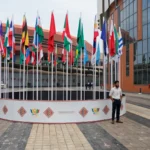
TLE DESK: Leaders of the BRICS group have called for “maximum restraint” in the Middle East, overcoming earlier divisions within the bloc to issue a joint statement at their summit in New Delhi on Saturday.
The 11-member grouping, which includes China, Russia, Iran and India, expressed deep concern over the continuing escalation of tensions in the Middle East and West Asia.
“We express deep concern over the continued escalation of tensions in Middle East/West Asia,” the joint statement said, urging members to avoid actions that could further aggravate the situation.
India pushes for unity
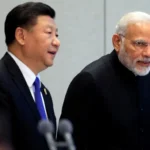
Chinese President Xi Jinping, who joined Russian President Vladimir Putin, Iranian President Masoud Pezeshkian, Indian Prime Minister Narendra Modi and other leaders at the summit, said the war in the Middle East did not serve the common interests of the international community.
The joint statement came after BRICS foreign ministers failed to reach an agreement in May, with Iran, Saudi Arabia and the United Arab Emirates divided over the conflict that began with US-Israeli strikes on February 28.
India worked to bridge those differences as the bloc sought to strengthen its influence on global issues including conflict, trade and energy security.
Modi, opening the two-day summit, called for a global system in which every country has a voice and every member has a stake.
He said BRICS countries represented about half of the world’s population, 40 per cent of global GDP and more than a quarter of global trade.
Xi-Putin presence adds weight
The summit also highlighted India’s delicate diplomatic balancing act.
New Delhi maintains relations with both Iran and Israel while seeking to preserve its strategic partnership with Washington. At the same time, Russia remains a major partner, particularly in the energy sector.
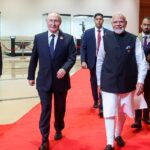
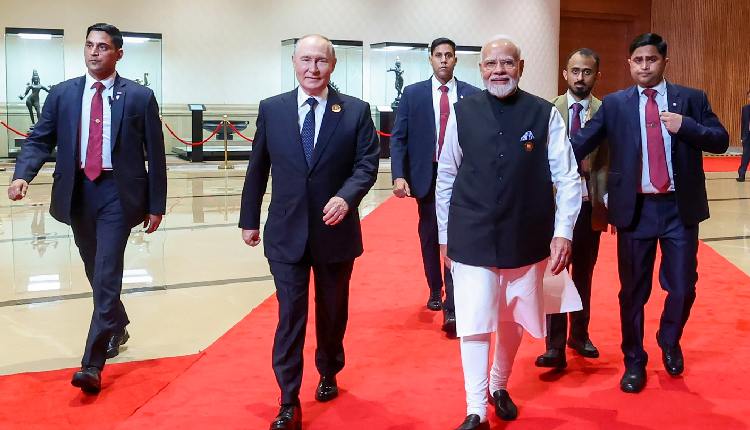
Modi embraced Putin before talks on Friday, while Pezeshkian used his visit to criticise the idea of the United States acting as a “regional policeman” in the Middle East.
Pezeshkian also held talks with Abu Dhabi Crown Prince Khaled bin Mohamed bin Zayed on the sidelines of the summit.
China-India thaw under scrutiny
Xi’s presence was closely watched as he made his first visit to India since 2019, marking another step in the cautious improvement of relations between the two nuclear-armed neighbours.
Xi received a red-carpet welcome before meeting Modi at the summit venue. Chinese state broadcaster CCTV later reported that the two leaders held talks.
Relations between Beijing and New Delhi have gradually improved since a deadly military clash along their disputed Himalayan border six years ago, with flights, visas and high-level contacts restored.
However, the underlying territorial dispute remains unresolved, with both sides maintaining substantial military deployments along their roughly 3,500-kilometre border.
Deep mistrust also persists over the border dispute, India’s growing trade deficit with China and wider strategic rivalry.
Dozens of Tibetans protested in New Delhi on Friday against Xi’s visit, highlighting the continuing political sensitivities surrounding China-India relations.
