















Lula wins fourth term as Flávio Bolsonaro challenges Brazil election result
The incumbent’s victory by more than four million votes defies polling expectations, but his next term will face a hostile Congress, market uncertainty and renewed pressure on Brazil’s electoral institutions.
Brazilian President Luiz Inácio Lula da Silva has secured a historic fourth presidential term, but the result has been overshadowed by right-wing Senator Flávio Bolsonaro’s refusal to concede defeat and his pledge to seek annulment of the election. The challenge raises fresh concerns about political stability in Latin America’s largest economy, where confidence in electoral institutions and judicial independence has been strained by previous disputes over election results.
According to Reuters, Flávio Bolsonaro questioned a late-Sunday decision by a Supreme Court justice appointed by Lula to extend voting by two hours following alleged irregularities involving voter transport. He said the circumstances made it impossible to recognise the result and that he would seek to have the election annulled. Lula defeated Bolsonaro by more than four million votes, a margin that analysts cited by Reuters considered a substantial obstacle to the challenge.
The dispute is particularly sensitive because Flávio is the son of former president Jair Bolsonaro, who was sentenced to 27 years in prison for plotting a coup after the 2022 election. Jair Bolsonaro’s supporters stormed government buildings following his defeat, making the prospect of renewed demonstrations a significant concern for Brazil’s political institutions.
Flávio Bolsonaro’s challenge centres on the two-hour extension of voting, which followed allegations of irregularities in transporting voters. However, Reuters reported that his own campaign had also sought an extension because of heavy rain in Brazil’s conservative-leaning south. That earlier request could weaken his argument that extending voting hours was inherently improper.
The allegations do not, by themselves, establish that the election result was invalid. Any legal challenge will depend on the applicable electoral rules, evidence of irregularities and whether the alleged problems could have affected the outcome. The scale of Lula’s victory is politically significant, but the legal merits of a challenge must be assessed independently of the margin.
The immediate risk is that a legal dispute becomes a rallying point for supporters unwilling to accept the result. Observers cited by Reuters warned that Bolsonaro’s refusal to concede could trigger protests in a country where confidence in the electoral system and the judiciary has already faced pressure.
Brazil’s institutions therefore face a dual task: assess any formal complaint according to the law and communicate their reasoning transparently enough to limit the spread of unsupported claims.
Lula’s victory defied polling expectations and a wider regional pattern of electoral gains by right-wing candidates. His return to office will disappoint the administration of US President Donald Trump, whose State Department had led efforts to help bring the Bolsonaro family back to power, according to Reuters.
During the campaign, Lula highlighted his record on poverty reduction and inequality, as well as low unemployment, illiteracy and deforestation. His appeal helped him overcome a first-round deficit and mobilise sufficient support in the runoff.
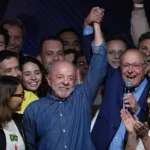
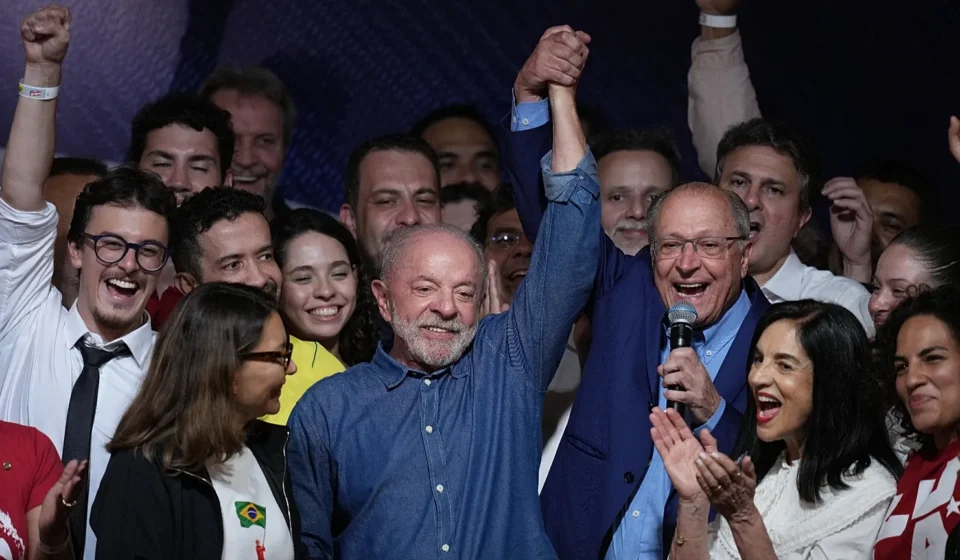
In his victory speech in São Paulo, Lula adopted a conciliatory tone, arguing that an elected president must govern for the whole country, including citizens who did not vote for him. The message comes as he prepares to lead a deeply polarised nation in which political opposition extends beyond the presidential contest.
Yet a national reconciliation effort will be difficult. Right-wing gains have strengthened Bolsonaro-aligned forces in Congress, leaving Lula with a legislature less favourable to his policy agenda. Carlos Melo, a political science professor at Insper, described the challenges ahead as numerous, Reuters reported.
Financial markets registered immediate concern after Lula’s victory. A Tokyo-listed exchange-traded fund tracking Brazil’s Bovespa index fell nearly 15% in Asian trading following the result, while analysts expected the Brazilian real to weaken against the US dollar, according to Reuters.
The market reaction reflects uncertainty about the direction of economic policy, legislative negotiations and the possibility of further political confrontation. It should not, however, be interpreted as proof that investors have reached a settled judgement about Lula’s next term. Early trading can reflect positioning, surprise and short-term risk adjustments as well as expectations about economic fundamentals.
The political outlook will matter for fiscal policy, investment conditions and the government’s ability to advance legislation. A hostile Congress could force Lula to negotiate with competing blocs, potentially slowing reforms or requiring concessions. Continued disputes over the election result could add another layer of uncertainty if they generate sustained protests or institutional confrontation.
The available reporting does not establish the scale or duration of any expected currency decline, nor does it provide enough information to quantify the potential economic cost of the political dispute.
Lula’s victory gives him a new presidential mandate, but not an uncontested path to govern. The election challenge, a strengthened right-wing opposition and uncertainty in financial markets will test his ability to translate campaign promises into policy.
For Brazil, the central issue extends beyond which political camp holds the presidency. The credibility of the electoral process depends on whether complaints are examined through established legal channels and whether political leaders refrain from treating unproven allegations as established evidence of fraud.
The next phase will be shaped by the handling of Bolsonaro’s proposed legal challenge, the response of his supporters and the government’s ability to work with Congress. A transparent legal process could help contain the dispute; sustained rejection of the result without substantiated evidence could deepen political divisions.
Lula has won another term, but the result has not ended Brazil’s political contest. It has shifted that contest into a new phase, in which electoral legitimacy, economic confidence and the capacity to govern will be tested together.
Source: Reuters — Brazil heads back to the future as Flávio Bolsonaro refuses to recognise Lula win
