



















Myanmar refugees face new regional dilemma as debates on repatriation
TLE Desk: More than five years after Myanmar’s military takeover, the country’s refugee crisis is entering another uncertain phase as neighbouring Southeast Asian governments increasingly discuss repatriation, regional diplomacy and closer engagement with Myanmar’s authorities.
The debate is being framed differently across the region. In Myanmar’s official narrative, closer relations with neighbouring governments are presented as evidence of diplomatic normalisation and regional acceptance. In Thailand and Malaysia, the discussion is increasingly connected to border management, domestic pressure and the practical burden of hosting displaced people. Singapore-based regional media have placed greater emphasis on whether conditions inside Myanmar are safe enough for refugees to return.
The difference in framing is becoming particularly visible as Malaysia and Thailand warm to closer engagement with Naypyidaw.
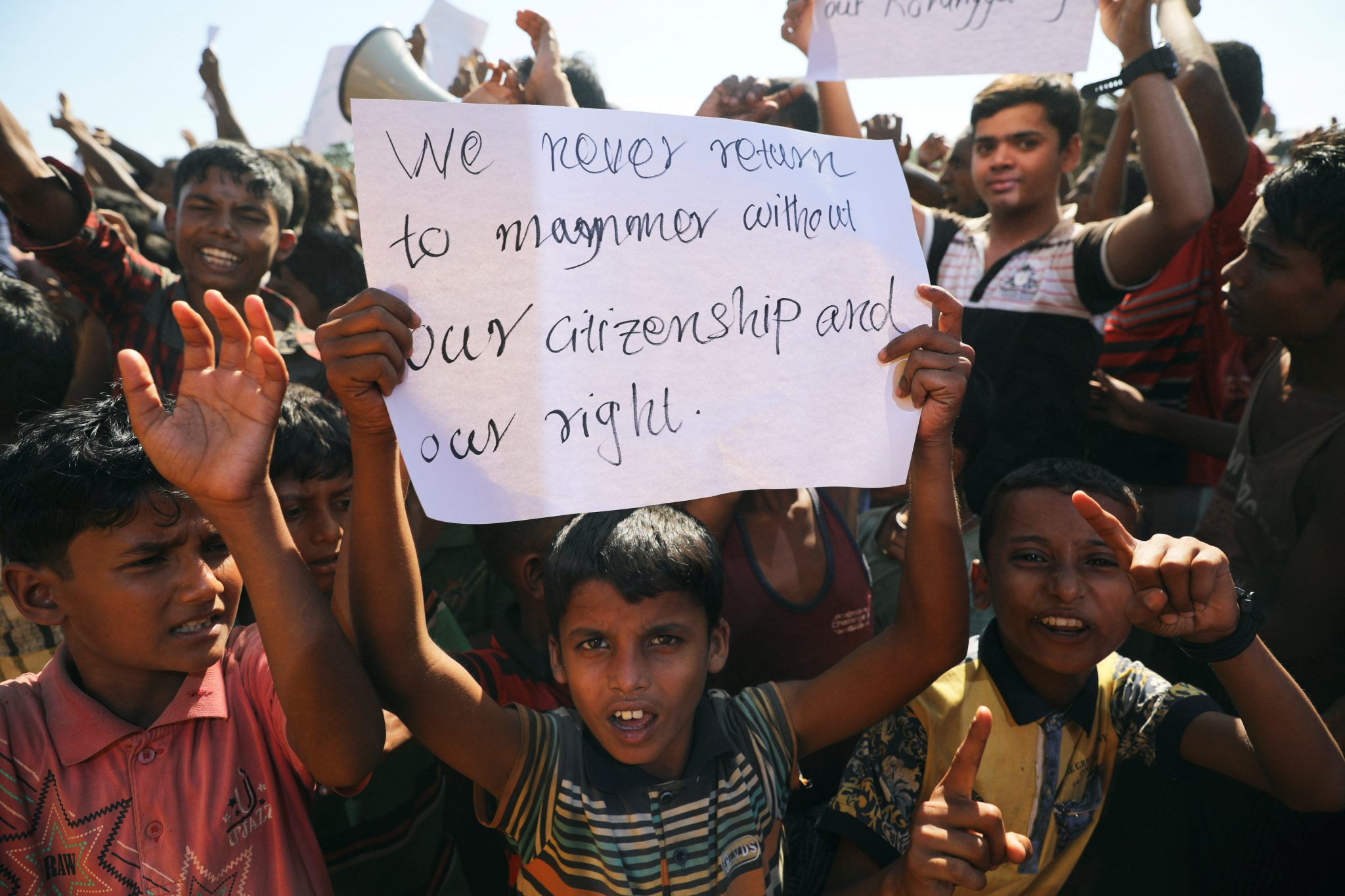
CNA reported on September 23 that Myanmar refugees were increasingly worried about being sent home as Malaysia and Thailand developed closer relations with Myanmar’s authorities. The report noted that the two countries were among Myanmar’s most important neighbours and that their changing approach could have direct consequences for people who had fled across the border.
For refugees, however, diplomatic normalisation is not necessarily synonymous with safety.
That distinction is at the centre of the current regional debate. Governments may view engagement with Myanmar as a practical necessity, particularly because the country shares borders with several ASEAN members and is central to regional security, migration and trade. Refugees and humanitarian organisations, by contrast, are concerned about whether the conditions that forced people to leave have actually changed.
Singapore-based coverage has increasingly brought that human dimension into the regional discussion. CNA’s recent reporting has focused on refugees who fear returning to Myanmar and on the question of whether conditions on the ground can justify repatriation.
Myanmar’s own official communications tell a different story.
The country’s foreign ministry has continued to participate in ASEAN diplomatic processes. Myanmar’s representative attended the ASEAN Senior Officials’ Meeting in Manila on September 9, where officials discussed ASEAN community-building, external relations and preparations for the next ASEAN summit.
From Naypyidaw’s perspective, participation in these regional meetings provides evidence that Myanmar remains part of ASEAN’s institutional framework. The language is consequently centred on regional cooperation, sovereignty and diplomatic engagement, rather than on the question of whether Myanmar’s political system has regained legitimacy.
That difference is important because ASEAN itself has historically struggled to balance its principle of non-interference with the consequences of Myanmar’s internal conflict.
For Malaysia and Thailand, the refugee question is more immediate.
Both countries are directly affected by movements of people across their borders. A prolonged conflict in Myanmar creates continuing humanitarian, security and administrative pressures, while large-scale refugee populations create political questions that governments cannot easily separate from their wider bilateral relations with Naypyidaw.
Malaysia has also been increasingly involved in efforts to address the Rohingya issue and wider Myanmar crisis. CNA reported earlier this month that Malaysia planned to invite Myanmar’s leader as part of efforts connected with Rohingya repatriation.
The language of repatriation itself illustrates the framing problem.
For governments, repatriation can mean restoring displaced people to their country of origin and reducing a long-running humanitarian burden.
For refugees, the same word can represent the possibility of being returned to a country where they do not believe they can live safely.
The disagreement therefore concerns not only policy but the definition of the problem itself.
Myanmar’s authorities can frame the issue as one of restoring normality and bringing displaced citizens home. Host governments can frame it as a question of managing borders and migration. Humanitarian organisations tend to frame it around safety, voluntary return and basic rights.
These narratives can coexist without describing exactly the same reality.
The regional media environment reflects this tension.
Myanmar’s official narrative gives greater prominence to diplomatic meetings and engagement with ASEAN governments. Malaysian and Thai reporting is more likely to focus on bilateral relations, migration and regional stability. Singapore-based outlets such as CNA tend to place greater emphasis on the practical consequences for refugees and on whether conditions inside Myanmar have sufficiently improved for returns.
This difference is particularly significant because Myanmar’s political crisis has not disappeared simply because regional diplomacy has become more active.
CNA reported on September 26 that Myanmar’s military was reportedly expanding its conscription drive. The report adds another layer to the repatriation debate because renewed recruitment pressure can directly affect young people and families inside the country.
The result is a difficult contradiction.
The region is becoming more willing to engage with Myanmar at precisely the moment when many displaced people remain uncertain about returning.
For ASEAN governments, however, complete isolation is also difficult. Myanmar shares borders with Bangladesh, India, China, Laos and Thailand and sits at the intersection of major regional trade and security routes. Its instability affects migration, organised crime, border security, infrastructure and humanitarian assistance far beyond its own territory.
This is why ASEAN’s approach has increasingly become one of engagement without full political normalisation.
The bloc continues to hold meetings involving Myanmar representatives, while the wider regional debate continues over how to deal with the military authorities and the country’s political crisis.
The South China Sea, energy security and economic integration may dominate many ASEAN meetings, but Myanmar remains one of the issues that tests the limits of the organisation’s consensus-based diplomacy. CNA reported in July that the ASEAN foreign ministers’ agenda included the Myanmar crisis alongside energy and food security and South China Sea tensions.
The Myanmar issue is also increasingly intersecting with Southeast Asia’s broader geopolitical competition.
Thailand and Malaysia have economic and security reasons for maintaining channels with Myanmar. China remains an important actor because of its economic and strategic interests in the country. India has its own concerns about border security and connectivity. ASEAN, meanwhile, wants to prevent the crisis from becoming another source of division inside the bloc.
That creates another difference in media framing.
A domestic Thai or Malaysian report may see Myanmar primarily as a border and migration problem.
A Myanmar state-media report may see the same relationship as evidence of diplomatic recognition.
A Singapore-based regional publication may interpret it as a test of ASEAN’s humanitarian credibility.
A Chinese or Indian strategic analysis may approach it through regional influence and security.
The underlying development is the same, but its meaning changes according to the interests of the audience.
The human consequences remain the hardest part of the story.
A diplomatic meeting takes place in a conference room. A government signs a bilateral agreement. ASEAN officials issue a statement. But for a refugee living across the border, the consequence may be much more personal: whether they can continue living where they are, whether their children can remain in school, and whether returning home is genuinely voluntary.
That is why the language used by regional media matters.
If the story begins with “repatriation”, the reader sees a migration-management problem.
If it begins with “refugees fear being sent back”, the reader sees a humanitarian problem.
If it begins with “Myanmar strengthens regional ties”, the reader sees diplomatic normalisation.
If it begins with “ASEAN engages Myanmar”, the reader sees an institutional and geopolitical problem.
None of those descriptions necessarily changes the underlying event. But each one tells the audience where to place responsibility, whose interests matter and what the central problem is.
For Southeast Asian media monitoring, Myanmar therefore offers a particularly useful example of how regional narratives can diverge without completely disagreeing on the facts.
The important question is not simply which publication is “biased”. A more useful examination asks who is being given agency, whose concerns are quoted, what terminology is used and what consequences are placed outside the frame.
At present, the regional story is moving in two directions at once. Governments are showing greater willingness to engage Myanmar, while refugees remain uncertain about whether engagement has produced the conditions necessary for a safe return.
That tension may define the next phase of Southeast Asia’s Myanmar policy.
For ASEAN, the challenge is no longer simply whether to talk to Myanmar. It is whether diplomatic engagement can produce conditions that make return, security and political stability meaningful realities rather than merely diplomatic language.
