

















Australia’s climate leadership collides with a new coal boom
Australia is preparing to enter the world’s biggest climate negotiations with an awkward contradiction hanging over its role. As the country prepares to lead the negotiations at COP31 and tells vulnerable Pacific neighbours that the world must accelerate the transition to clean energy, its coal industry is experiencing renewed demand.
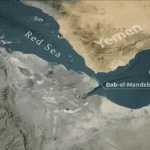
The contradiction has been sharpened by the war and energy disruption around the Strait of Hormuz. With gas supplies and prices under pressure, several Asian economies have turned back towards coal to keep electricity systems running. The result is a striking reversal in the global coal market: instead of declining in 2026 as previously expected, coal demand is now forecast to reach another record.
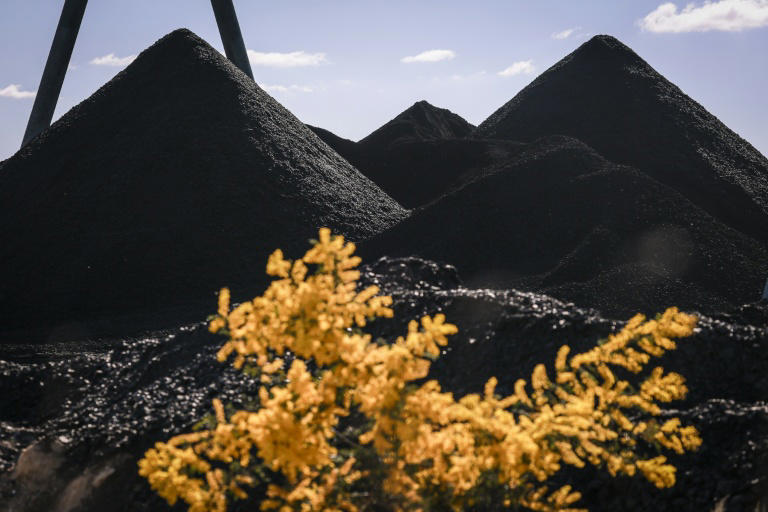
The International Energy Agency expects global coal demand to rise by 1.2 per cent this year to 8.94 billion tonnes. The agency says the Middle East crisis, higher natural gas prices and disruptions to energy supplies have encouraged some power systems with available coal capacity to switch from gas to coal. A strong El Niño is adding another pressure by increasing cooling demand and reducing hydropower output in parts of Asia.
For Australia, one of the world’s major coal exporters, that disruption has created an unexpected commercial opportunity. The IEA expects Australian thermal-coal exports to rise to around 216 million tonnes in 2026, while Australia remains the world’s dominant exporter of metallurgical coal.
This is occurring just as Australia’s diplomatic role in global climate policy is becoming more prominent.
Australia is President of Negotiations for COP31, which will be held in Antalya, Türkiye, from November 9 to 20. In that role, Canberra will lead the formal negotiations on issues including climate targets, rules and ambition, while working with Türkiye and Pacific countries.
The Pacific dimension makes Australia’s position particularly sensitive. Low-lying island countries are among the regions most exposed to rising seas and extreme weather, while Australia is simultaneously one of the world’s largest fossil-fuel exporters.
That tension was visible this week at the Pacific pre-COP meetings in Fiji and Tuvalu. Pacific leaders are pressing for stronger action to keep the 1.5°C temperature goal within reach, while highlighting the physical consequences of climate change already affecting their communities.
Australia argues that these positions are not necessarily incompatible.
Climate Change and Energy Minister Chris Bowen has said that a temporary increase in coal demand caused by an international energy shock should not be interpreted as a reversal of Australia’s longer-term direction. His argument is that the disruption itself demonstrates the vulnerability created by dependence on imported fossil fuels and strengthens the case for renewable energy, storage and electrification.
There is an economic logic to that argument. The Hormuz crisis has demonstrated that energy security and climate policy are increasingly connected. Countries that rely heavily on imported oil and gas can face sudden increases in costs when shipping routes are disrupted. If domestic renewable generation, batteries, transmission networks and other forms of clean-energy infrastructure can reduce that exposure, the transition becomes not only an environmental project but also an energy-security strategy.
Yet the coal boom exposes the difficulty of that transition.
Japan and South Korea, two major Asian energy consumers, have been among the countries turning towards coal as gas and other fuels become more expensive or difficult to secure. According to experts cited by AFP, deteriorating fiscal conditions can also make governments less willing to finance new clean-energy infrastructure or retire existing coal plants.
The result is a paradox in the energy transition. A geopolitical crisis can strengthen the long-term economic argument for renewable energy while simultaneously increasing short-term demand for fossil fuels.
Australia sits directly at the centre of that paradox.
Its coal industry remains deeply integrated into Asian electricity and industrial supply chains. New South Wales alone has 37 coal mines, and coal exports generated Aus$23.4 billion for the state last year, with South Korea, Japan, China and Taiwan among the principal destinations.
For communities dependent on mining, the industry’s expansion is therefore not an abstract climate-policy question. It means employment, regional income, local businesses and government revenue.
In Mudgee, in New South Wales’ Hunter region, that economic argument exists alongside concerns about environmental damage. Residents opposing mine expansion point to threatened wildlife and increasingly severe floods and bushfires, while supporters of the industry emphasise employment and the economic importance of mining.
That conflict is likely to become increasingly difficult to separate from Australia’s international climate responsibilities.
A recent legal development has added another layer to the debate. Australia’s High Court ruled on October 7 that a proposed extension of the Mount Pleasant coal mine in New South Wales had not been properly assessed in relation to its greenhouse-gas consequences, particularly emissions produced when exported coal is eventually burned overseas. The proposed extension could have produced an additional 406 million tonnes of coal.
The ruling is significant because it challenges the idea that Australia’s responsibility ends at the port.
Most of the emissions associated with exported coal occur outside Australia, when the coal is burned in another country. But the climate system does not recognise national borders. That is the central argument made by environmental campaigners and increasingly reflected in legal and policy debates.
“Climate harm does not stop at the border, and neither does the responsibility for it,” Greg Mullins, a former New South Wales fire commissioner and climate activist, said in the AFP report.
The economic case for coal, however, remains powerful enough to complicate any rapid transition. Australia’s mining sector supplies established Asian markets, supports regional communities and generates export revenue. Companies also argue that demand is determined by the energy policies of importing countries rather than by Australian producers alone.
This creates a broader question for climate diplomacy: how much responsibility belongs to the producer, and how much to the consumer?
Australia can argue that if Japan, South Korea, China or other economies require additional coal because of an energy crisis, refusing to supply it would not necessarily eliminate the demand. Another exporter could simply fill the gap.
But environmental campaigners counter that expanding supply can make continued fossil-fuel dependence easier, potentially delaying investment in alternatives.
The IEA’s outlook illustrates why this debate is becoming more complicated rather than less. The agency expects global coal demand to fall in 2027 if LNG flows through the Strait of Hormuz recover and natural-gas prices return closer to pre-crisis levels. But if gas shipments remain constrained, coal demand could rise further.
In other words, part of the apparent coal revival may be a geopolitical shock rather than evidence that the world has abandoned decarbonisation.
There are also signs of structural change underneath the short-term increase. The IEA says China’s rapid expansion of solar and wind power is already changing the relationship between electricity demand and coal generation, while coal imports in several mature Asian markets are expected to continue declining over the longer term.
That distinction matters for Australia. A temporary surge in exports may strengthen the coal sector today without guaranteeing that demand will remain strong over the coming decades.
For the Pacific, meanwhile, the consequences are measured differently.
In Tuvalu, where average elevation is only around two metres, rising seas are not a theoretical future risk. Sea levels around the country have risen about 15 centimetres over the past three decades—roughly twice the global average—and could rise by another 30 centimetres by 2050.
This is why Australia’s role at COP31 will be judged not simply by what it says about renewable energy, but by how convincingly it can reconcile climate leadership with its position as a major fossil-fuel exporter.
The Australian government’s position is that the energy shock demonstrates the need to move faster towards renewables. Critics see the continued expansion of coal mines as evidence that economic dependence on fossil fuels remains deeply embedded.
Both realities exist at the same time.
The coal industry is responding to a real market created by disrupted gas supplies. Australia’s climate diplomacy is responding to a real environmental crisis affecting its Pacific neighbours. And the country’s political challenge is to manage the tension between those two realities without pretending that one has made the other disappear.
The deeper lesson of the current coal boom may therefore be less about whether coal has returned permanently than about how vulnerable the global energy transition remains to geopolitical shocks.
A conflict thousands of kilometres from Australia’s mines has increased demand for Australian coal. An extreme El Niño is adding pressure to electricity systems. At the same time, Pacific communities are confronting rising seas and increasingly severe climate risks.
The irony is difficult to miss: the same global energy insecurity that is reviving demand for coal may also be strengthening the economic case for abandoning fossil fuels.
For Australia, which will sit at the negotiating table when the world meets for COP31, that contradiction will be impossible to keep outside the room.
