



















Iran rejects Saudi claims over Houthi attacks as Yemen conflict widens
Tehran offers to mediate despite Riyadh’s accusations, as missile strikes target strategic sites in Saudi Arabia and Yemen
Iran has rejected Saudi Arabia’s accusation that it encouraged Yemen’s Houthi movement to intensify attacks against the kingdom, deepening a diplomatic dispute as missile and drone strikes threaten airports, oil infrastructure and military facilities across the region.
Iranian Foreign Ministry spokesman Esmaeil Baqaei said Tehran had played no role in Houthi operations, arguing that Yemen’s armed forces acted according to their own interests and assessments. He also reiterated Iran’s willingness to help mediate between the Houthis and Saudi Arabia.
The denial followed accusations from Saudi Deputy Foreign Minister for Public Diplomacy Rayed Krimly, who said Iran had encouraged the latest escalation and continued to arm, train and support the Houthis. Tehran rejected the allegations, leaving the two countries at odds over the source of the group’s expanding campaign.
The dispute comes as Saudi Arabia faces repeated attacks on strategic infrastructure. The Saudi-led military coalition said on Friday that it had intercepted three drones over southern Saudi Arabia and the Riyadh area, two cruise missiles over the Red Sea, and a ballistic missile heading towards Yanbu, an important oil-export hub on the kingdom’s western coast.
The latest violence has also reached Yemen’s interim capital, Aden. Two missiles struck the grounds of Aden International Airport on Friday, according to local security officials. The Houthi movement said the operation targeted a military command headquarters and a weapons depot associated with Saudi-led forces. Yemeni officials said a passenger aircraft preparing to depart for Cairo narrowly avoided being hit. No deaths were reported in the airport incident.
The strikes followed an attack on the Al-Maashiq presidential palace in Aden on Thursday that killed five people and injured 16, according to Yemen’s health minister. Houthi-affiliated media said the target was a military operations headquarters at the complex, while the internationally recognised government condemned the attack.
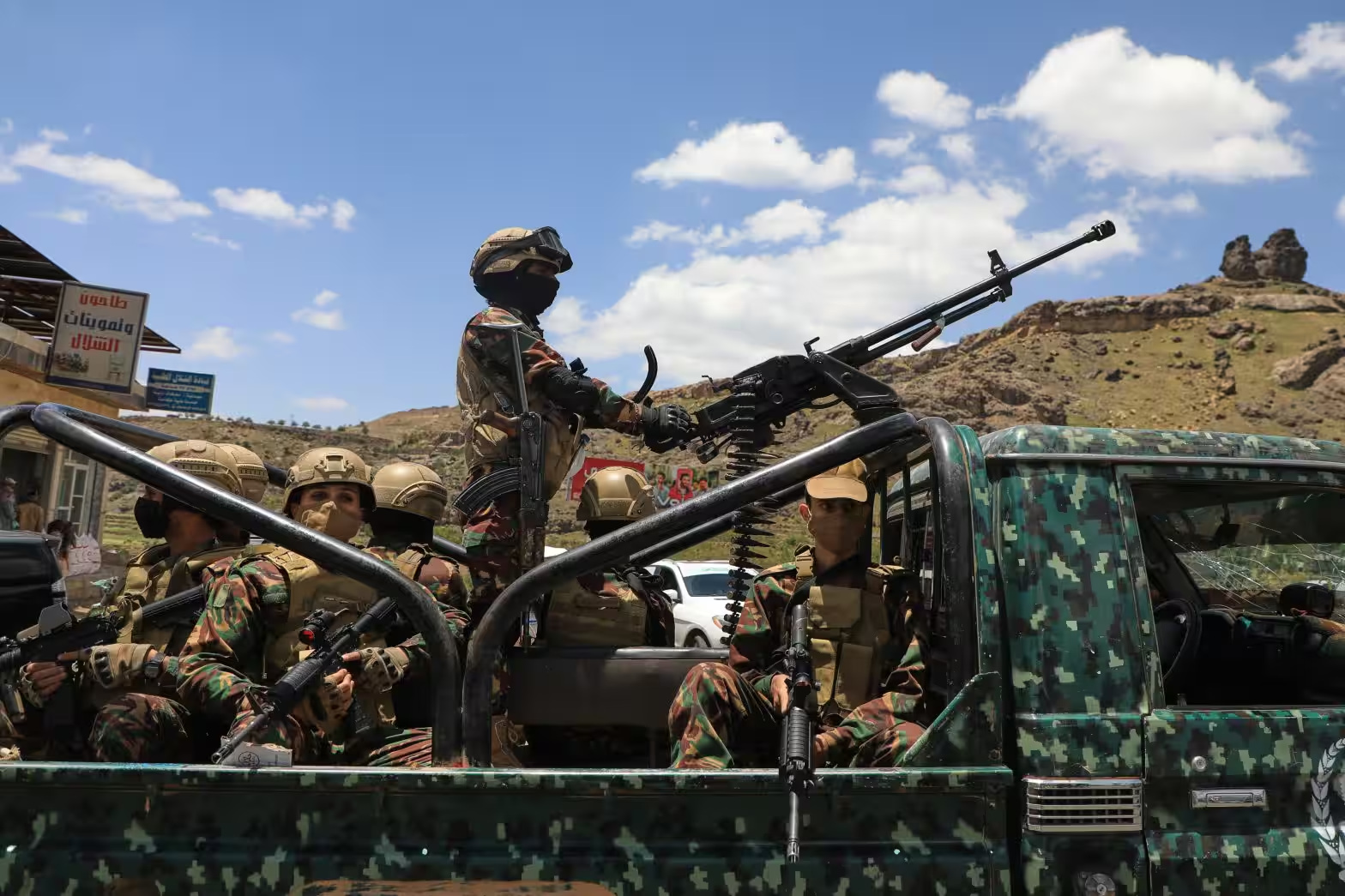
The renewed confrontation has unfolded alongside advances by Houthi forces along Yemen’s Red Sea coast. Government troops, backed by Saudi air power, have launched a counteroffensive to recover territory, but have so far struggled to reverse the group’s gains.
The strategic stakes extend beyond Yemen. The Houthis’ position near the Bab el-Mandeb Strait, a major passage connecting the Red Sea with the Gulf of Aden, places commercial shipping and energy flows at risk. Saudi oil exports are also exposed to wider regional instability, particularly as the war involving Iran, the United States and Israel has disrupted the Strait of Hormuz.
Although Iran has denied direct involvement in Houthi operations, Saudi Arabia maintains that Tehran’s support has contributed to the group’s capabilities. The competing claims underscore a central uncertainty in the conflict: how far the Houthis are acting independently and how much external support is shaping their military campaign.
For now, the immediate risks are continued attacks on civilian infrastructure, further disruption to maritime routes and a broader regional escalation. Iran’s offer to mediate provides a diplomatic opening, but no agreement to halt the fighting has been announced.
Sources: Agence France-Presse; Reuters; Associated Press.
