


















Alef Aeronautics challenges Tesla in flying-car race with aerial stunt
California start-up says its prototype has completed 1,000 flights as Tesla’s airborne Roadster demonstration sparks debate over what qualifies as a flying car
A California-based aviation start-up has taken a playful swipe at Tesla after Elon Musk’s company unveiled a new Roadster capable of performing airborne stunts, using a video to present itself as a more established contender in the emerging flying-car market.
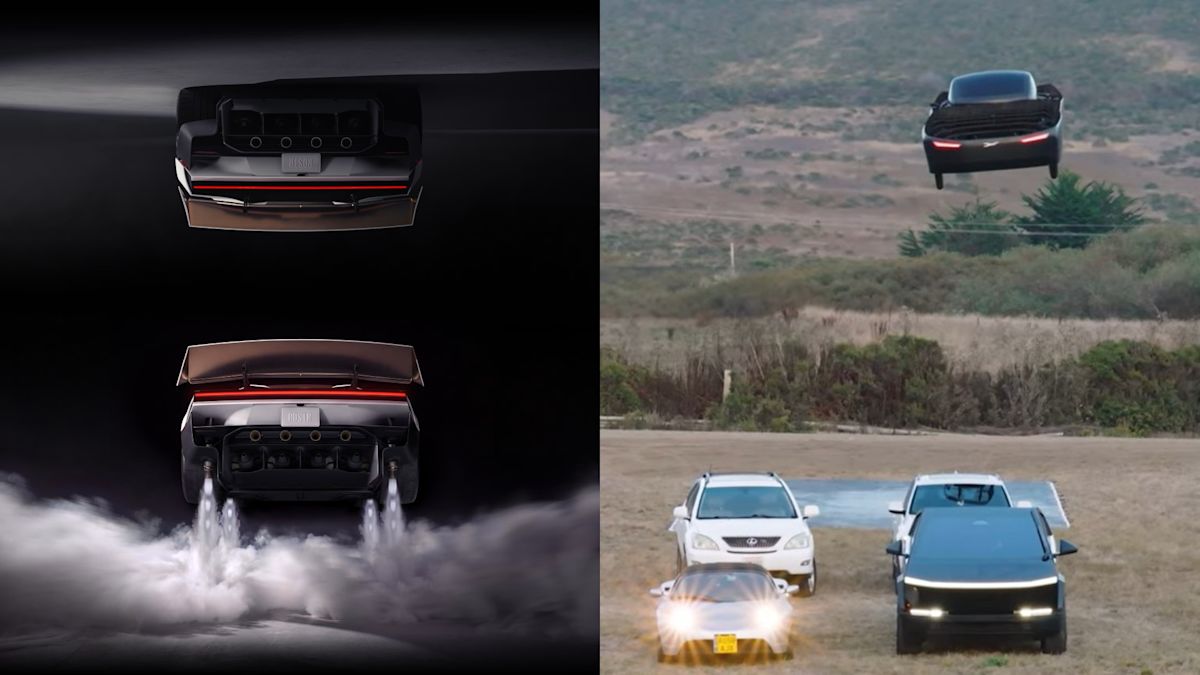
Alef Aeronautics released footage showing its prototype flying over a Tesla Roadster and a Cybertruck, describing the demonstration as a welcome to Tesla in the flying-car race. The company said the flight was its 1,000th, according to reports by KTLA and technology publication Electrek.
The timing was deliberate. Tesla unveiled its second-generation Roadster at a SpaceX facility in Texas on 15 October, demonstrating a prototype that used rocket-style thrusters and a specialised suction system to perform dramatic manoeuvres. The vehicle briefly left the ground, flipped in mid-air and landed, drawing renewed attention to Musk’s long-running ambition to bring futuristic transport technology to market.
But the demonstrations highlight an important distinction: a car capable of brief airborne manoeuvres is not necessarily equivalent to a vehicle designed for sustained, controlled flight.
Alef, founded in 2015, is developing the Model A, an electric vehicle intended to operate both on roads and in the air. Its design uses distributed electric propulsion and a vehicle body intended to support flight, allowing it to take off vertically rather than relying on a runway.
Tesla’s Roadster demonstration, by contrast, centred on a high-performance electric sports car fitted with SpaceX-related thruster technology. The demonstration showed brief airborne movement, but it did not establish that the vehicle could function as a conventional aircraft or provide sustained flight between destinations.
Alef used the contrast to position its technology as a more direct interpretation of a flying car. In a separate video, the company argued that a flying car should combine ordinary road-driving capability with vertical take-off.
That definition is the company’s own framing, rather than an established industry-wide standard. The broader market includes several concepts, ranging from roadable aircraft to electric vertical take-off and landing vehicles that are not designed for ordinary road use.
Alef lists an expected price of US$299,999 for its Model A. Its website offers a US$150 reservation for the general queue and a US$1,500 payment for priority placement. These are pre-order arrangements, not evidence that customers can take delivery of a production-ready vehicle.
Tesla’s reservation terms also require substantial upfront payments. According to the reports surrounding its October unveiling, the standard Roadster reservation begins with a US$5,000 payment, followed by a further US$45,000 within 10 days. Higher-priced configurations have separate terms. Tesla has targeted production for 2028, but a demonstration does not guarantee that the vehicle will reach customers on that schedule.
Both companies face challenges beyond engineering. Commercial deployment will depend on safety testing, regulatory approval, manufacturing capacity, operating costs and whether the vehicles can meet practical transportation needs.
For Alef, the central challenge is turning a flying prototype into a vehicle that can be manufactured and operated at scale. For Tesla, the question is whether the Roadster’s striking demonstration can translate into a commercially viable vehicle whose airborne capabilities are useful beyond a controlled test environment.
Flying-car development has long been constrained by the difficulty of combining road safety with aviation requirements. Vehicles must contend with weight, battery capacity, flight stability, noise, maintenance and the need for safe places to take off and land. Regulatory approval for road use does not automatically authorise flight, and aviation certification does not automatically permit unrestricted use on public roads.
Alef’s video has sharpened the competition narrative, but it does not by itself establish which company is closer to commercial success. The companies are demonstrating different approaches, and their public claims need to be assessed against independently verified flight performance, certification status and actual delivery milestones.
For now, the contest is as much about defining the category as it is about building a market. Tesla has brought fresh attention to airborne vehicle technology; Alef is using that attention to argue that its road-and-air concept has been under development for longer. Whether either approach becomes a practical transport option will depend on evidence beyond a dramatic video.
Sources: This report draws on KTLA’s coverage of Alef’s response to Tesla, Electrek’s report on Alef’s flight demonstration, Alef Aeronautics’ official pre-order page, and Reuters’ report on Tesla’s next-generation Roadster unveiling. The flight-count and pricing details are attributed to company statements and published reports; neither the video nor the companies’ announcements alone establish full commercial readiness or unrestricted flight approval.
