











Trump backs Nvidia chief as unresolved security questions shadow his return
The US president says he has sufficient information to rule out a national security threat from Jensen Huang, but the company’s internal investigation and wider scrutiny of alleged technology diversion to China remain unresolved.
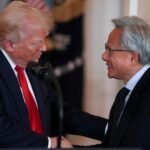
US President Donald Trump has defended Nvidia chief executive Jensen Huang against national security concerns, saying he believes the semiconductor executive poses no threat to the United States, despite continuing questions surrounding his reported links to a woman suspected of having connections to Chinese intelligence.
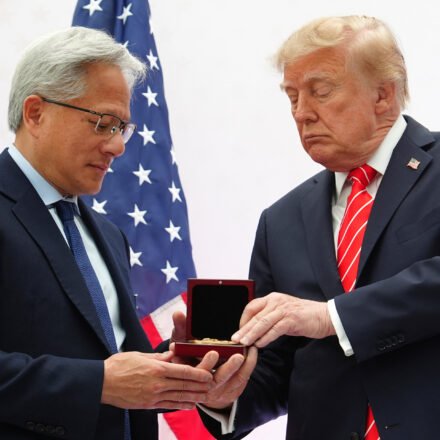
Speaking to reporters at his Mar-a-Lago estate in Florida on Thursday, 26 November, Trump said he had received enough information to conclude that Huang was not a security risk.
“I think he’s absolutely fine,” Trump said, adding that his assessment was based on “information I have, which is a lot of information”.
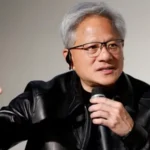
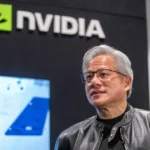
His remarks come just days after Nvidia’s board reinstated Huang as president and chief executive, following an extraordinary corporate crisis that briefly removed one of the world’s most influential technology executives from the company he co-founded.
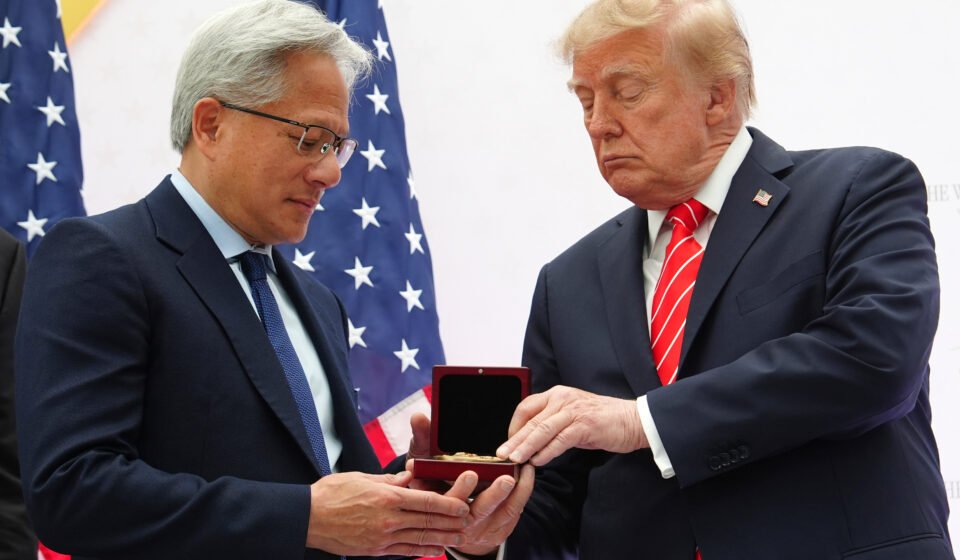
Trump also openly acknowledged his administration’s involvement in securing Huang’s return, describing the intervention as beneficial not only for the United States but for the wider world.
“I think it’s a great thing that he’s going back,” he said, arguing that he had done something positive for the country by supporting the executive’s reinstatement.
The episode has raised questions about the relationship between national security oversight, political influence and corporate governance, particularly as Nvidia occupies a central position in the global artificial intelligence industry.
Nvidia announced Huang’s resignation on 12 November, appointing chief financial officer Colette Kress as interim chief executive. The company said its board would begin searching for a permanent successor.
The departure followed reports of Huang’s personal relationships with a businesswoman suspected by US intelligence agencies of having links to Chinese espionage. Separate reporting also alleged an affair with an Nvidia employee. The allegations prompted concerns about potential exposure of sensitive corporate information and the possibility of advanced semiconductor technology reaching China through intermediaries.
It is important, however, to distinguish suspicion from established wrongdoing. No publicly established finding has demonstrated that Huang knowingly assisted Chinese intelligence or personally violated US export-control laws.
Nvidia’s independent directors announced an investigation into reports that Huang had been targeted by a foreign intelligence operation. The company retained outside legal counsel to examine the allegations, while Huang pledged to co-operate.
The board initially indicated that it had confidence in Huang but would allow the investigation to proceed. Its subsequent decision to reinstate him on 23 November marked a sharp reversal.
The reinstatement followed discussions involving senior US officials, including Trump and Vice-President JD Vance. Nvidia said its board had voted unanimously to bring Huang back after reviewing his explanations and receiving input from senior levels of the US government. The board said it was satisfied with his candour and ability to lead the company, and believed his return posed no national security risk.
However, the basis for the administration’s confidence has become a central point of contention. A Reuters investigation published on 25 November found that the Justice Department had not conducted a formal investigation into Huang before Trump’s intervention. Instead, Attorney General Todd Blanche concluded that there was no evidence of unlawful conduct by Huang based on ongoing investigations into two Nvidia customers, Super Micro Computer and Megaspeed International.
Those investigations concern suspected attempts to divert advanced semiconductor technology to China in violation of US export controls. Reuters reported that the assessment could change as the investigations continue. This distinction is significant: the absence of evidence establishing Huang’s involvement is not equivalent to a completed investigation clearing him of all allegations.
The wider scrutiny also remains active in Congress. According to the Associated Press, Huang is expected to face questions from three House committees examining the national security implications of the allegations and the suspected diversion of Nvidia chips to China.
The Justice Department has also not established whether Alice Huang, the businesswoman at the centre of the espionage allegations, was acting as a Chinese intelligence operative. Attorney General Blanche previously acknowledged that the department was examining the matter. China has denied the espionage allegations.
For Nvidia, the controversy presents risks extending beyond the personal conduct of its chief executive. The company supplies critical processors used to train and operate advanced AI systems, making its products strategically important to both the US technology industry and national security.
Washington has imposed increasingly restrictive controls on advanced semiconductor exports to China to limit Beijing’s access to computing power that could support military and surveillance applications. Any suggestion that restricted technology has reached Chinese buyers through intermediaries therefore carries implications for US trade policy, diplomatic relations and the credibility of export-control enforcement.
Nvidia’s board has attempted to address these concerns through additional oversight measures. Alongside the investigation into Huang, it announced the formation of a National Security and Export Control Committee made up entirely of independent directors. The company also said it would appoint a chief compliance officer to oversee compliance across its operations.
The political intervention has nevertheless raised questions about the independence of corporate decision-making. Trump’s administration has a clear economic interest in maintaining Nvidia’s position as a global AI leader, particularly as Washington competes with China for technological dominance. But protecting a strategically important company and establishing that its leadership meets appropriate governance and security standards are not necessarily the same objective.
The financial consequences of Huang’s departure also demonstrated the company’s influence over investor sentiment. The Associated Press reported that Nvidia shares gained more than 31 per cent on 23 November following the reinstatement, although they remained below their previous record high. The recovery reflected investor confidence in Huang’s leadership and the importance of continuity at a company central to the global AI industry.
Trump’s latest comments reinforce his support for Huang, but they do not settle the questions surrounding the executive’s conduct, the alleged espionage connections or possible export-control violations involving Nvidia’s customers. His return restores leadership continuity at one of America’s most strategically important technology companies. Whether it also restores confidence in the company’s governance and security arrangements will depend on the findings of investigations that remain unfinished.
Sources: Nvidia – Board statement on independent investigation, 8 November 2026; Nvidia – CEO transition announcement, 12 November 2026; Nvidia – Board reinstates Jensen Huang, 23 November 2026; Reuters – How the Trump administration determined Jensen Huang is not a national security threat, 25 November 2026; Reuters – Huang returns as Nvidia CEO after Trump intervention; Associated Press – Nvidia board reinstates Jensen Huang as CEO; Channel NewsAsia – Trump insists Nvidia CEO not a security threat, 26 November 2026; US Securities and Exchange Commission – Nvidia Form 8-K, November 2026.