











Taiwan vote reshapes local politics as China watches
The ruling DPP makes significant gains in nationwide local elections but fails to capture Taipei, as domestic concerns dominate campaigning amid continuing tensions with Beijing.
Taiwan’s ruling Democratic Progressive Party (DPP) has made substantial gains in local elections, strengthening its position ahead of the 2028 presidential contest, although the opposition Kuomintang (KMT) has retained control of the capital, Taipei.
Voters went to the polls on Saturday, 28 November, to elect mayors, county magistrates and local representatives across the island’s 22 cities and counties. The four-yearly elections were widely viewed as an assessment of President Lai Ching-te’s administration and an early indication of the political balance ahead of the next national election.
The DPP won at least nine local government races, compared with just five in 2022, while the KMT secured at least 10, according to preliminary results reported by international media. Some local contests remained unresolved as counting continued. The DPP’s strongest gains included Taichung, Taiwan’s second-largest city, which it wrested from the KMT after eight years of opposition rule.
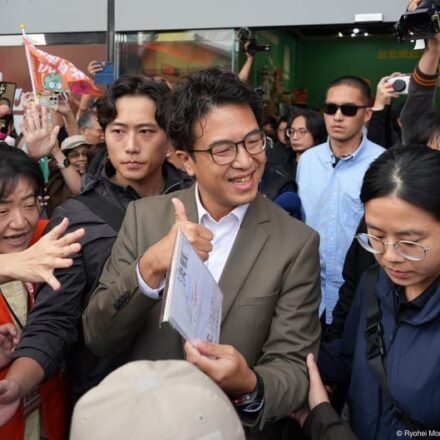
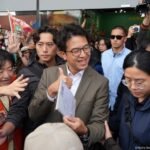
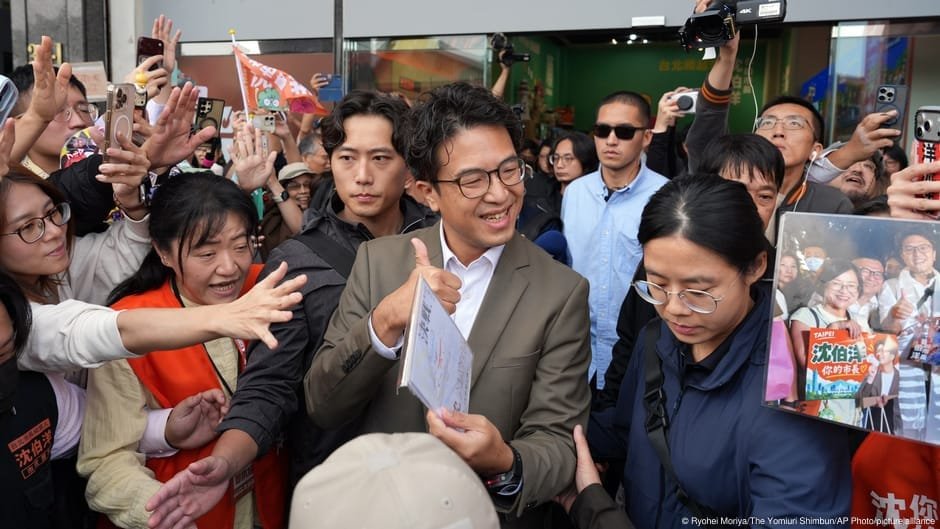
However, the capital remained under KMT control. Incumbent mayor Chiang Wan-an defeated DPP challenger Puma Shen, securing approximately 53.7 per cent of the vote against Shen’s 45.7 per cent, according to figures reported by Taiwan’s Central News Agency. Shen conceded defeat, ending the DPP’s attempt to regain Taipei, which it has not governed since 1994.
The result demonstrated the contrast between the ruling party’s improved performance across the island and its continued difficulty winning over voters in some traditionally opposition-leaning urban areas.
The elections were closely watched in Beijing because of their implications for Taiwan’s domestic political direction and its relationship with mainland China. Taiwan is self-governed, while Beijing claims the island as part of its territory and has not ruled out using force to bring it under its control. The DPP generally advocates maintaining Taiwan’s separate political identity, while the KMT favours greater engagement with Beijing.
Military activity added to the tension surrounding polling day. Taiwan’s Ministry of National Defense reported detecting 33 sorties by Chinese military aircraft, including fighter jets and bombers, alongside eight Chinese naval vessels around the island on Friday. The figures were released by Taiwanese authorities, although they do not independently establish that the military activity was intended to influence the election.
Taiwanese officials also accused Beijing of using disinformation to undermine public confidence in the electoral process. The allegations included suspected attempts to circulate misleading material about political candidates and Taiwan’s democratic institutions. Beijing has rejected accusations of interference. The election nevertheless illustrated how concerns about external pressure can remain part of the political environment even when voters are primarily focused on domestic issues.
Economic concerns featured prominently during the campaign. Transport, housing costs, social welfare, energy prices and the cost of living were among the issues shaping voter priorities. The Associated Press reported that voter Chang Li-fen, who cast her ballot in Taipei, identified economic conditions as her main concern, pointing to rising energy costs and their impact on household spending.
Energy policy also featured in a nationwide referendum held alongside the local elections. Voters considered a proposal to overturn the existing policy prohibiting nuclear power generation. Supporters argued that additional energy sources could help meet growing electricity demand, particularly from Taiwan’s expanding artificial intelligence and semiconductor industries. The outcome could influence future debates over energy security, although the referendum itself does not automatically reopen nuclear power plants.
For President Lai, the DPP’s improved performance offers some political relief after its poor showing in 2022. Winning control of additional local governments could help the party rebuild its grassroots organisation and strengthen its position before the 2028 presidential election. However, the defeat in Taipei demonstrates that the party still faces substantial challenges in attracting voters beyond its traditional support base.
The KMT, meanwhile, has retained important urban strongholds despite losing ground in several localities. Its continued control of Taipei and neighbouring New Taipei gives the opposition a significant platform from which to challenge the ruling party. The results also underline that local elections are not simply a referendum on cross-strait relations: voters can support candidates based on municipal performance without necessarily endorsing their parties’ broader positions on China.
Ultimately, the election has produced a more competitive local political landscape rather than a decisive national shift. The DPP has recovered ground, the KMT remains influential and Beijing continues to face a government in Taipei that rejects its sovereignty claims. With the next presidential election approaching in early 2028, Saturday’s results offer an important indication of political sentiment, but they do not settle Taiwan’s longer-term political direction or its increasingly complicated relationship with China.
Sources:
- Reuters – Ruling party makes gains in Taiwan local elections watched by China
- Associated Press – Taiwan’s opposition keeps control of Taipei in local elections closely watched by China
- The Guardian – Taiwan’s ruling party secures best result in a decade
- Focus Taiwan (Central News Agency) – Taipei Mayor Chiang wins second term
- Focus Taiwan – DPP flips Taichung and five other seats; KMT holds Taipei
- Radio Taiwan International – 2026 Taiwan local election results
- Taiwan Ministry of National Defense – Official website and military activity updates