

















India’s Gen-Z ‘Cockroach Party’ returns to streets, national protest
A youth movement born from an internet joke is mobilising against electoral roll revisions, raising questions about voter access, institutional accountability and the power of digital activism.
A youth-led protest movement in India that began as an internet joke is preparing for another round of demonstrations, shifting its focus from an education scandal to a contentious voter-list revision that has triggered a wider debate over electoral fairness.
The Cockroach Janata Party (CJP), which gained prominence through protests against alleged examination paper leaks earlier this year, is now demanding the resignation of Chief Election Commissioner Gyanesh Kumar. Its campaign centres on the Election Commission’s Special Intensive Revision (SIR) of electoral rolls, a process that opposition parties say has removed millions of eligible voters.
CNN reported on 9 October that the movement was preparing to return to New Delhi under the banner of “Season 2”, with protesters planning to gather at Jantar Mantar, the capital’s designated protest site. The renewed mobilisation follows demonstrations in several cities and a growing confrontation between activists, opposition parties and the authorities.
The scale of the voter-list revision has become central to the dispute. Associated Press reporting puts the number of names removed from electoral rolls at more than 130 million. The opposition alleges that the process disproportionately affects its supporters and risks excluding eligible citizens from elections. The Election Commission and the government reject claims of political manipulation, arguing that the exercise is intended to remove duplicate and ineligible entries.
The dispute has acquired additional political significance because the CJP has already demonstrated an ability to turn online mobilisation into street-level pressure. Its earlier campaign against the examination paper-leak scandal contributed to demands for the education minister’s resignation, which followed in July. That episode gave the movement visibility beyond social media and offered its organisers a model for challenging government decisions through sustained public protest.
Its latest campaign, however, concerns a more fundamental question: who gets to participate in an election. Unlike an examination scandal, which centres on the integrity of a particular process, the removal of names from electoral rolls can affect citizens’ ability to exercise their voting rights. Establishing whether eligible voters have been wrongly excluded requires transparent records, accessible appeals and independent scrutiny of the revision process.
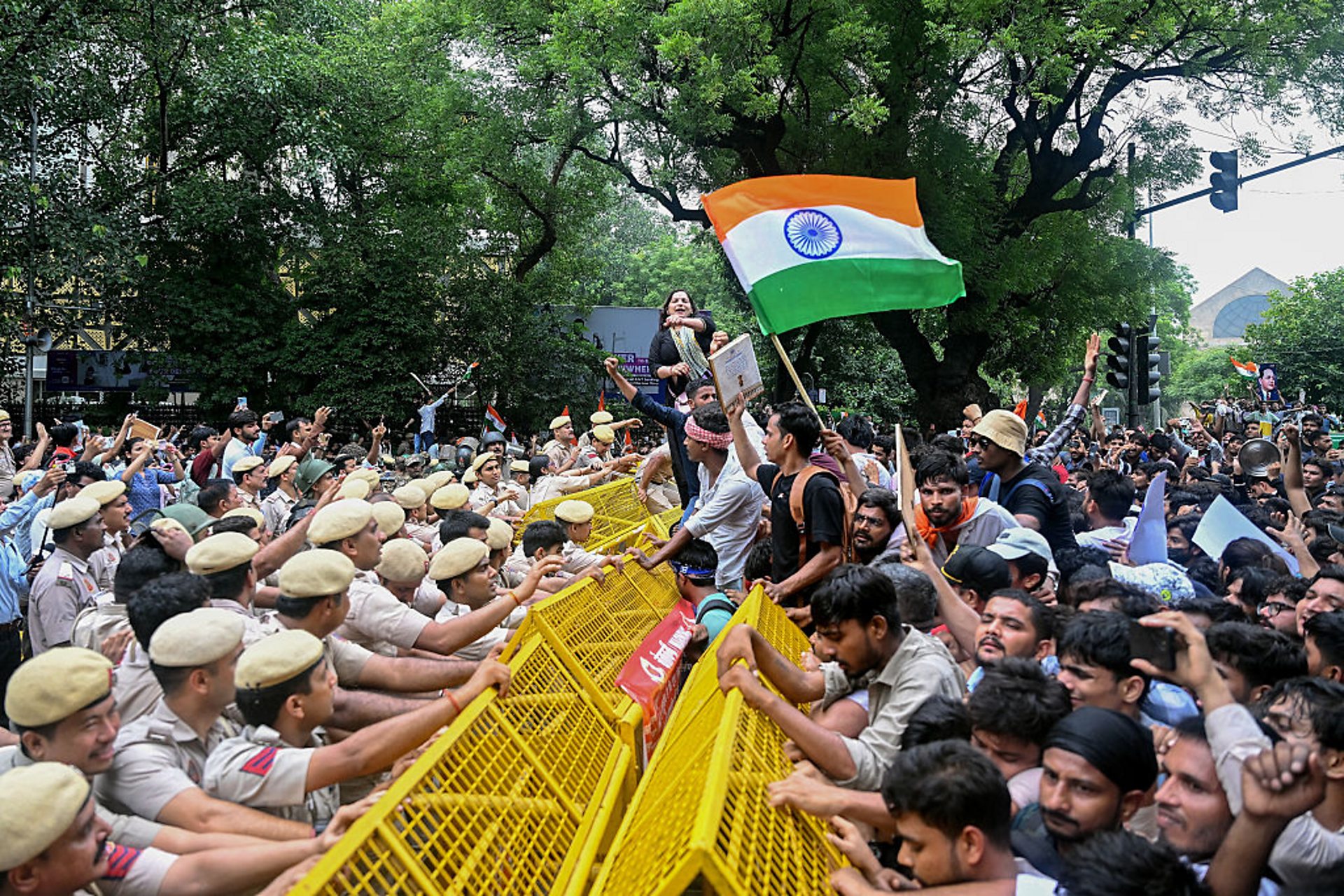
Authorities have responded to the planned demonstrations with heightened security measures in New Delhi. Reporting by Deutsche Welle describes barricades, transport restrictions and a substantial deployment of security personnel ahead of the planned 10 October protest. Opposition figures, including Congress leader Rahul Gandhi, have also joined demonstrations and faced brief detention.
The CJP’s emergence illustrates how digital culture can provide a route into political participation for younger citizens who may feel disconnected from established parties. Humour, viral videos and an unconventional identity have helped the movement attract attention, while its street demonstrations have given that online visibility a more tangible political expression.
Yet public attention alone cannot establish whether the movement will secure electoral reforms or sustain its influence. Its longer-term impact will depend on whether organisers can build a durable campaign, document alleged irregularities and translate public anger into verifiable institutional changes.
The immediate test is whether the voter-list dispute can be addressed through transparent procedures and credible safeguards for eligible voters. For India’s political institutions, the controversy is a reminder that confidence in elections depends not only on the act of voting but also on public trust in the process that determines who is entitled to vote.
